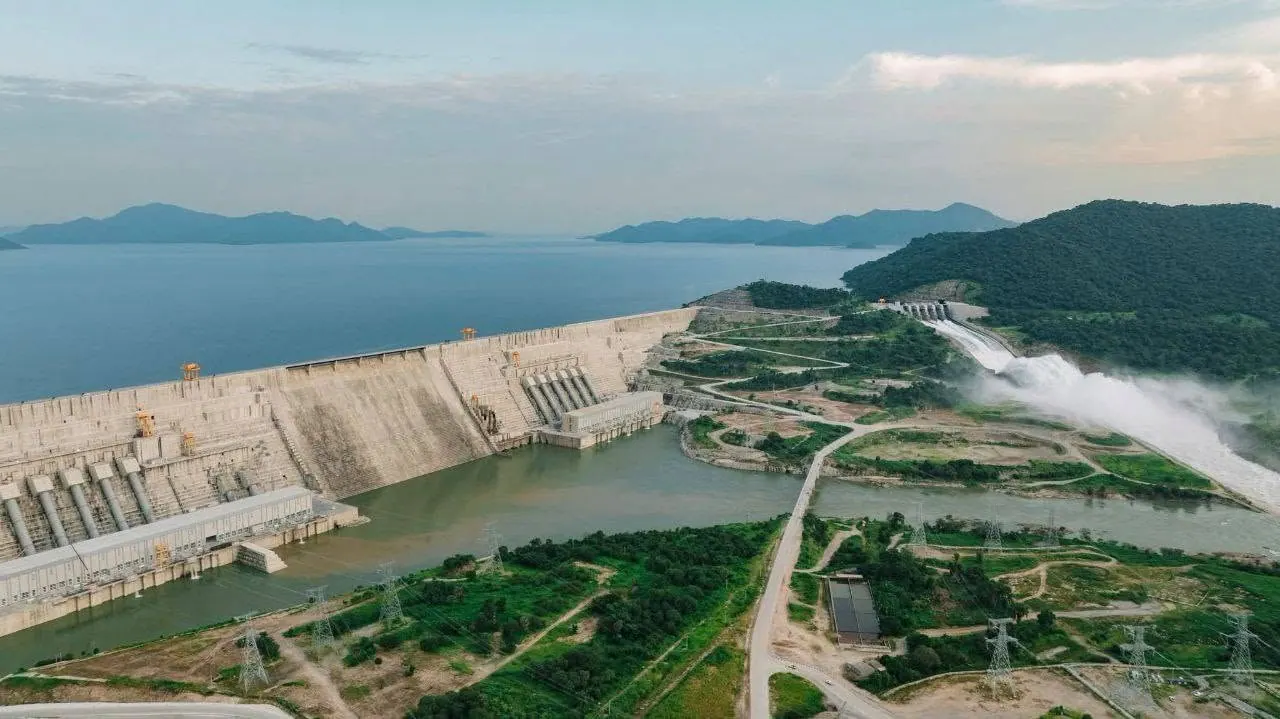
Ethiopia, a country endowed with numerous transboundary rivers and natural water resources, has the right and capacity to harness these resources for its economic development, agriculture, industry, and power generation. The country's history of poverty can be changed by utilizing these natural resources for development, and the GERD is a prime example of this effort. The dam, built on the Blue Nile River, has not had any negative impacts on the downstream countries, but rather has become a modern infrastructure that benefits the region by regulating the water flow, reducing sedimentation, and preventing flood risks.
The GERD has become a source of clean electricity not only for Ethiopia but also for neighboring countries. The dam's power generation has started to be transmitted to neighboring countries, strengthening regional economic ties and addressing the energy shortages in East Africa. This development has been hailed as a genuine example of shared growth and cooperation in the region. Prime Minister Abiy Ahmed has emphasized that Ethiopia's use of the Blue Nile River is not intended to harm or undermine the interests of other countries, but rather to bring its people out of darkness and work together with regional countries to develop the energy sector.
Ethiopia has taken great care to ensure that the downstream countries' interests are protected and their concerns are addressed. The country has committed to following the principle of fair water utilization, and the GERD has been designed and constructed with this principle in mind. However, despite these efforts, Egypt, one of the downstream countries, has been pursuing a policy that appears to be driven by self-interest and a desire to undermine Ethiopia's development efforts.
Egypt has historically used the Blue Nile River exclusively for its own benefit, often resulting in significant water evaporation and waste. The country has also attempted to block the construction of the GERD, citing concerns that are not supported by scientific evidence. Egypt's actions have been seen as an attempt to maintain its historical dominance over the region's water resources, rather than working towards a fair and equitable solution.
Despite Egypt's opposition, Ethiopia has continued to move forward with the GERD project, driven by its commitment to development and cooperation. The dam has become a symbol of Ethiopia's determination to harness its natural resources for the benefit of its people and the region. The GERD has also become a source of inspiration for other countries in the region, demonstrating the potential for cooperation and shared growth.
The GERD has the potential to transform the region's energy landscape, providing clean and renewable energy to millions of people. The dam's power generation has already started to make a positive impact on the region, and its benefits are expected to increase in the coming years. As the region continues to develop and grow, the GERD will play an increasingly important role in supporting economic growth and cooperation.
In conclusion, the GERD has become a beacon of hope for regional development, demonstrating the potential for cooperation and shared growth. Ethiopia's commitment to fair and equitable water utilization has set a positive example for other countries in the region, and the GERD has become a symbol of the country's determination to harness its natural resources for the benefit of its people and the region.
Key points
- The GERD has become a source of clean electricity for Ethiopia and neighboring countries, strengthening regional economic ties and addressing energy shortages.