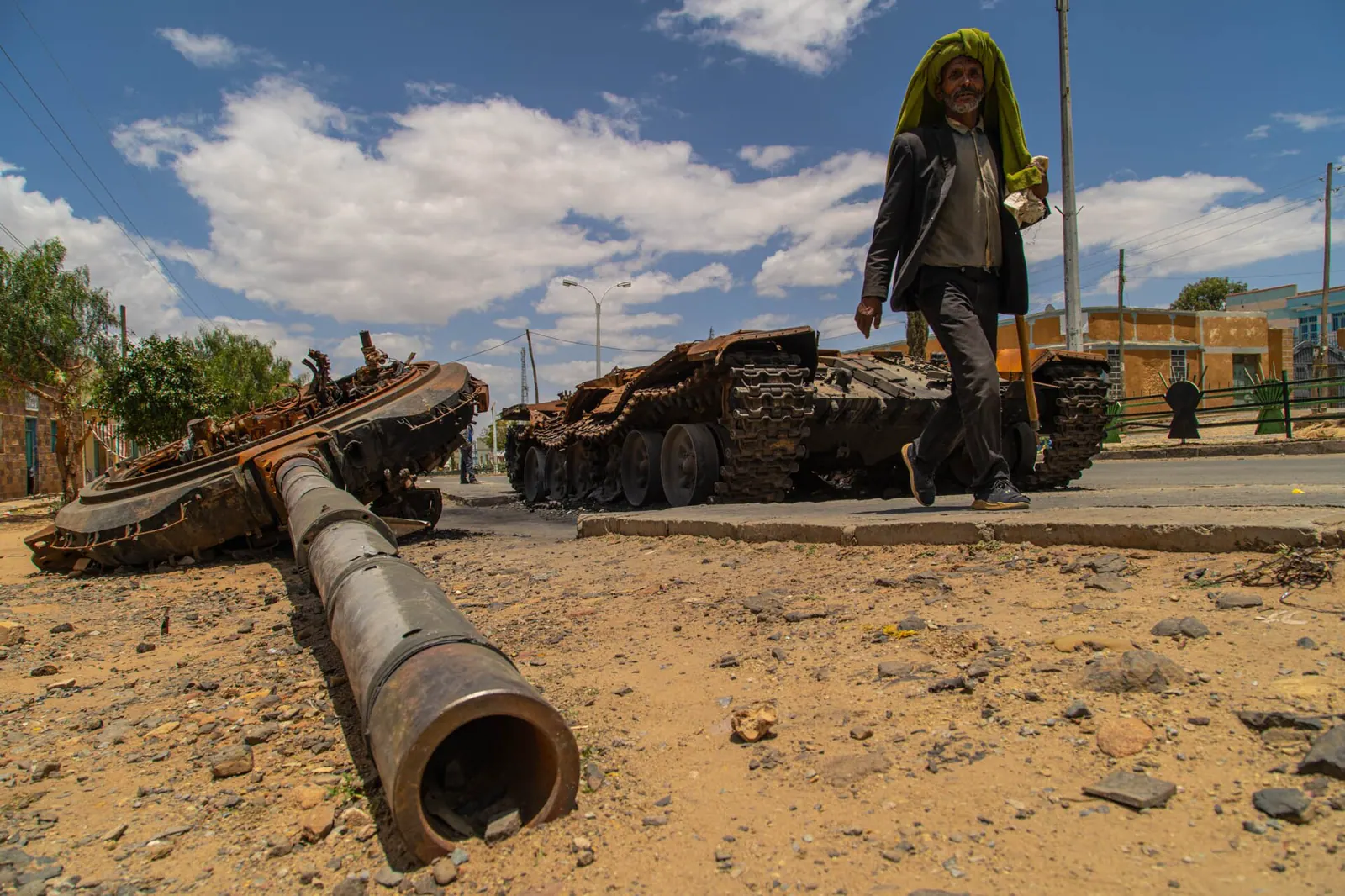
The Pretoria Cessation of Hostilities Agreement, signed in November 2022, was initially seen as a definitive roadmap toward peace in Ethiopia. However, the agreement did not resolve the country's core systemic collapse, but rather localized and delayed it. The structural fragmentation of the state's security architecture has now reached a critical flashpoint, with forces that fought on opposing sides during the Tigray war forging a sweeping, nationwide military coalition.
The coalition, known as the Ethiopian Peoples' Forces Alliance for Survival, brings together the Tigray People's Liberation Front (TPLF), the Amhara Fano national movement, the Oromo Liberation Army (OLA), the Ogaden National Liberation Front (ONLF), the Afar Revolutionary Democratic Unity Front (Ugugumo), the Benishangul Peoples' Liberation Movement, and the Gumuz Peoples' Democratic Movement. Their stated objective is the total military removal of Prime Minister Abiy Ahmed's federal government and the installation of an inclusive transitional charter.
The emergence of the Alliance for Survival completely upends the strategic math within Ethiopia. Historically, these factions have been locked in vicious, existential blood feuds. During the 2020-2022 Tigray war, Amhara Fano militias fought on the frontlines alongside the federal military to systematically crush Tigrayan forces. The conflict was defined by horrific, ethnically driven atrocities, millions of displaced people, and a bitter territorial dispute over Western Tigray.
Federal overreach and absolute political exclusion have achieved the seemingly impossible: turning yesterday's battlefield enemies into co-conspirators against the political centre. The initial cracks widened significantly in June 2026, when the federal government proceeded with a general election that was heavily boycotted by major opposition parties. Systemic intimidation, mass arrests of political dissidents, and a complete lack of independent oversight meant the opposition's withdrawal left an uncontested ballot.
The final diplomatic pillar collapsed when the TPLF officially declared that the Pretoria peace agreement is no longer valid. TPLF spokespersons confirmed to international monitors that the accord was spent, citing the federal government's failure to return displaced populations to their homes, resolve constitutional regional borders, and stabilize basic security infrastructure as promised. By treating the peace deal as void, the TPLF removed the last legal and diplomatic boundaries keeping them from aligning with active regional insurgencies.
The federal government's internal panic was evident in its response to the coalition's public launch. On September 20, 2026, Amhara Fano National Movement leader Zemene Kassie appeared on TPLF-controlled Tigray Television to formally read the alliance's joint declaration to the nation. The federal response was swift, punitive, and legally absolute, with the Ethiopian Media Authority suspending Tigray TV indefinitely and prohibiting all digital, broadcast, and print outlets from using the station as a source or redistributing its content.
The Ethiopian government is attempting to legislate the alliance out of public consciousness through a media crackdown. However, the structural disintegration of East Africa's most pivotal state threatens to pull its neighbors into a multi-theater regional war. The danger is no longer just localized ethnic insurgencies, but a far more complex and volatile situation that requires a comprehensive and inclusive solution.
Key points
- The Pretoria Cessation of Hostilities Agreement did not resolve Ethiopia's core systemic collapse.
- Forces that fought on opposing sides during the Tigray war have forged a sweeping, nationwide military coalition.
- The federal government's internal panic has led to a media crackdown, attempting to legislate the alliance out of public consciousness.