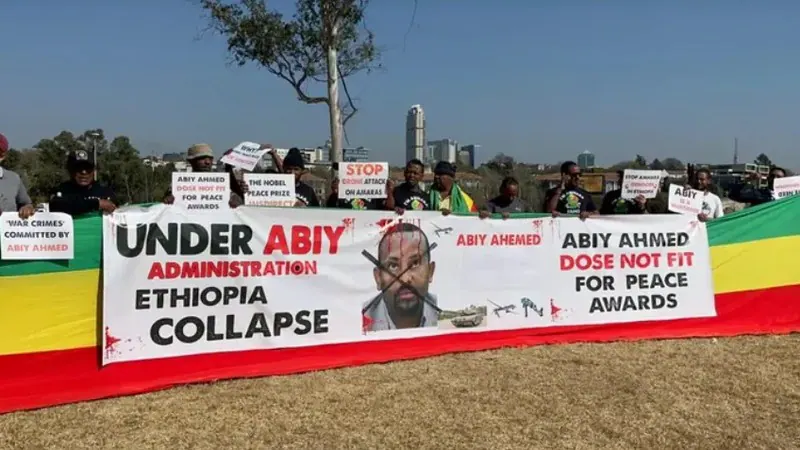
In a significant development, various Ethiopian opposition groups have formed an alliance against Prime Minister Abiy's government. The coalition includes Fano, the Oromo Liberation Army, and the Tigray People's Liberation Front (TPLF), among others. These groups have been at odds with the government for years, with some fighting insurgencies in different regions. The alliance was formed due to shared grievances against Abiy's government, which they accuse of war, genocide, and risking national disintegration.
The coalition's formation is a result of prolonged tensions between the groups and the government. Fano rose up against the government in 2023, refusing orders to disarm, while the Oromo Liberation Army has been at war with the state since 2018. The TPLF, which fought alongside federal forces against the TPLF during the Tigray war, had been in secret talks with Fano for over a year before announcing the alliance. This war killed up to 600,000 people and left deep scars of ethnic violence.
The alliance's unity is fragile, with history suggesting that unity against a common enemy rarely survives victory. Libya's post-Gaddafi factions and Syria's fractured opposition are examples of this. The coalition's structural weakness is evident in the different visions of its member groups on ethnic federalism and territorial administration. Fano and Oromo political forces hold sharply different views, and Tigrayan and Amhara forces still dispute control of Western Tigray.
Eritrea's role in the alliance is also a factor, with Abiy's spokesperson accusing the alliance of receiving Eritrean financial backing. Eritrea and the TPLF have been bitter adversaries since the 1998 to 2000 border war. However, reports of a tactical understanding between Asmara and elements of the TPLF have circulated, driven by mutual alarm at Abiy's ambitions toward the Red Sea port of Assab.
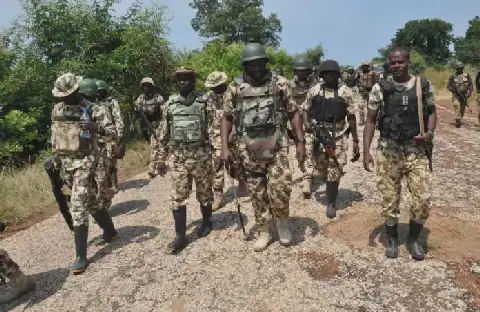
The alliance's military strength is a concern for Abiy's government, with armies that were built to fight the government's other enemies now answering to a shared command structure. The federal government's answer, an internal National Dialogue, has been dismissed by critics as lacking credibility. The country's most powerful armed movements sit outside it entirely, making the alliance's real test whether it can unite against Abiy and agree on what comes after him.
The coalition's leaders, including Fano's Zemene Kassie, have suggested that joint military operations may become necessary. This indicates that political cooperation alone may not hold the coalition together for long. The TPLF's Vice President Amanuel Assefa says that the current break with Addis Ababa didn’t happen overnight, but was built slowly out of shared grievance rather than shared history.
The implications of the alliance are significant, with Abiy's advisers dismissing it as capable of causing chaos but not of toppling the government. However, the alliance's formation has changed the arithmetic, and its real test will be whether Tigrayans, Amharas, and Oromos can agree on what comes after Abiy.
Key points
- The Ethiopian opposition groups have formed an unlikely alliance against PM Abiy's government.
- The coalition's unity is fragile due to different visions on ethnic federalism and territorial administration.
- Eritrea's role in the alliance is a factor, with accusations of financial backing and a tactical understanding with elements of the TPLF.