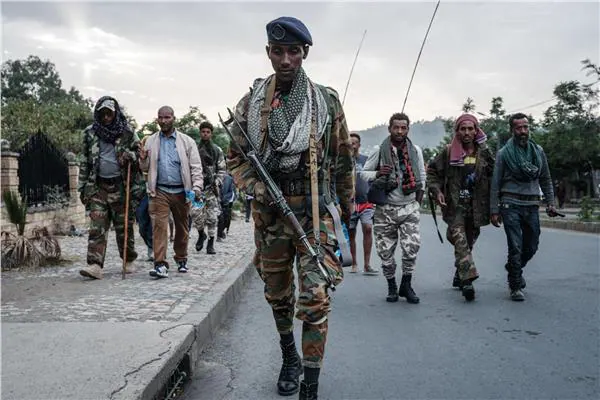
Ethiopia has entered a new phase of security and political tension, with escalating confrontations in the Tigray region and the formation of an alliance by 7 armed groups to overthrow Prime Minister Abiy Ahmed's government. This development comes after months of rising tension between the federal government and the Tigray People's Liberation Front (TPLF), which was a key party in the 2020-2022 war. The conflict had ended with the signing of the Pretoria peace agreement in November 2022.
In recent months, the Tigray region has witnessed a resurgence of tension between the TPLF and the federal government, following a period of relative calm after the Pretoria agreement. In May, the TPLF regained control of the region's political administration from the interim administration formed under the peace agreement. The federal government has considered this development a threat to the arrangements made under the agreement. Since then, concerns have grown about the potential for renewed conflict, particularly with clashes reported in various parts of Tigray and airstrikes by the Ethiopian military against TPLF forces.
On September 23, 2026, TPLF forces took control of the Mekele airport, according to local sources. This led the Ethiopian Airlines to suspend flights to Mekele, Shire, and Axum due to the security situation in the region. Reports also indicated clashes between TPLF forces and federal troops in the Afar region. The situation escalated further with the TPLF's announcement of joining a new armed alliance aimed at overthrowing Abiy Ahmed's government.
The alliance, described as unprecedented, brings together seven armed and political groups, including the TPLF, Fano movement in the Amhara region, the Oromo Liberation Army, and others. The groups have vowed to work together, potentially both politically and militarily, to achieve their goal. This development has raised concerns about the potential for wider conflict and instability in Ethiopia.
The Ethiopian government has faced several internal challenges, including a long-standing rebellion in the Oromia region, led by the Oromo Liberation Army, and a conflict with Fano forces in the Amhara region. These challenges were reflected in the June 2026 general elections, where voting was not possible in some areas due to security concerns. Despite this, Abiy Ahmed's Prosperity Party won a significant majority in the parliament.
The current situation in Tigray and the formation of the new alliance have raised questions about the effectiveness of the Pretoria peace agreement. The TPLF has stated that the agreement is no longer valid, while the federal government accuses various parties of violating it. The international community has expressed concern about the escalating violence and its potential impact on regional stability.
The Ethiopian government's ability to address these challenges and maintain stability in the country remains uncertain. The formation of the new alliance and the escalating clashes in Tigray have created a complex and volatile situation, with potential consequences for the entire region.
Key points
- The alliance of 7 armed groups aims to overthrow Prime Minister Abiy Ahmed's government.
- The TPLF has taken control of the Mekele airport, leading to the suspension of Ethiopian Airlines flights to the region.
- The Ethiopian government faces multiple internal challenges, including rebellions in Oromia and Amhara regions.