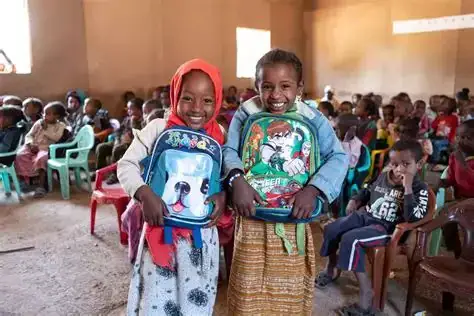
The Government of Ethiopia has initiated a polio vaccination campaign targeting 11.3 million children across five regions, including Addis Ababa, Oromia, Central Ethiopia, South Ethiopia, and Southwest Ethiopia. This effort is a collaboration with the World Health Organization, the United Nations Children Fund (UNICEF), and the Global Polio Eradication Initiative (GPEI) partners. The campaign aims to protect children from poliovirus infection and contribute to a polio-free future.
Dr. Loveday Nkwogu, representing Prof. Francis Kasolo, the World Health Organization (WHO) Representative to Ethiopia, emphasized the importance of collective action in protecting children from polio. The vaccination campaign will be implemented through house-to-house visits by health workers and community volunteers, administering life-saving polio vaccines to every eligible child. Additionally, the teams will identify zero-dose and under-vaccinated children and link them with routine immunization services.
The World Health Organization has deployed 28 central and field staff to support the vaccination campaign, providing technical assistance in coordination, advocacy, microplanning, and training of health workers. The campaign consists of two rounds, with the first round taking place from November 21-24, 2026, and the second round from December 18-21, 2026. This effort builds on previous successful vaccination campaigns conducted in Gambella, Benishangul Gumuz Region, and parts of Oromia region.
Despite Ethiopia remaining free of wild poliovirus, outbreaks of circulating variant poliovirus continue to pose a threat, particularly in areas with immunity gaps and high population movement. This year, cases of circulating variant poliovirus type 1 were reported in Gambella, Oromia, and South Ethiopia regions, highlighting the need for rapid and high-quality vaccination responses to protect children and stop transmission.
The current polio vaccination campaign aims to address the immunity gaps and prevent further transmission of the virus. The WHO and partners are also calling for increased efforts to strengthen vaccine-preventable surveillance alongside vaccination efforts. High-quality Acute Flaccid Paralysis (AFP) and environmental surveillance remain essential to rapidly detect and respond to any poliovirus transmission.
The World Health Organization continues to provide technical and operational support to the Government of Ethiopia, including planning, coordination, monitoring, supervision, and surveillance activities. Ethiopia joins the global community in reaffirming its commitment to ensuring that no child is missed, no community is left behind, and every child is protected from vaccine-preventable diseases.
The polio vaccination campaign is a significant step towards achieving a polio-free future for Ethiopia. The government, in collaboration with its partners, is working to ensure that every eligible child is reached and protected. The campaign's success will depend on the collective efforts of parents, community leaders, health workers, and partners in promoting the importance of vaccination and encouraging community participation.
Key points
- The Ethiopian government has launched a polio vaccination campaign targeting 11.3 million children across five regions.
- The campaign aims to protect children from poliovirus infection and contribute to a polio-free future.
- The World Health Organization is providing technical and operational support to the government, including planning, coordination, and surveillance activities.
Reporting sources
- Ethiopia to vaccinate 11.3 million children against Polio · The Tanzania Times – News from Tanzania, Africa, World, Breaking News, Weather, Environment and Climate Change