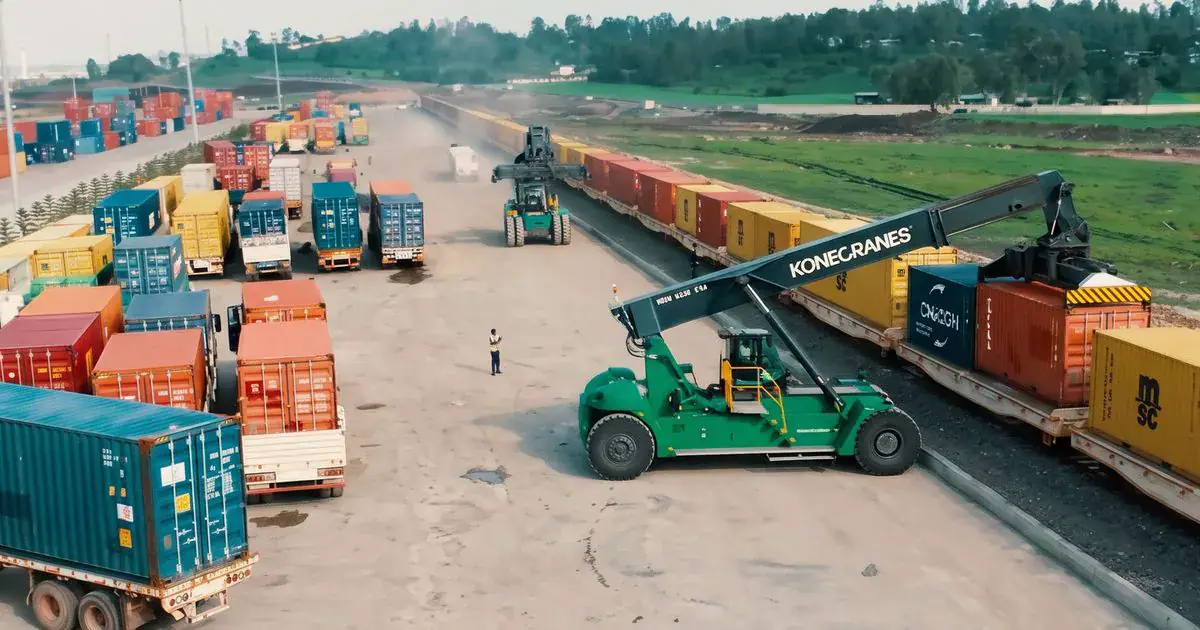
The Ethiopian government has taken a significant step to alleviate supply chain bottlenecks in the country by designating the Galaan Multipurpose Port (GMP) as a Multimodal Logistics Hub Destination. Located just outside the capital, Addis Ababa, the facility will enable direct connection of Ethio-Djibouti freight trains to local trucks, reducing importer delays and congestion at the main dry port. This development is expected to have a positive impact on the country's trade and economy.
Previously, cargo arriving from the coast had to go through a fragmented system of multiple transport contracts and paperwork handoffs before being loaded onto an Ethiopian truck. The new multimodal status at Galaan allows businesses to ship containers from Asia or Europe to the terminal under a single transport contract and bill of lading. The railway will handle cross-border transport, and once the cargo reaches Galaan, it will seamlessly transfer to road transport for final delivery.
The Galaan terminal's upgrade is a critical development for Ethiopia's economy, as the majority of the country's inbound container traffic is currently forced through a single chokepoint: the Modjo Dry Port. The Modjo Dry Port handles over 78 percent of the nation's imports, and Djibouti processes 96.7 percent of Ethiopia's total trade cargo, moving 17.6 million tonnes of goods annually. The congestion at Modjo frequently traps factory machinery and consumer goods in long queues.
The Ethio-Djibouti Railway Share Company (EDR) has made significant strides in efficiency over the last two years, growing its share of Ethiopia's exports from 9 percent to 50 percent and carrying 3.2 million tonnes of cargo in 2025. By reinforcing the strategic link between the electrified railway and domestic trucking at Galaan, planners aim to directly attack high logistics costs that have historically inflated the price of everyday goods.
The new rail hub is part of Ethiopia's ongoing shift from diesel trucks to electric rail. The government has been working to build the physical plumbing needed to make Ethiopian trade faster, cheaper, and more globally competitive. The development of the Galaan terminal is expected to have a positive impact on the country's trade and economy, making it easier and more efficient for businesses to import and export goods.
The launch of the Galaan Multipurpose Port as a multimodal logistics hub is a significant step towards reducing port delays and boosting trade in Ethiopia. The facility will enable the country to handle integrated multimodal operations, reducing congestion and delays. This development is expected to have a positive impact on the country's economy, making it more competitive and attractive to investors.
The Ethiopian government's efforts to improve the country's trade and logistics infrastructure are ongoing. The development of the Galaan terminal is just one example of the government's commitment to making Ethiopian trade faster, cheaper, and more globally competitive. With the country's economy expected to continue growing, the demand for efficient logistics and trade infrastructure will only increase.
Key points
- The Galaan Multipurpose Port has been designated as a Multimodal Logistics Hub Destination to streamline the import-export process and reduce delays.
- The new rail hub will enable direct connection of Ethio-Djibouti freight trains to local trucks, reducing congestion at the main dry port.
- The development of the Galaan terminal is part of Ethiopia's ongoing shift from diesel trucks to electric rail.