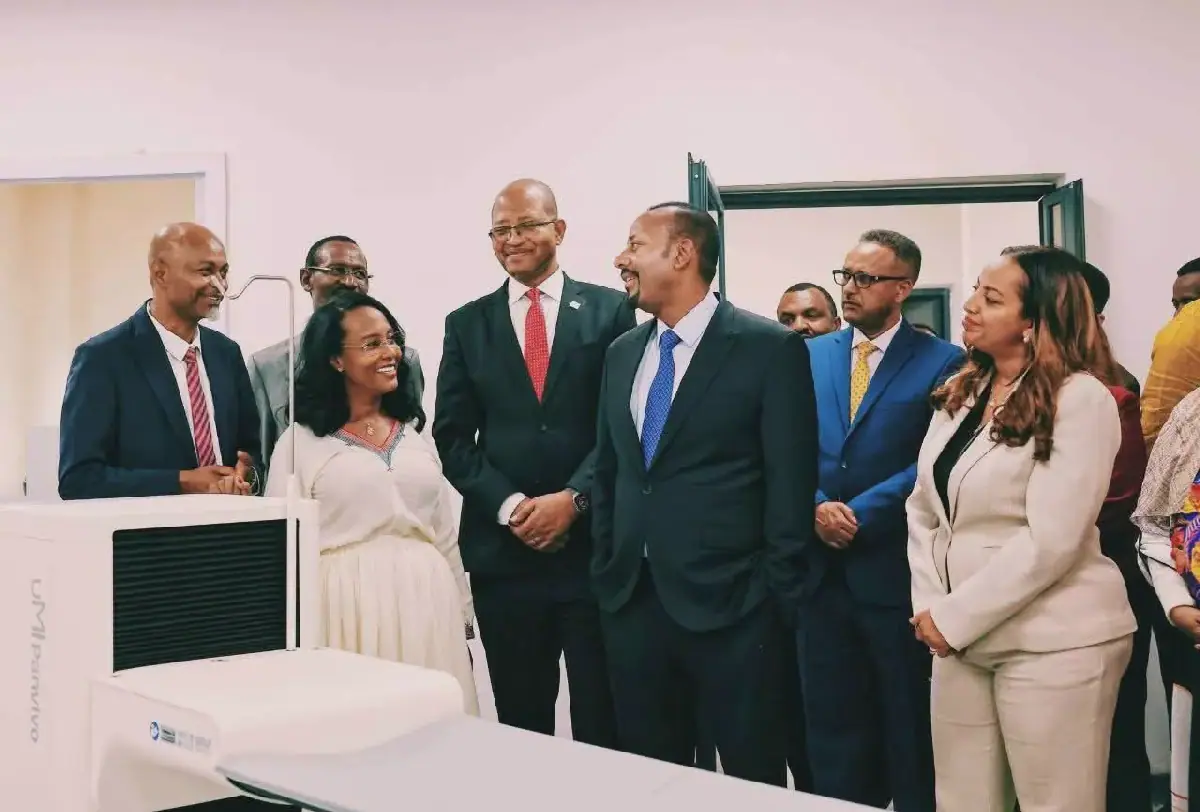
Ethiopia's healthcare sector has undergone significant transformations, leveraging modern technology and artificial intelligence to improve medical services. The country has introduced advanced technologies such as X-rays, CT scans, and MRIs, enabling accurate diagnoses without invasive procedures. Robot-assisted surgeries have also reduced recovery time and minimized pain for patients. Many countries have successfully performed organ transplants, and Ethiopia is following suit.
Addis Ababa, the capital city, is being developed into a premier medical hub, not only for its residents but also for foreign nationals. The city is constructing state-of-the-art hospitals and upgrading existing ones to provide top-notch medical services. This development aims to reduce the need for Ethiopians to travel abroad for medical treatment. New hospitals, such as the Abebech Gobena Mothers and Children's Hospital, Lafto Specialized Hospital, and Kolfe Specialized Hospital, have been built in recent years.
The expansion of medical services in Addis Ababa includes the construction of nine new health centers and the renovation of over 40 existing health posts. The number of hospital beds has increased, more than doubling in the past five years. Medical services have also become more digitized, reducing the need for human intervention. The government has been actively working to improve the healthcare sector, and the private sector is also playing a significant role in the development of medical services.
Ethiopia has made significant progress in introducing advanced medical technologies, including MRI, AI-assisted digital X-rays, cancer and heart disease treatment, and modern laboratory services. The country has also established forensic chemistry and DNA testing services, as well as kidney dialysis and forensic services. These advancements have reduced the need for medical travel abroad.
The introduction of advanced medical services, such as heart and kidney transplants, cancer treatment, and orthopedic surgeries, has significantly reduced the number of Ethiopians traveling abroad for medical treatment. The development of medical tourism in Addis Ababa is expected to attract foreign investment, further enhancing the city's reputation as a medical hub.
To further solidify its position as a medical hub, Ethiopia plans to streamline medical visa issuance and integrate its healthcare system with international institutions. The government is working to establish a medical tourism industry, which will not only improve healthcare services but also contribute to the country's economy.
In addition to its efforts to improve medical services, the Ethiopian government is also focusing on preventing and controlling non-communicable diseases. The government is working to strengthen its healthcare system, ensuring that it can provide high-quality medical services to its citizens and attract medical tourists from across Africa.
Key points
- Ethiopia is working to make Addis Ababa a top medical destination in Africa by introducing advanced medical technologies and improving healthcare services.
Reporting sources
- አዲስ አበባን የአፍሪካ የሕክምና ማዕከል ለማድረግ መሰረት ተጥሏል · Addis Media Network