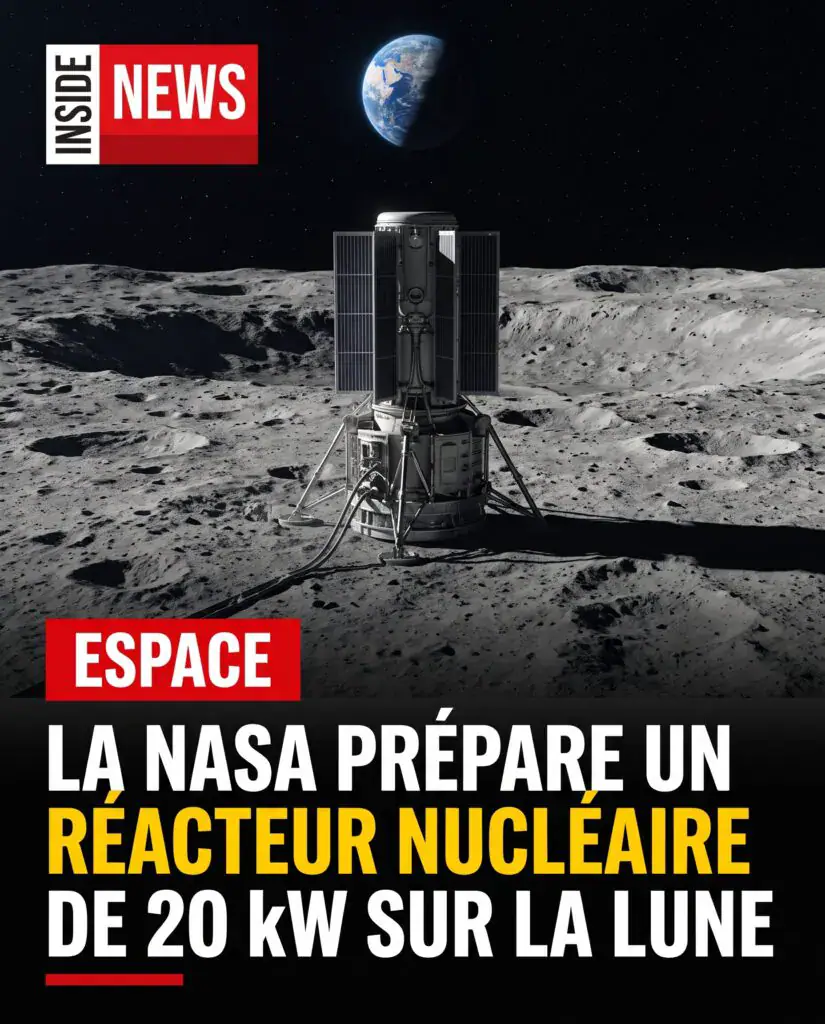
NASA has initiated a call for industry proposals to develop Lunar Reactor-1, a compact nuclear fission system designed to generate electricity on the Moon. The agency aims to have the system ready for launch by 2030 and operational for at least five years. This project, unveiled on November 23, 2026, targets a power output of 20 kilowatts, equivalent to the annual energy consumption of approximately 16 average American households.
The Lunar Reactor-1 project addresses the limitations of solar power on the Moon, where a lunar night lasts about 14 Earth days. In areas with limited sunlight or in shadow, solar panels cannot provide continuous power without substantial energy storage systems. A nuclear reactor can offer stable power independent of sunlight, which is crucial for sustained human presence and operation of essential equipment.
The reactor is expected to support various lunar activities, including habitats, communication systems, vehicles, scientific instruments, and other critical equipment. NASA requires the system to meet the nuclear safety standards set by the US Department of Energy. The agency is seeking proposals from industries until December 21, with the project's development still in the conceptual and testing phases.
The lunar nuclear reactor project is part of NASA's broader efforts to establish a sustainable presence on the Moon and beyond. Similar nuclear technologies are being explored for Mars missions, where dust storms and distance from the Sun can significantly reduce solar power generation. The development of these technologies is also seen as a geopolitical imperative, with implications for international cooperation and safety.
A reliable lunar energy source could enhance the autonomy of future lunar bases, facilitate scientific research, and improve communication systems. However, it also raises concerns about safety, responsibility, and international cooperation. The 2030 target for a launch-ready system is ambitious and contingent on successful testing, funding, and regulatory approvals.
NASA's lunar reactor project complements its other initiatives, such as Space Reactor-1 Freedom, slated for a 2028 launch. This project aims to demonstrate nuclear electric propulsion and transport capabilities, including the deployment of three SkyFall helicopters to Mars. The development of nuclear power systems is critical for deep space missions, where solar power may not be viable.
The successful development and deployment of Lunar Reactor-1 could pave the way for more ambitious space exploration and utilization. Key to this endeavor is the collaboration between NASA and industry partners, which will be crucial in overcoming the technical and regulatory challenges associated with nuclear power in space. The project's progress will be closely watched as it advances through the proposal and development phases.
Key points
- NASA aims to launch Lunar Reactor-1 by 2030 to provide stable power for lunar operations.
- The reactor's design must meet US Department of Energy nuclear safety standards.
- Similar nuclear technologies are being explored for future Mars missions.