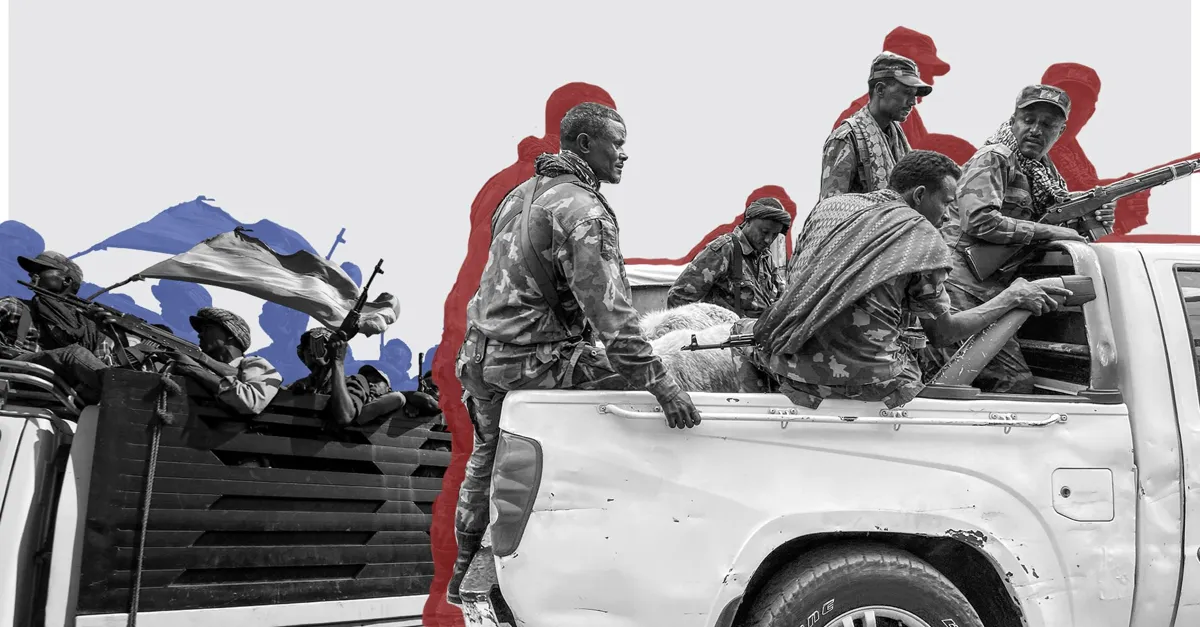
The Ethiopian crisis has entered a new phase of escalation, posing a significant threat to the Horn of Africa. The collapse of the 2022 Pretoria peace agreement and renewed clashes between federal government forces and the Tigray People's Liberation Front (TPLF) have raised concerns. According to the Council on Foreign Relations (CFR), the TPLF has formed an alliance with other armed groups to overthrow Prime Minister Abiy Ahmed. This development has sparked fears of a wider conflict.
On September 20, 2026, the TPLF announced the formation of the "Ethiopian People's Forces for Survival" coalition, comprising seven armed and political groups. The coalition's primary objective is to topple the federal government led by Abiy Ahmed. In response, government forces launched an airstrike on a residential area in Tigray, injuring 13 civilians. The Ethiopian government has since taken measures to restrict media coverage, suspending the broadcast of Tigray TV.
The conflict has spread to the Afar region, with clashes reported in areas such as Abala, Mijay, and Wusim. The TPLF and its allies have made significant gains, capturing key airports in regions like Mekele, Axum, and Shair. These developments have prompted the United Nations Secretary-General, António Guterres, and the African Union to express their deep concern over the escalation of violence and seizure of airports.
On September 24, 2026, the TPLF declared a "total war" against the federal government, leading to the expansion of fighting into the Amhara region and the suspension of flights at Lalibela airport. According to Acleddata, a conflict monitoring organization, the TPLF's advance into Afar reflects its strategy to disrupt supply lines to Addis Ababa. The conflict has significant implications for the region, with potential disruptions to fuel and import supplies passing through Djibouti.
In an effort to regain control, the federal government has cut off communication and internet services in Tigray. The move has been accompanied by intense fighting and drone strikes in areas like Shiraro. The conflict has also attracted new actors, with the Sidama National Liberation Front announcing its joining of the TPLF-led coalition.
The humanitarian situation is deteriorating, with reports of hundreds of casualties and displaced persons. Médecins Sans Frontières (MSF) has received numerous wounded and injured individuals, while the International Committee of the Red Cross has evacuated over 161 people from conflict zones to the Afar region. The conflict continues to spread, with clashes reported in areas like Sikota.
The international community remains concerned about the escalation of violence in Ethiopia. The conflict has significant implications for regional stability, with potential spillover effects into neighboring countries. The situation remains fluid, with ongoing fighting and humanitarian concerns.
Key points
- The conflict in Ethiopia has spread beyond Tigray, threatening regional stability.
- The TPLF has formed an alliance with other armed groups to overthrow Prime Minister Abiy Ahmed.
- The humanitarian situation is deteriorating, with reports of hundreds of casualties and displaced persons.