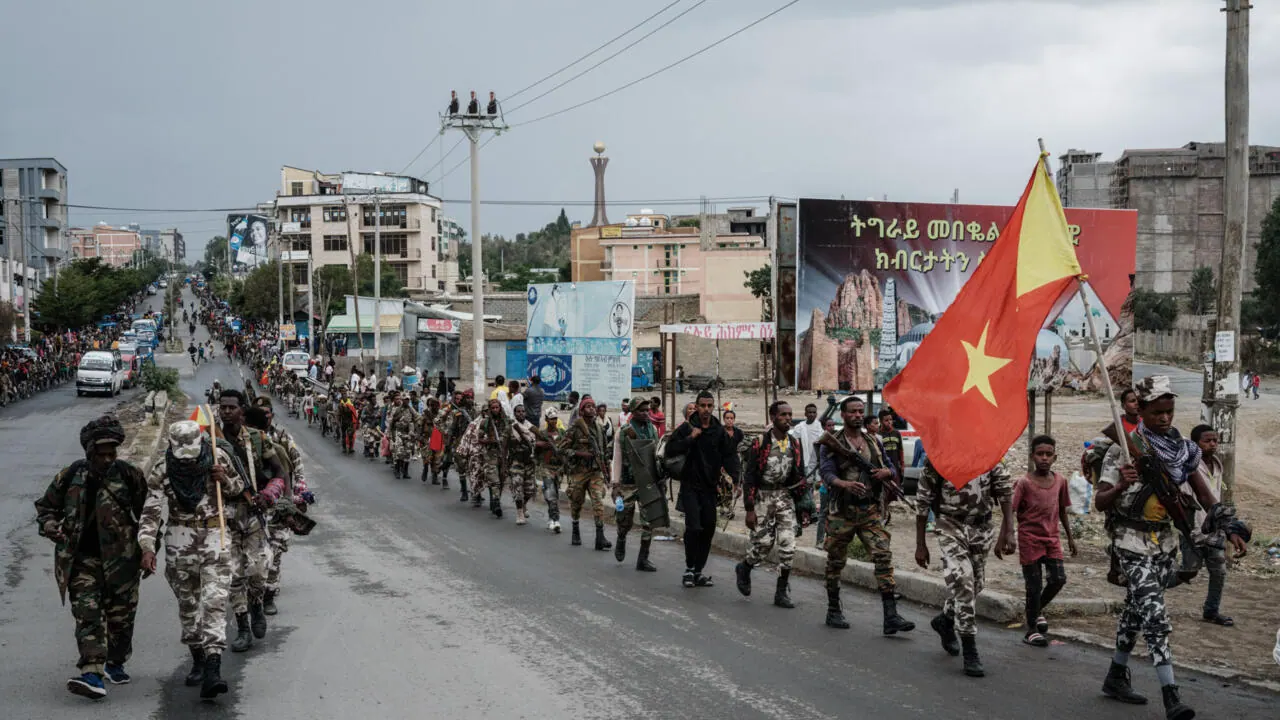
Ethiopia's army chief, Field Marshal Birhanu Jula, has accused Eritrea and Sudan of supporting armed groups attacking government forces in the northern region of Tigray. This accusation comes amid intense fighting between the Tigray People's Liberation Front (TPLF) and the federal government, sparking fears of a resurgence of the civil war that claimed around 600,000 lives from 2020 to 2022. The conflict has led to significant displacement, with around 150,000 people reportedly displaced in Afar due to the fighting.
The TPLF claims it is conducting a "defensive war" against Prime Minister Abiy Ahmed's government, having seized airports and launched strikes into the Afar and Amhara regions. A humanitarian source reported that the town of Erebti in Afar fell to TPLF rebels after heavy shelling, with the group now advancing towards Afdeera, about 100 kilometres east. The TPLF's actions aim to cut off supplies from Djibouti, crucial for Ethiopia's trade, and have allied with seven other armed groups, mirroring tactics from the previous conflict.
The conflict has resulted in significant disruptions, including a drone strike on the headquarters of Tigrai TV, a key media outlet for the TPLF in Mekelle. A journalist confirmed they heard an explosion and fled the building; subsequently, the station was rendered off-air. The federal government previously suspended the station indefinitely and prohibited other media from broadcasting its content. Since Friday, communication in Tigray has been severely disrupted, complicating efforts to report on the conflict.
There are concerns of a repeat of the blockade experienced during the last civil war, which saw essential services and aid supply cut off. United Nations Secretary-General Antonio Guterres expressed alarm over reports of drone use and threats to civilians. The Ethiopian government, despite having substantial military assets, including drones and a force of about 500,000 troops, may face increased involvement from Eritrea, which fears Ethiopia's ambitions to control access to the Red Sea.
The TPLF's previous governance lasted from 1991 until 2018, when they were ousted during Abiy's rise, triggering a violent conflict characterised by war crimes and sexual violence. The Pretoria Peace Agreement of 2022 brought a temporary calm; however, it was never fully implemented, leaving many unable to return home and sparking sporadic clashes as tensions rise again. Rights groups allege that the TPLF has begun forced recruitment in anticipation of further conflict.
The conflict has significant implications for the region, with potential for escalating violence and humanitarian crises. The international community is closely monitoring the situation, with concerns about the impact on civilians and regional stability. The Ethiopian government and the TPLF must navigate a complex web of alliances and rivalries to find a peaceful resolution to the conflict.
As the situation continues to unfold, the humanitarian situation is likely to deteriorate, with thousands of civilians already displaced and affected by the fighting. The international community must remain engaged and provide support to those affected by the conflict, while also encouraging the parties to find a peaceful resolution to the crisis.
Key points
- Ethiopia's army chief accuses Eritrea and Sudan of backing Tigray rebels amid renewed clashes.
- The conflict has resulted in significant displacement, with around 150,000 people reportedly displaced in Afar.
- The international community is closely monitoring the situation, with concerns about the impact on civilians and regional stability.