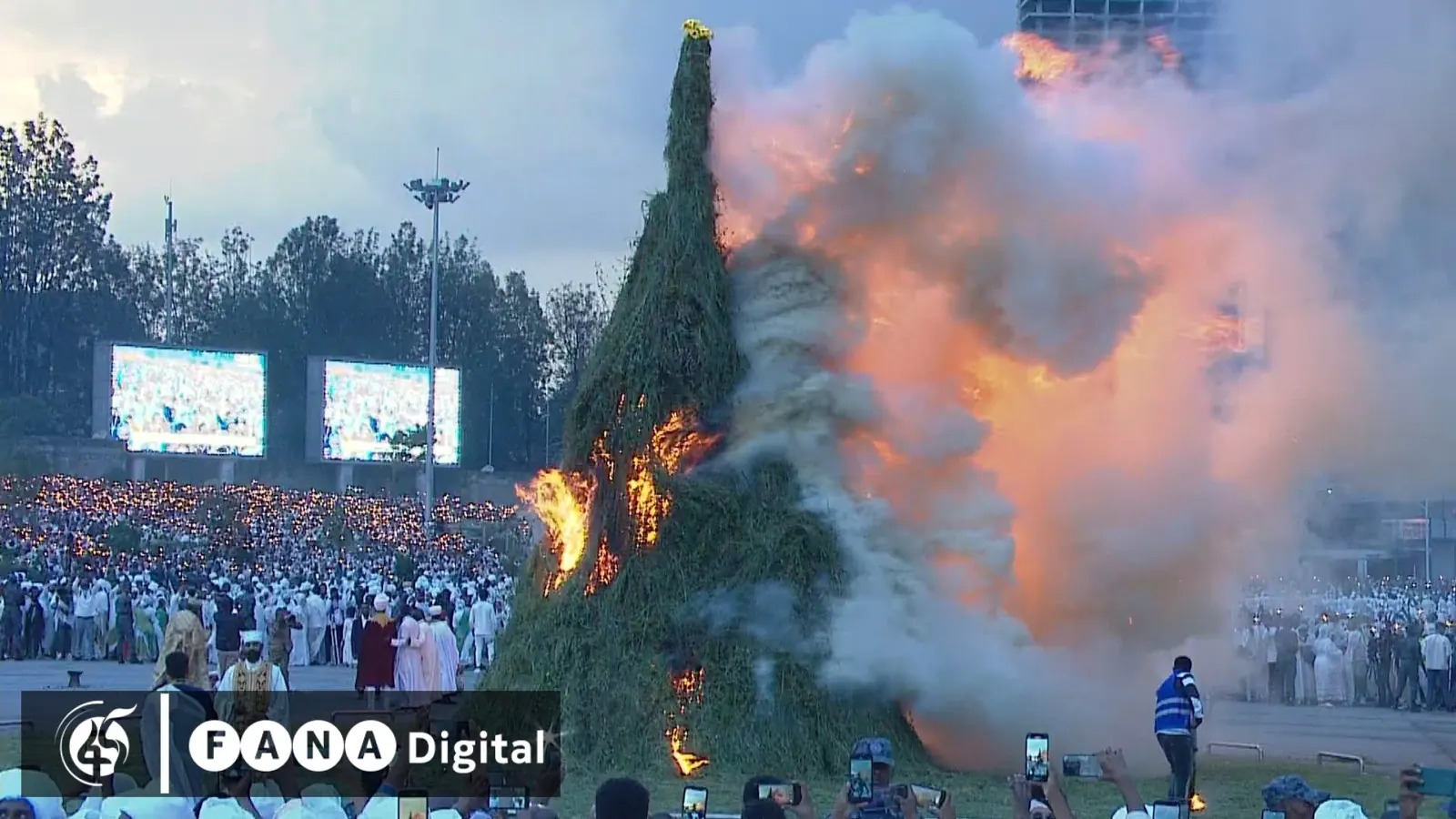
The Ethiopian Orthodox Tewahedo Church celebrates Meskel, one of its most significant annual festivals, on September 27. Meskel commemorates the discovery of the True Cross, on which Jesus Christ was crucified, died, and was resurrected, saving humanity. The church attaches great importance to the cross, viewing it as a symbol of Christ's sacrifice and redemption. According to church teachings, the cross is a powerful reminder of Christ's love and mercy.
The legend of Meskel dates back to the 4th century when Queen Helena, mother of Emperor Constantine, embarked on a journey to Jerusalem to find the True Cross. According to tradition, Queen Helena was guided by a divine vision and the help of an angel to locate the cross. After extensive excavations, the cross was finally discovered on March 10, 326 AD. The site where the cross was buried was previously used as a garbage dump, but Queen Helena's perseverance led to its rediscovery.
The Meskel celebration is marked by the lighting of a bonfire, known as "demera," which symbolizes the fire that Queen Helena lit to guide her to the cross. The demera is typically lit in the evening, and people gather around it to sing hymns and pray. The festival is a time for spiritual reflection, unity, and rejoicing in the triumph of good over evil. According to church officials, the Meskel celebration is a testament to the enduring power of faith and the significance of the cross in Christian tradition.
The Meskel festival has significant cultural and historical importance in Ethiopia, with the country's unique traditions and customs adding to its richness. The festival is a time for families and communities to come together, share food and drink, and celebrate the unity and love that the cross represents. The Ethiopian Orthodox Church plays a vital role in preserving and promoting the country's cultural heritage, with Meskel being one of its most cherished festivals.
The Meskel celebration has also become an important tourist attraction, with visitors from around the world flocking to Ethiopia to experience the country's vibrant culture and traditions. The festival has been recognized by UNESCO as an Intangible Cultural Heritage of Humanity, highlighting its significance as a unique and valuable aspect of Ethiopia's cultural identity.
As Ethiopians celebrate Meskel, they reflect on the values of faith, unity, and hope that the festival represents. The cross is seen as a powerful symbol of redemption and salvation, and its discovery is celebrated as a triumph of good over evil. The festival is a time for spiritual renewal and rejuvenation, as well as a celebration of Ethiopia's rich cultural heritage.
In the spirit of Meskel, Ethiopians come together to wish each other well, make plans for the future, and reaffirm their commitment to the values of love, compassion, and unity. As the demera burns brightly, it is a reminder of the light of hope and faith that guides the country and its people. With its unique blend of spirituality, culture, and tradition, Meskel is a truly unforgettable experience that showcases the best of Ethiopia.
Key points
- The Meskel festival commemorates the discovery of the True Cross and is a significant celebration in the Ethiopian Orthodox Church.
- The festival is marked by the lighting of a bonfire, known as "demera," which symbolizes the fire that Queen Helena lit to guide her to the cross.
- Meskel has been recognized by UNESCO as an Intangible Cultural Heritage of Humanity, highlighting its significance as a unique and valuable aspect of Ethiopia's cultural identity.