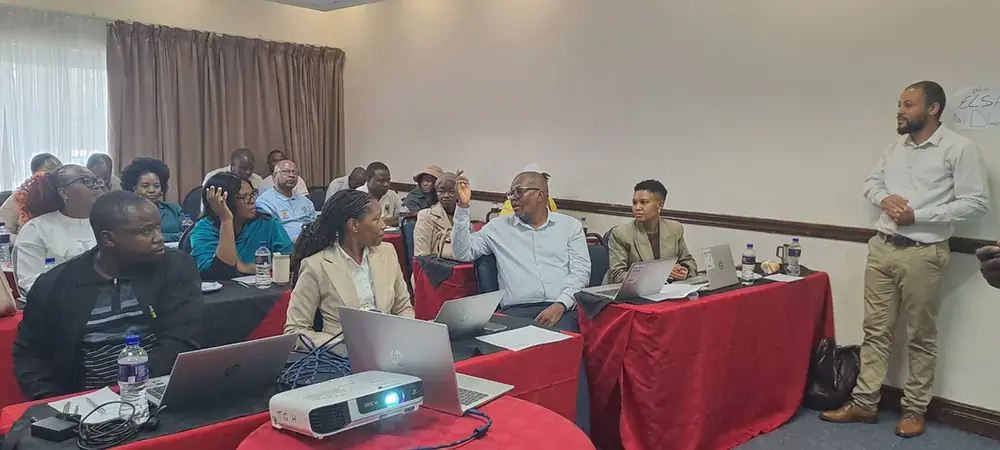
Eswatini is enhancing its public health surveillance and response systems to ensure early detection and timely management of disease outbreaks. The Ministry of Health, in conjunction with the National Disaster Risk Management Authority, recently organized a workshop to strengthen the country's ability to identify, report, and respond to priority diseases. The Integrated Disease Surveillance and Response strategy is being used to detect potential threats early at community, health facility, and national levels.
The strategy involves identifying cases and events, reporting, data analysis, and interpretation, as well as investigations. Investigations can involve individual case investigations or broader outbreak investigations, depending on the nature of the health threat. Indicator-Based Surveillance and Event-Based Surveillance are two important surveillance approaches used under the strategy. These approaches complement each other in strengthening early warning systems and epidemic intelligence.
Indicator-Based Surveillance involves collecting structured information using specific variables and indicators, while Event-Based Surveillance relies on unstructured or ad hoc information, particularly when unusual health events or potential disease threats are identified. Both approaches are crucial in ensuring that health authorities receive information about possible outbreaks quickly. The strategy is also part of Eswatini's preparedness obligations under the International Health Regulations.
The International Health Regulations require countries to develop the necessary capacities to detect, assess, report, and respond to public health emergencies. Eswatini is preparing for possible public health emergencies, including the threat of ebola, by understanding the situation and its spread across Africa. The country aims to be ready to respond should a case be detected. Effective community communication is essential in disease surveillance and outbreak preparedness.
Communities need to understand how to recognize possible warning signs, report suspected cases, and alert relevant authorities when encountering unusual health events. Ordinary citizens play a crucial role in early detection, which does not solely depend on health facilities and national institutions. The overall objective is to ensure that the country has the necessary systems and capacities to identify potential health threats, communicate information promptly, and initiate appropriate responses.
Eswatini's preparedness is linked to its obligations under the International Health Regulations, particularly the need to detect and report public health threats before they become international emergencies. The framework provides international standards for countries to identify, assess, report, and respond to public health threats. Countries need functional surveillance systems to determine the extent of a public health threat.
The International Health Regulations were revised in 2005 to strengthen the international response to public health threats. Understanding the history of public health emergencies, including the H1N1 influenza pandemic, polio, Ebola outbreaks, and COVID-19, is essential in appreciating why countries need to prepare in advance. Strengthening surveillance and response capacities is necessary to ensure that Eswatini can respond effectively to public health emergencies.
Key points
- Eswatini is strengthening its public health surveillance and response systems to detect and manage disease outbreaks early.
- The country is preparing for possible public health emergencies, including the threat of ebola.
- Effective community communication is essential in disease surveillance and outbreak preparedness.