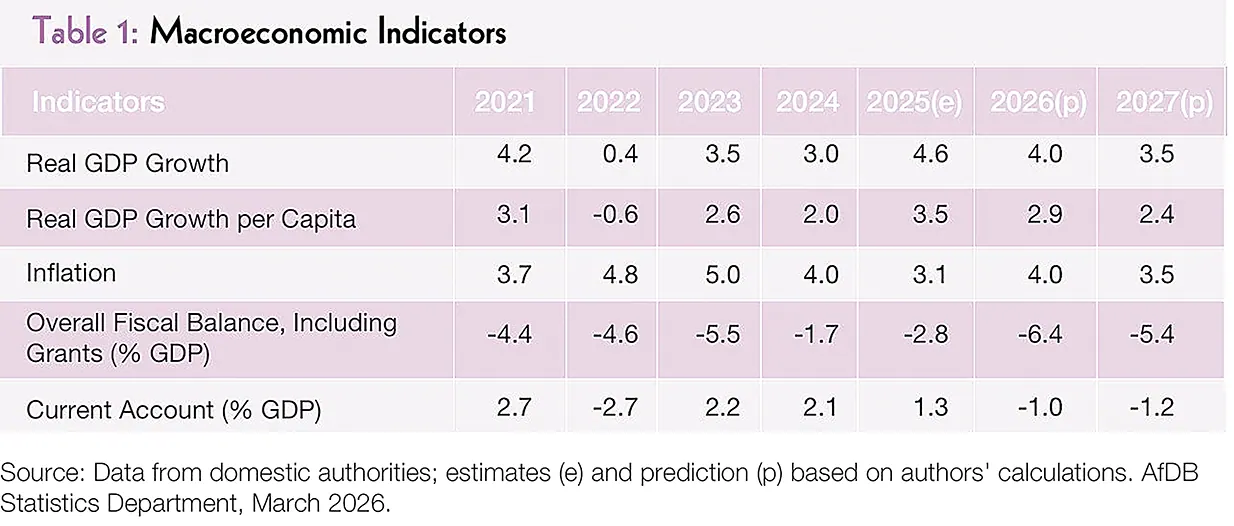
Eswatini's economy demonstrated significant strengthening in 2025, with real gross domestic product (GDP) growth accelerating to an estimated 4.6 per cent, up from 3.0 per cent in 2024. This growth was primarily supported by the services sector, construction, and increased public investment. The African Development Bank (AfDB) Country Focus Report 2026 highlights this positive trend, but also cautions that the recovery remains vulnerable to various pressures.
The AfDB report, titled Mobilising Eswatini’s Development Financing at Scale in a Fragmented World, identifies resilience as a central feature of the country’s economic trajectory. However, this resilience is considered fragile due to structural constraints within the economy. These constraints include a narrow production base, weak transmission of credit to the private sector, and high levels of informality, which limit private-sector dynamism and domestic resource mobilisation.
The services sector remained the main engine of growth during 2025, with wholesale and retail trade, transport, information and communication services, and financial activities supporting economic expansion. The construction sector also rebounded as delayed public infrastructure projects progressed, while manufacturing recorded modest gains. Additionally, export-oriented sectors such as sugar, textiles, forestry, and food processing benefited from stable regional demand and improved performance.
Agriculture partially recovered in 2025 following improved rainfall and expanded irrigation, although mining activity remained subdued. On the demand side, increased public investment was a major contributor to growth, alongside a gradual recovery in private investment. Capital projects in transport, water, energy, and social infrastructure generated spillovers into construction and services, further boosting economic activity.
Despite the positive growth, the AfDB report highlights an important limitation: the import-intensive nature of public investment reduced the amount of value generated domestically. Higher imports linked to capital spending offset export gains, meaning net exports contributed little to overall growth. This has led the AfDB to argue that Eswatini needs to strengthen domestic value addition, improve export competitiveness, and reduce its reliance on import-intensive sources of growth.
The report also notes that medium-term prospects for Eswatini's economy remain positive but are exposed to climate and external risks. Fiscal and financing pressures continue to pose significant challenges, and the country's ability to sustain growth will depend on its capacity to address these structural issues. The AfDB's findings underscore the need for strategic interventions to enhance the economy's resilience and promote sustainable development.
The AfDB's assessment provides a comprehensive overview of Eswatini's economic performance and prospects. By addressing the identified challenges and leveraging opportunities for growth, Eswatini can work towards achieving more sustainable and inclusive economic development. The country's economic trajectory will likely be influenced by its ability to mobilise development financing and implement policies that support private-sector growth and domestic resource mobilisation.
Key points
- Eswatini's economy grew 4.6% in 2025, driven by services, construction, and public investment.
- The recovery remains vulnerable to fiscal pressures, weak private-sector financing, and external shocks.
- The country needs to strengthen domestic value addition, improve export competitiveness, and reduce reliance on import-intensive sources of growth.