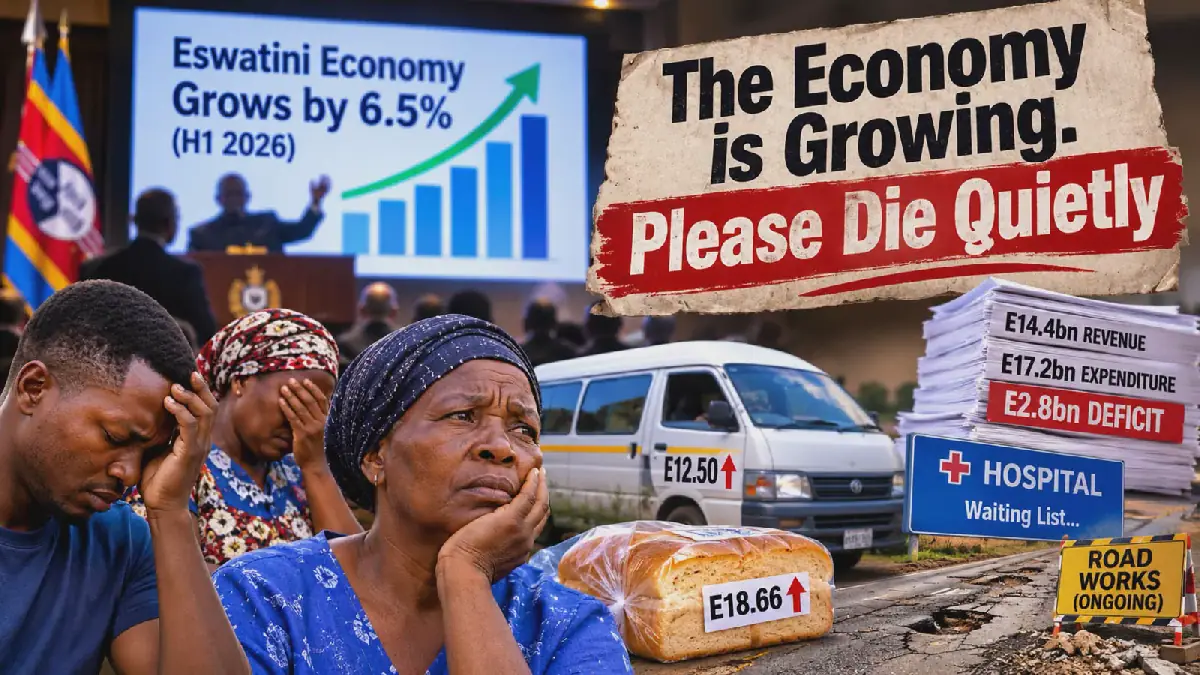
Eswatini's economy experienced a 6.5% growth in the first half of 2026, according to reports. However, this growth has not translated to improved living standards for citizens. Instead, bread prices have risen from E17.90 to E18.66, and kombi fares have increased from E10 to E12.50 for the first eight kilometers. These rising costs are putting a strain on citizens who are already struggling to make ends meet.
The government's financial situation is also precarious, with a E2.8 billion hole in the budget after collecting E14.4 billion and spending E17.2 billion in the first six months of the financial year. This is a significant increase from last year's deficit. The government has budgeted E7.79 billion for capital projects, but only 24% of this amount had been spent by September. This has resulted in delayed payments to contractors and unfinished projects, including two roads in Siteki that have been stalled due to cash flow problems.
The public services sector is also facing significant challenges. Fewer than 33% of cardiac referrals were completed, leaving patients in need of specialist care waiting for treatment. The Phalala Fund, which is used to support healthcare, had E189.83 million, but by September 22, E178.79 million had been spent, including E101 million on previous debts. This has resulted in a shortage of medical supplies and equipment, with laboratories facing broken equipment and shortages of reagents.
The healthcare sector is not the only one facing challenges. Childhood immunization programs have been affected by transport, fuel, and staffing difficulties, resulting in vaccines sitting cold in fridges while children remain unreached. The state broadcaster has also struggled financially, relying on an overdraft while operating from borrowed studio space. These challenges highlight the need for the government to prioritize public services and address the financial constraints facing citizens.
Despite these challenges, the government is expected to celebrate the economic growth with a PowerPoint presentation. However, critics argue that this growth is not meaningful if it does not translate to improved living standards for citizens. The economy can expand while families become poorer and public services deteriorate. This has raised concerns about the accuracy of the growth figure and the need for a more nuanced understanding of the economy.
The situation in Eswatini highlights the need for the government to prioritize the needs of its citizens. The economy should serve the people, not the other way around. The government needs to address the financial constraints facing citizens, improve public services, and ensure that economic growth is inclusive and sustainable. This will require a comprehensive approach that addresses the root causes of poverty and inequality.
In conclusion, Eswatini's economic growth is not a cause for celebration, given the rising costs of living and deteriorating public services. The government needs to take a closer look at the numbers and ensure that economic growth is translating to improved living standards for citizens. This will require a commitment to prioritizing public services, addressing financial constraints, and promoting inclusive and sustainable economic growth.
Key points
- The economy grew by 6.5% in the first half of 2026, but citizens face rising costs of living and deteriorating public services.
- The government's financial situation is precarious, with a E2.8 billion hole in the budget.
- Public services, including healthcare and education, are facing significant challenges due to financial constraints.
Reporting sources
- The economy is growing. Please die quietly · Times of Swaziland