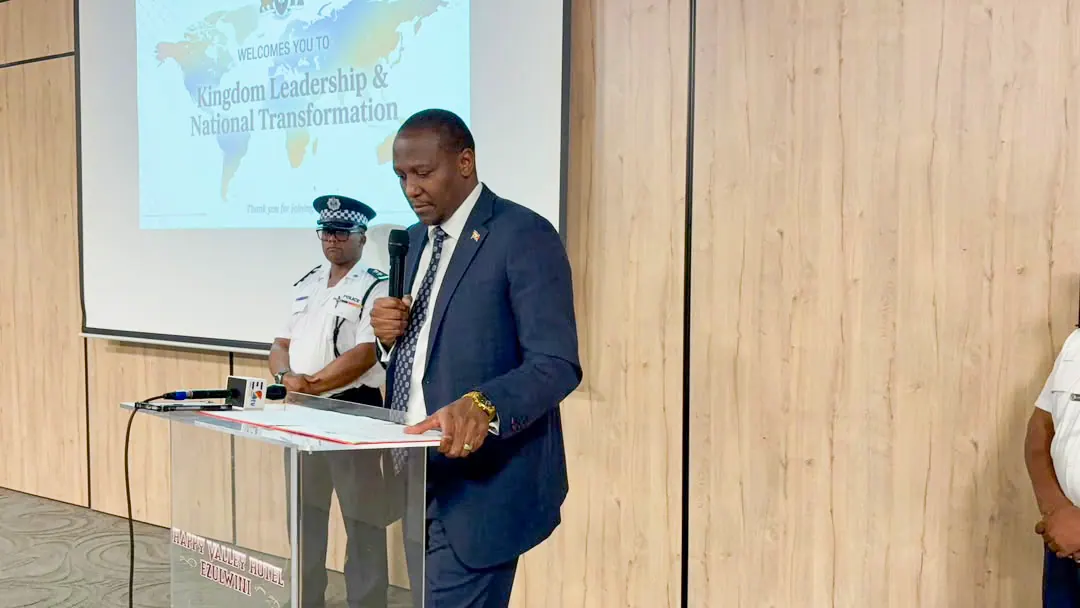
Eswatini's Prime Minister Russell Dlamini has expressed concerns that systemic corruption and toxic public discourse could threaten the country's future. Speaking at a national leadership gathering at Happy Valley Hotel, Dlamini called on church and State leaders to work together to strengthen ethical leadership and reform the way national issues are debated. The gathering was attended by Cabinet ministers, legislators, and leadership expert Professor Delanyo Adadevoh.
Dlamini described systemic corruption as more than an economic problem, saying it was also a moral failure requiring both institutional and spiritual responses. He emphasized that infrastructure development alone could not guarantee the country's progress because roads, hospitals, schools, and industries could not shape the character of the people who ran the country. The Prime Minister stressed the importance of character-building in the country's development.
The Prime Minister called for a clear division of responsibilities between church and State, while urging religious leaders to help cultivate public servants who regard leadership as a sacred trust rather than an opportunity for personal enrichment. He also raised concern over what he described as the deteriorating quality of public discourse, warning that political posturing and polarisation could undermine national unity.
Dlamini urged lawmakers and civic leaders to change the way national dialogue is conducted, saying disagreements were inevitable but should not degenerate into hostility. He emphasized that contempt had no place in national discourse and that differences of opinion were both inevitable and healthy. The Prime Minister warned that Eswatini could not make meaningful progress if public discourse continued to deepen divisions within society.
The Prime Minister further urged leaders across political, institutional, and personal spheres to put national interests ahead of individual ambitions. He emphasized that the country's future could not be built upon perpetual consultation, the recycling of personalities, or the degradation of public discourse into insults, threats, and division. Dlamini called for a change in the way leaders approach national issues.
Dlamini also called for what he described as the ‘lawful and purposeful disruption’ of legacy systems that serve bureaucratic interests instead of the public. He said ethical governance would require leaders to challenge systems that no longer served the public good and replace them with institutions focused on service and accountability. The Prime Minister emphasized the need for leaders to be proactive in addressing the country's challenges.
The national leadership gathering comes at a time when Eswatini is facing various challenges, including corruption and social unrest. The Prime Minister's call for collective action and ethical leadership is seen as a crucial step towards addressing these challenges and building a better future for the country. The government has a significant role to play in promoting good governance and accountability.
Key points
- Eswatini's Prime Minister Russell Dlamini warns of the dangers of systemic corruption and toxic public discourse.
- Dlamini calls for collective action and ethical leadership to address the country's challenges.
- The Prime Minister emphasizes the need for a clear division of responsibilities between church and State.