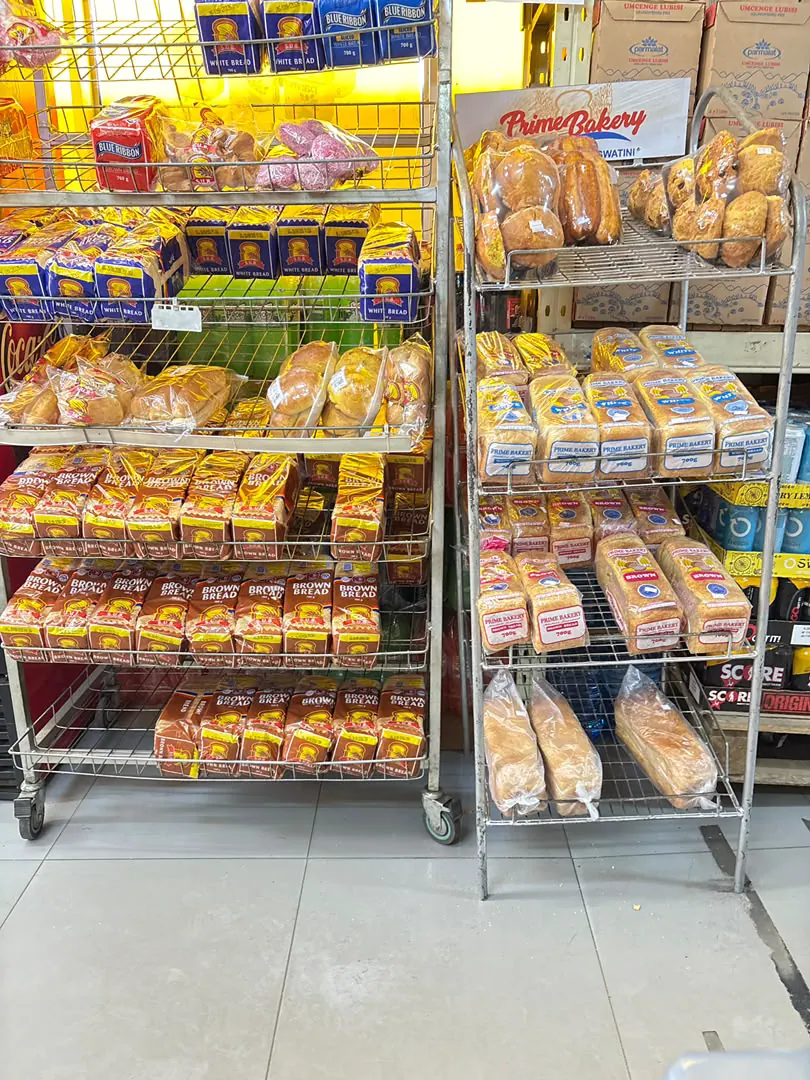
The Eswatini government has approved a 4.23% increase in the regulated price of bread, which will take effect on October 1, 2026. This decision comes after the Eswatini Bakers' Association submitted a request to the Ministry of Commerce, Industry and Trade seeking the increment due to rising input costs and economic pressures. The increase will see the price of an 800g white loaf rise from E17.90 to E18.66, while an 800g brown loaf will increase from E15.60 to E16.26.
The latest price adjustment is the second in less than 12 months, following a 7% increase that took effect on November 1, 2025. The Eswatini Bakers' Association attributed the pressure to rising fuel prices, which have increased transportation and other production costs. According to sources, the cost of key inputs used to produce a standard 700g loaf increased significantly between November 2025 and June 2026.
Chief Commercial Officer in the Ministry of Commerce, Trade and Industry, Sonto Hlophe, acknowledged that the Eswatini Bakers Association requested an increment due to rising input costs and economic pressures. She confirmed that Cabinet has approved the request. The last bread price increase was 7% and took effect on November 1, 2025.
The price increase comes as households in Eswatini continue to deal with higher costs in other areas of their monthly budgets. The Central Bank of Eswatini recently reported that credit extended to households and non-profit institutions serving households reached E9.9 billion in June 2026, representing an 11.6% increase compared with June 2025.
Other personal loans, including unsecured borrowing, rose by 1.1% during the month to E4.1 billion, while motor vehicle loans increased by 3.4% to E1.5 billion. Electricity tariffs were also increased from April 1, 2026, with ESERA initially approving an average increase of 13.61%, although government intervention subsequently reduced the effective average adjustment to 11.74%.
Fuel prices have also undergone significant increases this year. In April, petrol increased by 14.9% while diesel rose by 21.2%. In May, petrol increased by a further 13.1% and diesel by 25.4%. Although a subsequent fuel review in June reduced diesel and paraffin prices, petrol increased again by 90 cents to E26.17 per litre.
The pressure on households is not limited to regulated commodities. Major South African food manufacturers Premier Group and Tiger Brands have warned that further food price increases could become unavoidable due to rising fuel, packaging, and other production costs. NAMBoard has also announced that it will enforce a 24% levy on imported edible oils from September 1, 2026.
Key points
- The Eswatini government has approved a 4.23% increase in the regulated price of bread, which will take effect on October 1, 2026.
- The increase is attributed to rising input costs and economic pressures faced by the Eswatini Bakers' Association.
- This is the second bread price increase in less than 12 months, following a 7% increase that took effect on November 1, 2025.