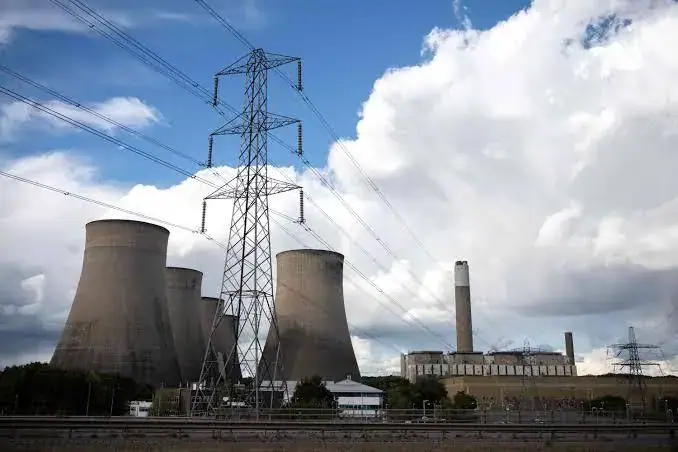
Eskom, South Africa's state-owned power utility, plans to decommission two major coal-fired power stations, Hendrina and Arnot, in Mpumalanga by 2030. The power stations have a combined operating history of approximately 100 years. Hendrina Power Station, commissioned between 1970 and 1976, has an installed generation capacity of 2,000 megawatts. Arnot Power Station, which began construction in 1968, has six generating units that were fully operational by 1975.
The planned closures are part of Eskom's broader energy transition strategy, which includes repurposing coal-fired power station sites for cleaner energy generation. The sites are expected to be repurposed for renewable energy projects, including solar photovoltaic generation, wind power, and battery energy storage systems. This move is aimed at reducing the country's reliance on coal and promoting sustainable energy sources.
However, the planned closures have raised concerns about the impact on workers and surrounding communities. The National Union of Mineworkers has called on the government to suspend the decommissioning process until proper plans are in place to protect affected workers and communities. The union argues that preparations for alternative employment, including reskilling and training programs, are progressing too slowly.
Khangela Baloyi, NUM Energy Sector Coordinator, warned that South Africa needs to learn from the closure of Komati Power Station, where inadequate transition planning resulted in significant job losses. Baloyi emphasized that the impact of shutting down the facilities would extend beyond Eskom employees to include coal miners, contractors, small businesses, and people providing goods and services to workers.
The concerns have also come under parliamentary scrutiny, with the Portfolio Committee on Electricity and Energy conducting oversight visits to Hendrina and Arnot on November 22. The committee heard that workers expressed anxiety about potential job losses and uncertainty surrounding their future employment. Committee chairperson Zamakhanyase Khanyase said the committee would escalate the concerns to Eskom's executive management and the Ministry of Electricity and Energy.
The proposed closures highlight the challenge facing the government and Eskom as they seek to move towards cleaner energy while safeguarding electricity security, employment, and the livelihoods of communities dependent on the power stations. The committee emphasized that decommissioning must take place within the Just Energy Transition framework, supported by practical programs to protect affected workers and communities.
The decommissioning of Hendrina and Arnot power stations raises questions about whether South Africa will have enough replacement electricity generation capacity when the two facilities are retired. The National Union of Mineworkers argues that planning should begin between five and ten years before a power station closes to give affected businesses and communities sufficient time to prepare.
Key points
- The planned closures of Hendrina and Arnot power stations have raised concerns about job losses and electricity supply in Mpumalanga.
- The National Union of Mineworkers has called for the government to suspend the decommissioning process until proper plans are in place to protect affected workers and communities.
- The Portfolio Committee on Electricity and Energy has emphasized the need for decommissioning to take place within the Just Energy Transition framework.