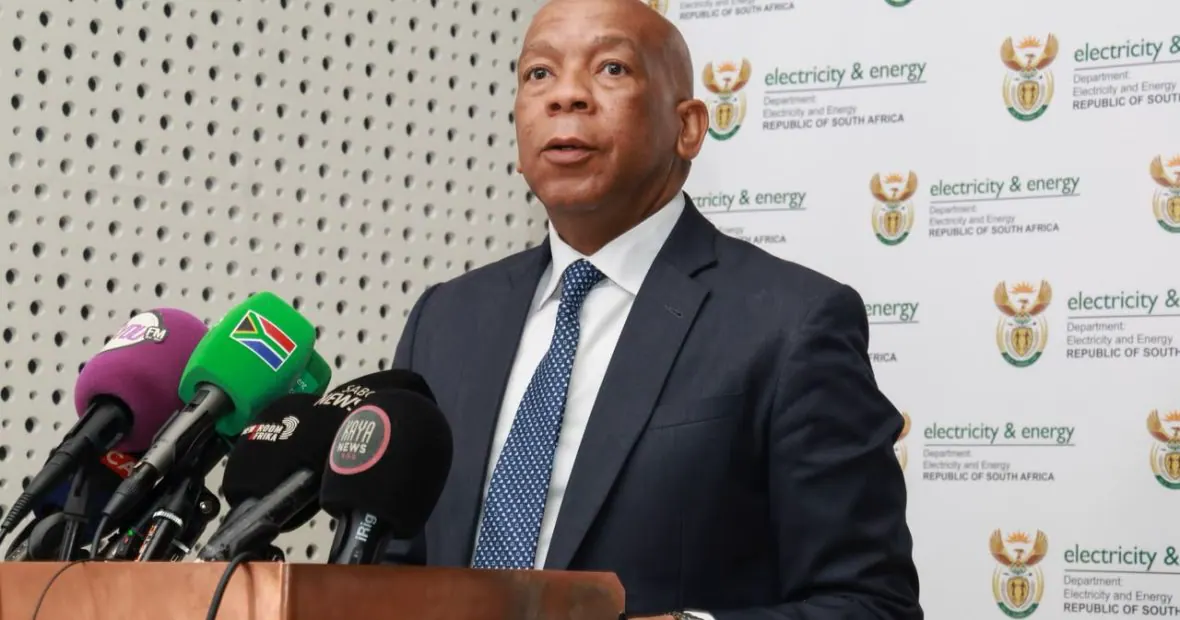
South Africa's Electricity and Energy Minister, Dr. Kgosientsho Ramokgopa, has assigned Eskom's board with the critical task of driving down electricity costs, enhancing reliability, and securing the utility's long-term future. This directive comes as Dr. Mteto Nyati continues to serve as Chairperson, providing stability to Eskom as it moves beyond immediate challenges and towards a sustainable future in South Africa's evolving electricity market.
During a media briefing in Pretoria, Minister Ramokgopa emphasized Eskom's vital role in supporting investment, jobs, and households through a reliable and affordable electricity supply. He highlighted the shareholder's expectations for Eskom 2.0, which includes planning for new generation capacity, expanding the grid, strengthening customer relationships, and adapting to new generators and traders in the market.
The board is expected to develop a comprehensive roadmap for Eskom, covering the next three, five, and 10 years. This roadmap must define the utility's public obligations, future generation mix, commercial position, and the necessary investments to sustain them. The goal is for Eskom to fulfill its mandate without relying on repeated fiscal support or sustained double-digit tariff increases.
In line with the Integrated Resource Plan 2025, Eskom must undertake technical and financial work to inform board decisions on the future of its generation fleet. This includes reducing emissions from existing coal-fired power stations, assessing coal-abatement technologies, and defining Eskom's strategic role in gas and nuclear energy. Eskom Green must turn its approved strategy into a credible pipeline of projects, starting with approximately 2 GW of renewable capacity.
Minister Ramokgopa also stressed the importance of expanding the transmission network to connect new generation capacity and meet growing industrial demand. The shareholder expects Eskom and the National Transmission Company South Africa to advance a deliverable grid programme, including through Independent Transmission Projects, while supporting South African manufacturers, suppliers, and skills development.
Eskom's growth strategy must extend across Southern Africa, with regional demand and supply informing opportunities for electricity trade and cross-border interconnectors. The Minister called for viable projects to be developed with regional partners and potential funders, including the Development Bank of Southern Africa, the Industrial Development Corporation, and the African Development Bank.
The Minister emphasized the need for a stronger commercial and customer-focused strategy, including reliable supply, accurate billing, and timely resolution of complaints. The Department of Electricity and Energy will work with National Treasury, the Department of Cooperative Governance and Traditional Affairs, and the South African Local Government Association to strengthen payment discipline and improve arrangements for sustainable electricity supply.
Key points
- Eskom's board is tasked with driving down electricity costs and improving reliability.
- The utility must develop a comprehensive roadmap for its future, covering the next three, five, and 10 years.
- Eskom's growth strategy must extend across Southern Africa, with regional demand and supply informing opportunities for electricity trade and cross-border interconnectors.