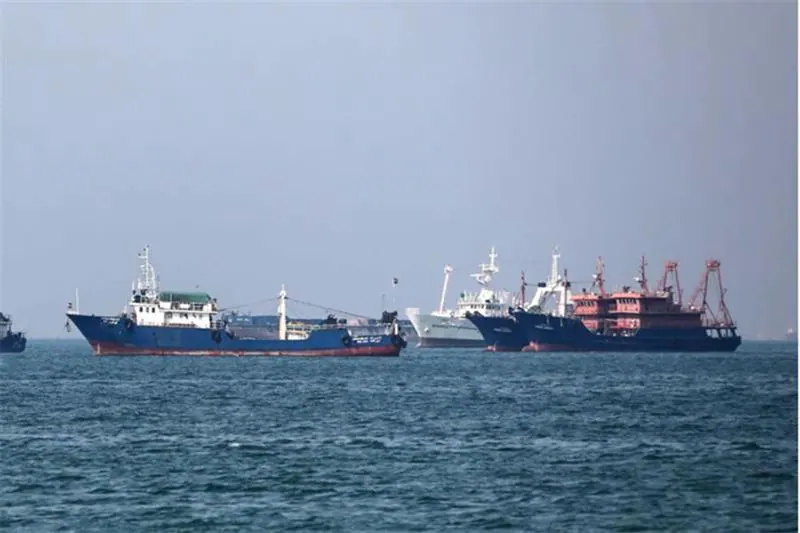
The ongoing conflicts in the Horn of Africa and the Middle East are escalating, causing growing concerns over a potential cross-border conflict that could involve multiple states. The US-Israeli war on Iran, which began on February 28, has disrupted trade traffic through the Strait of Hormuz, while the battles in the Horn of Africa and neighboring Yemen threaten to compromise traffic through the Bab el-Mandeb Strait and across the Red Sea.
A group of researchers from both regions discussed the situation in a webinar titled "A region in flux: war, realignment and the limits of power," jointly hosted by the Folke Bernadotte Academy, the Rift Valley Institute, and the Arab Reform Initiative. The researchers examined the interconnected space as a single strategic system, highlighting the impact of the conflicts on international trade, especially energy supplies, ahead of the northern hemisphere's winter.
The discussion featured Bader Al-Saif, a historian at the Royal Institute of International Affairs; Mohamed Nagi Abdel-Salam of the Sudanese Centre for Policy Studies; Yasmeen Al-Eryani of the Sana'a Center for Strategic Studies; and Awet Weldmichael, professor of international history and politics at the London Graduate Institute. The host and moderator of the discussion, an associate senior researcher at the Stockholm International Peace Research Institute, emphasized the need to understand the conflicts and identify pathways for conflict resolution and durable state building.
According to Al-Saif, one obvious pathway for the conflict around Iran is to strike deals, as it is likely only a matter of time before the next round of hostilities in the war that the US and Israel started against Iran. He argued that the countries of the region need to move beyond the current lack of holistic solutions to regional issues and find a modus operandi for regional coexistence.
Al-Eryani noted that the conflict in Yemen is having an impact on several other countries, particularly with the recent increase in attacks conducted by the Houthis against neighboring Saudi Arabia. This spillover effect is drawing more attention to a conflict that has been unfolding in Yemen for over a decade. Meanwhile, Weldmichael stated that Ethiopia is descending into an all-out civil war, while Somalia faces increasing threats of divisionism.
The Red Sea is becoming an increasingly contested venue for several non-coastal states, especially Ethiopia, a landlocked country with a historic need to access the sea. Israel's recognition of Somaliland, a secessionist province of Somalia, reflects its wish to have a presence on the Red Sea, amid the Iran-supported Houthis' expanded presence and power in the region.
The ongoing conflicts have significant implications for global trade and energy security, with potential disastrous humanitarian crises ahead of the northern hemisphere's winter. The situation remains volatile, with multiple scenarios possible, including a protracted conflict around both straits or a concurrent attack by the US against Iran and by Saudi-supported Yemeni forces against the Houthis.
Key points
- The conflicts in the Horn of Africa and the Middle East threaten international energy and supply security.
- A cross-border conflict involving multiple states is a growing concern.
- The situation remains volatile, with multiple scenarios possible.