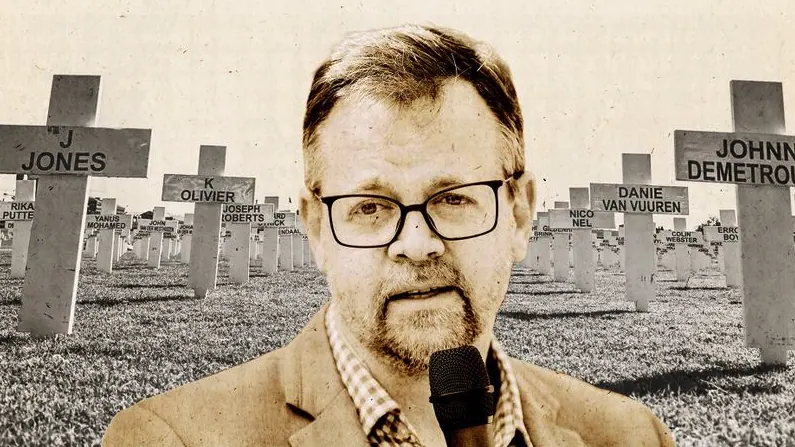
On September 26, 2026, Lex Libertas, led by Ernst Roets, erected 3,000 white crosses on the National Mall in Washington, DC, to represent victims of farm attacks in South Africa. The campaign aimed to create a powerful visual representation of the human cost of the crisis and raise international awareness. Despite efforts to engage journalists and media platforms globally, particularly in the US and Europe, the event struggled to attract significant media attention.
The event's goal was to build growing global awareness of the issue, but it appears to have fallen short. In recent years, conservative US broadcasters like Fox News have given attention to the false claim of "white genocide" and alleged mistreatment of white South Africans. However, with the US midterm elections approaching, American media showed considerably less appetite for platforming Roets and his allies this time around.
There was no evidence of Fox News covering the event, and the sole US national TV channel giving it airtime was One America News (OAN), which has faced controversy and lost major US television providers. The most extensive coverage from other US media came from right-wing news website The Daily Caller, known for its coverage of debunked conspiracy theories and far-right views.
Outside the US, the UK's right-wing GB News provided sympathetic coverage. However, the majority of media coverage came from South African outlets, much of it generated by domestic pushback against the campaign. Afrikaners for South Africa accused Lex Libertas of exploiting the suffering of farm victims to advance a narrow political agenda and presenting Americans with a misleading picture of the country.
The event's hoped-for blitz of international media attention was a damp squib. Notably absent were major Maga influencers like Jack Posobeic, with whom Roets has shared a stage in the past. Instead, Lex Libertas had to make do with lower-profile names from the international online right, such as Italian influencer Lorenzo Caccialupi.
Caccialupi's presence at Roets' vigil is revealing, as he belongs to a transnational right-wing network supportive of European parties like Germany's far-right AfD and similar movements. This highlights the growing network between global right-wing movements. The limited media attention and lack of prominent influencer support raise questions about the campaign's effectiveness in raising awareness and driving change.
The Lex Libertas event demonstrates the challenges of gaining traction for certain issues in the US media landscape, particularly during election seasons. The campaign's failure to secure widespread coverage may be attributed to various factors, including the controversy surrounding its message and the current media environment.
Key points
- The event failed to attract significant US media attention, with limited coverage from national TV channels and right-wing news websites.
- The campaign's message was met with pushback from South African outlets and domestic groups, who accused Lex Libertas of exploiting the suffering of farm victims for a narrow political agenda.
- The event highlights the growing network between global right-wing movements, with Italian influencer Lorenzo Caccialupi representing a transnational right-wing network supportive of European far-right parties.