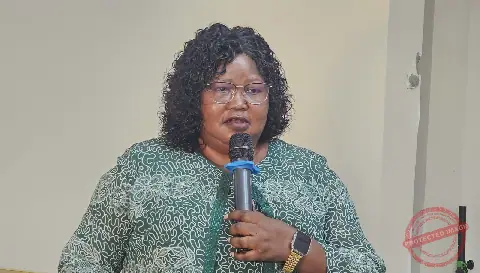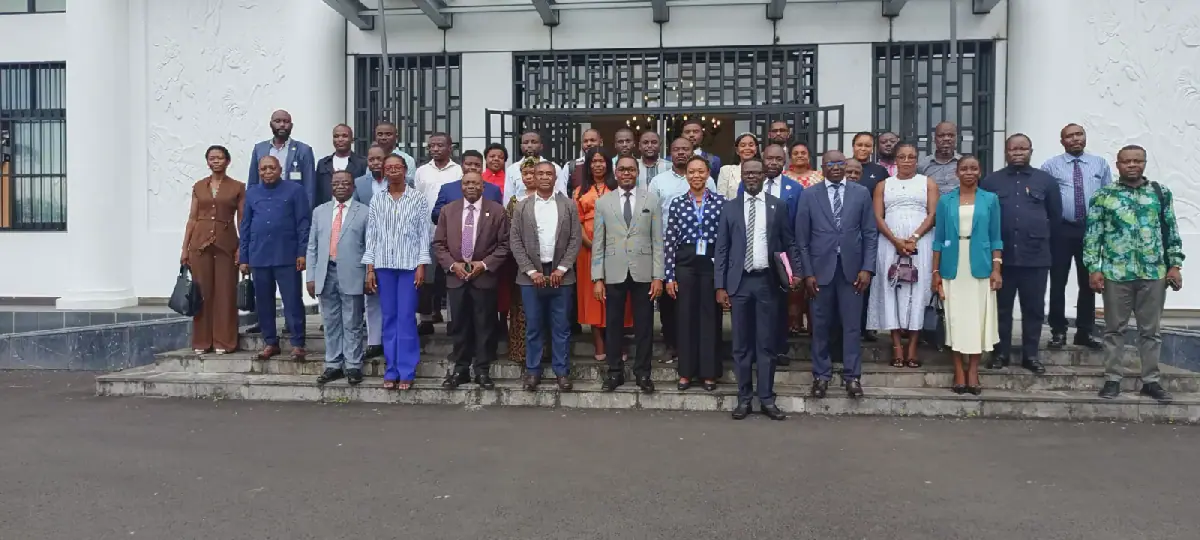
The closing ceremony of the workshop was presided over by INEGE's Director General, Ricardo Nsue Ndemesogo Obono, and attended by directors general from various institutions and representatives of United Nations agencies accredited in the country. The workshop, which took place from October 26 to November 6, was organized by INEGE with the support of the United Nations Population Fund (UNFPA), the Food and Agriculture Organization (FAO), and the United Nations Development Programme (PNUD).
The workshop brought together experts from various sectoral ministries, representatives of civil society, and statistical specialists. An independent national expert, Jaime Nsue Esono, also participated and contributed to the development of the sessions with his experience in executing previous censuses in Equatorial Guinea. The work focused on reviewing and validating technical strategies and instruments to be used during the census process, with special attention to methodological coherence, operational viability, and adaptation to different phases of the operation.
During the first week, participants examined eight strategies related to census planning and execution, from census mapping to procedures for disseminating and archiving statistical information. The second week was dedicated to evaluating questionnaires for ordinary and collective households, community questionnaires, and those for the Post-Census Survey and the first module of the General Agricultural Census.
As a result of the working sessions, participants proposed various recommendations to reinforce the accuracy and reliability of the data. Key proposals included verifying administrative boundaries and official locality names with competent authorities and testing the effectiveness of procedures for accessing difficult-to-cover areas during the pilot census.
The specialists also recommended preserving the independence of the Post-Census Survey, which will allow for evaluating the coverage and quality of the collected information. For the agricultural component, it was deemed necessary to apply modules II and III in complementary stages of the process to obtain more detailed information on agricultural holdings and their productive activities.
Following the closure of the workshop, the next step will be to incorporate the observations and recommendations into the examined strategies and questionnaires before submitting their final versions to the competent authorities for official adoption. Once revised, the documents will be used to guide the population and agricultural censuses in Equatorial Guinea.
The successful completion of the validation workshop marks an important milestone in the country's efforts to conduct accurate and reliable censuses. The involvement of various stakeholders, including experts from different ministries and UN agencies, has ensured that the technical documents are comprehensive and effective.
Key points
- The workshop was attended by experts from various sectoral ministries, representatives of civil society, and statistical specialists.
- The participants proposed recommendations to reinforce the accuracy and reliability of the data, including verifying administrative boundaries and official locality names.
- The next step is to incorporate the observations and recommendations into the examined strategies and questionnaires before submitting their final versions to the competent authorities.
Reporting sources
- El INEGE clausura el taller de validación de los documentos técnicos de los censos de población y agropecuario · AHORAEG Guinea Ecuatorial - Diario online líder de noticias