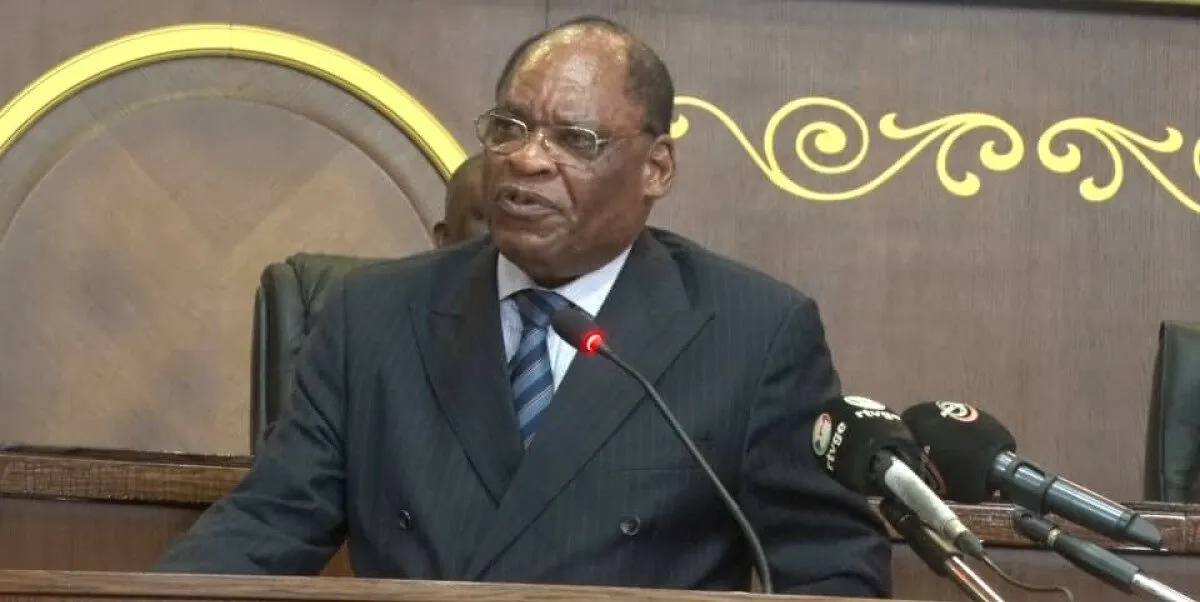
Equatorial Guinea's Minister of Education, Engonga Nguema Onguene, recently appeared before a parliamentary committee to provide an account of his ministry's management and programs. The minister reviewed the execution of his department's programs, ongoing actions, and plans for the upcoming year. This comprehensive report covered various sectors, including early childhood education, preschool, primary education, literacy, secondary education, technical and vocational training, higher education, educational planning, and cooperation.
In the area of early childhood education, Minister Nguema Onguene outlined projects aimed at expanding school coverage, developing curricula, and improving teaching methodologies. He also highlighted initiatives to support students with disabilities and provide literacy programs for children outside the educational system. These efforts aim to improve educational outcomes and increase access to education for all. The minister's report emphasized the importance of a strong foundation in education.
The minister's report also focused on secondary education, where programs concentrate on curriculum development, textbook publication, and expanding educational offerings. Additionally, the ministry plans to appoint new teachers, publish selectivity manuals, and provide support to students taking these exams. A project to provide economic assistance to needy students is also underway. These initiatives seek to enhance the quality of secondary education and better prepare students for further studies.
In the realm of technical and vocational training, Minister Nguema Onguene cited several key initiatives, including capacity building, international exchanges, and incentives for disadvantaged and outstanding students. The ministry is also working on a catalog of professional qualifications, implementing a new vocational training model, and developing a law on vocational training. Furthermore, 1,000 cadres are being trained at polytechnics in Malabo and Mongomo.
For higher education, the ministry has planned several initiatives, including academic monitoring of university students both within and outside the country. The ministry also aims to strengthen the Commission for the Homologation of Titles and launch a program to enhance academic services by training professors in master's and doctoral programs. These efforts aim to improve the quality of higher education in Equatorial Guinea.
In educational planning, the minister highlighted the creation of a database for teaching staff and the update of key laws, including the General Law on Education, the Law on Higher Education and Universities, and the Regulation of the Inspectorate Body. The ministry has also launched the Technology Plan, the national school transportation project, and initiatives to support private centers and update the school map.
The ministry's report also covered cooperation in education, youth, physical education, and sports. According to Minister Nguema Onguene, many ministry projects are ongoing, while others have been completed or are in the process of execution. The minister's comprehensive report provided a detailed overview of the ministry's activities and plans.
Key points
- The Ministry of Education in Equatorial Guinea has presented a comprehensive report on its management and programs to the parliamentary committee.
- The report covered various sectors, including early childhood education, secondary education, technical and vocational training, and higher education.
- The ministry's initiatives aim to improve educational outcomes, increase access to education, and enhance the quality of education in Equatorial Guinea.