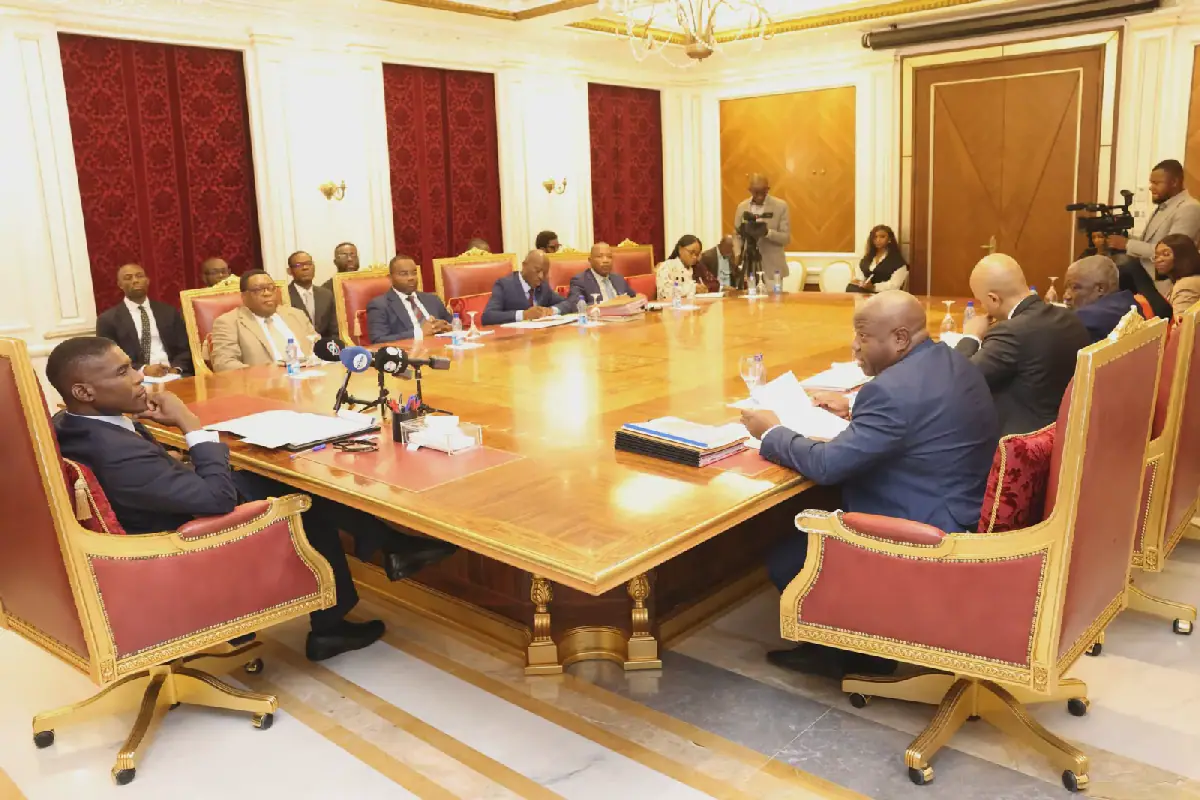
The government of Equatorial Guinea has convened a meeting to review the economic proposal of Securiport, a US-based company, aimed at modernizing the country's border control. The meeting, presided over by Vice President Nguema Obiang Mangue, brought together the Prime Minister and officials from various departments, including Transportation, Aviation Civil, Security, Finance, and Treasury. The session focused on examining the tariffs and services outlined in Securiport's offer.
Securiport previously provided services in Equatorial Guinea for several years, and the current review seeks to compare previous contracts with the new proposal. The Vice President has requested that previous agreements be revisited to assess whether the new terms align with the services to be implemented. This move aims to ensure that the project is tailored to the country's real needs, without unnecessary expenses or duplicate charges.
Nguema Obiang Mangue emphasized the importance of adjusting the project to the country's requirements, avoiding superfluous costs and potential negative impacts on passengers or tourism. As part of the proposed measures, a pilot phase is recommended, starting at Malabo and Bata airports. This phase will enable the evaluation of the system's effectiveness before considering its expansion to other airports, ports, and border crossings.
The initiative to modernize border control dates back to November 2025, when Securiport presented its proposal to the government. Since then, authorities have been examining the technical and financial aspects of the project, seeking more favorable economic conditions. The goal is to establish a system that enhances border control and traveler security without imposing an unjustified economic burden on the state or citizens.
The proposed system aims to improve the security of travelers while ensuring that its implementation does not negatively impact the country's economy. The government is working to strike a balance between security needs and economic feasibility. By reviewing the tariffs and services offered by Securiport, the government seeks to optimize the project's benefits while minimizing potential drawbacks.
A key aspect of the project is the implementation of a pilot phase, which will allow for the assessment of the system's effectiveness in a controlled environment. This approach will enable the government to make informed decisions about the project's future expansion. The pilot phase is expected to provide valuable insights into the system's performance and identify potential areas for improvement.
The government's efforts to modernize border control are part of a broader strategy to enhance the country's security and tourism infrastructure. By implementing a more efficient and effective border control system, Equatorial Guinea aims to improve the travel experience for visitors while maintaining a high level of security. The project's success will depend on the government's ability to balance competing priorities and find a solution that meets the country's needs.
Key points
- The government of Equatorial Guinea is reviewing Securiport's tariffs to ensure that the company's proposal for modernizing border control is economically feasible and meets the country's real needs.
- A pilot phase is planned for Malabo and Bata airports to evaluate the effectiveness of the proposed system before considering its expansion to other locations.
- The project aims to enhance border control and traveler security without imposing an unjustified economic burden on the state or citizens.