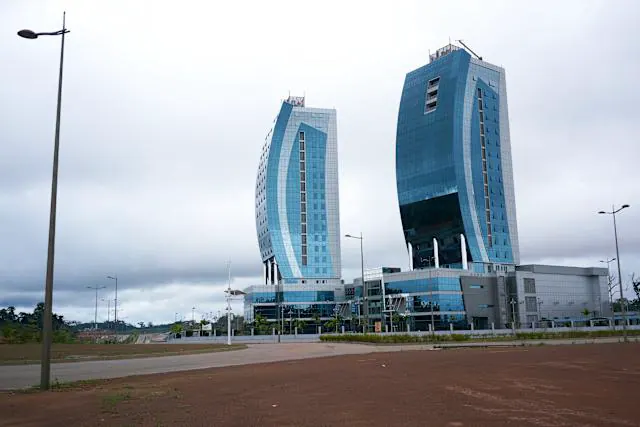
The President of Equatorial Guinea, Teodoro Obiang Nguema Mbasogo, has officially approved a decree to relocate the country's capital from Malabo to Ciudad de la Paz (Djibloho) in the continental region. This move is part of a strategic plan to modernize and promote territorial cohesion. The decision was announced during an official ceremony attended by high-ranking government officials.
The relocation is in line with the country's policy of balanced development, territorial cohesion, and modernization of public administration. These are key pillars of the Equatoguinean government's institutional agenda. Ciudad de la Paz is designed as a modern administrative capital, strategically located in the heart of the continental territory. This location aims to improve accessibility, optimize government logistics, and enhance institutional security.
Historically, Malabo's location on Bioko Island has presented challenges in terms of accessibility and security. The government highlights that the relocation is a preventive measure against external threats and attacks, which have been a concern in the past due to the country's insular capital. By moving to Ciudad de la Paz, Equatorial Guinea aims to reduce its vulnerability to maritime threats.
The relocation process is also expected to break away from colonial-era administrative structures that no longer meet the needs of a modern, sovereign state. Ciudad de la Paz has been designed with contemporary urban planning standards, featuring government, residential, and service infrastructures aligned with a long-term vision.
According to government sources, the complete relocation of administrative services will take approximately one year. During this period, ministries, public agencies, and strategic state entities will be progressively relocated. This process is expected to have a direct impact on the national economy, stimulating activity in sectors such as construction, services, logistics, transportation, and urban development.
The relocation will also promote the integration of the continental territory into the center of the country's political and administrative life. This move is a significant step towards consolidating a more balanced model of state development, reinforcing Equatorial Guinea's vision for long-term national development and institutional projection.
With this decision, Equatorial Guinea is set to achieve a more cohesive and modern administrative structure. The government's focus on territorial integration and development is expected to yield long-term benefits for the country's growth and stability. The project aligns with the government's goals of creating a more efficient and secure institutional framework.
Key points
- The relocation aims to improve accessibility and security.
- Ciudad de la Paz is designed with contemporary urban planning standards.
- The relocation is expected to stimulate economic activity in various sectors.