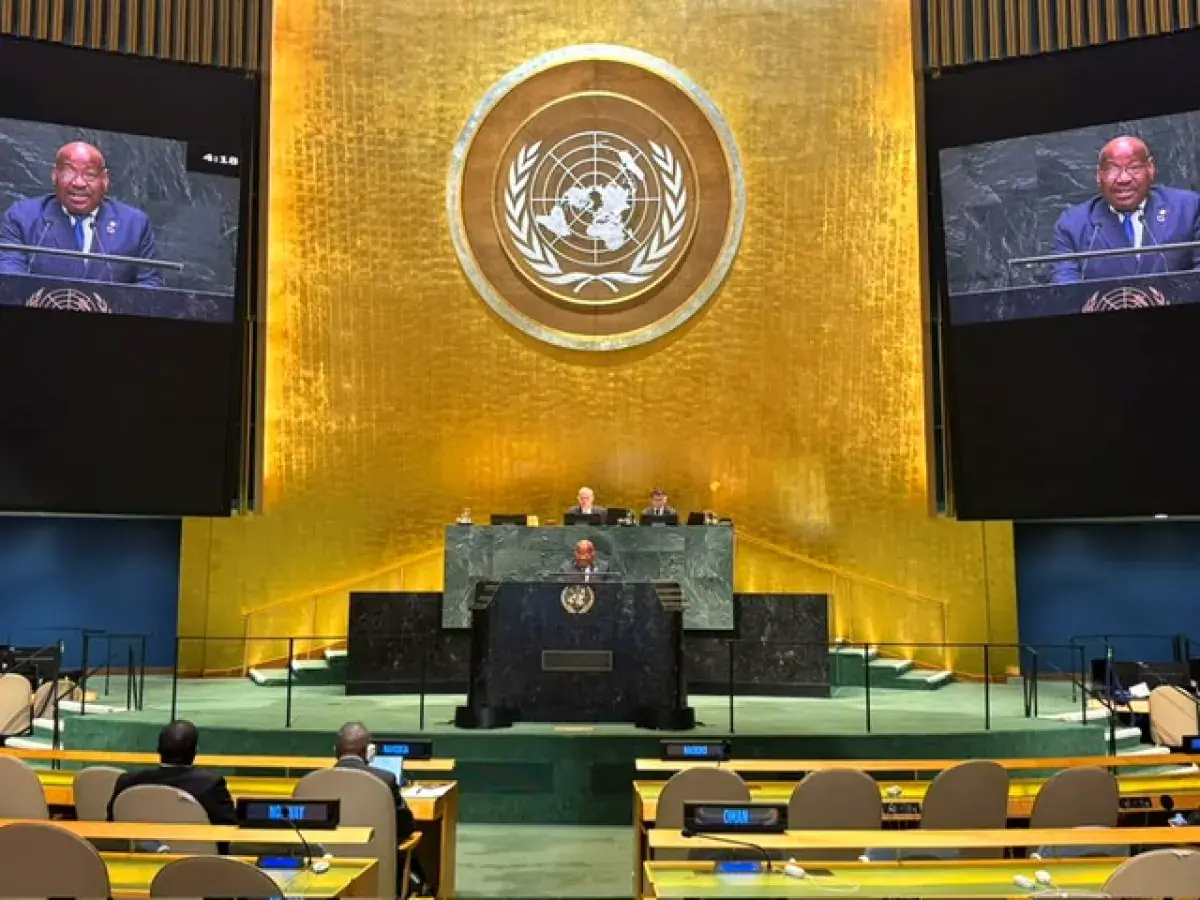
Equatorial Guinea addressed the UN General Assembly on November 10, criticizing the use of veto power that led to the end of the UN peace mission in Western Sahara. The criticism was made during the 39th plenary session of the UN General Assembly in New York. This session was part of a mechanism to follow up on the use of the right of veto, established by Resolution 76/262. The discussion followed the failure of the October 30 Security Council votes.
The failure to renew the mandate of the UN Mission for the Referendum in Western Sahara (MINURSO) was due to a veto by Russia on a US proposal. A second initiative by Russia also failed to gain necessary votes. This situation ended the mandate of a peace operation established in 1991. It has raised concerns about regional stability implications. The Equatorial Guinea representative, Ndong Mba, expressed concern that the absence of a valid mandate creates a legal and operational vacuum.
Ndong Mba, accompanied by Juan de Dios Edjo Memba, warned that the vacuum affects the territory's population and countries contributing personnel to the mission. Mba described it as a historical anomaly that two non-African permanent members decided the fate of an African mission. He criticized the veto's consequences when used for particular interests. Mba advocated for the veto to protect international peace and security, representing the 193 UN member states.
Equatorial Guinea reiterated its support for the African Common Position on Security Council reform. This position, outlined in the Ezulwini Consensus, Sirte Declaration, and Tripoli Document, calls for two African permanent seats with veto power and five non-permanent seats. Regarding Western Sahara, Mba supported efforts by UN envoy Staffan de Mistura. He saw Morocco's autonomy proposal as a basis for a peaceful solution.
Various delegations expressed differing views on Western Sahara's future. Morocco defended its autonomy initiative, while Algeria insisted the conflict remains a decolonization issue. Namibia and South Africa lamented the Security Council's failure to ensure MINURSO's continuity. They expressed solidarity with the Saharawi people. Russia and China supported an orderly mission withdrawal with measures to preserve humanitarian assistance and stability.
The MINURSO mission, established in 1991, aimed to organize a referendum in Western Sahara. Its mandate ended on October 31, 2026. The mission's termination has sparked concerns about the region's stability and the Saharawi people's future. Equatorial Guinea's criticism of the veto use reflects broader concerns about the UN Security Council's decision-making process.
The Western Sahara conflict has been a longstanding issue, with Morocco and Algeria holding differing views on its resolution. The African Union has reiterated its support for a peaceful solution. The UN continues to play a role in addressing the conflict.
Key points
- The UN peace mission in Western Sahara ended due to a veto by Russia.
- Equatorial Guinea criticized the use of veto power in the UN Security Council.
- The African Common Position calls for two permanent African seats in the UN Security Council.
Reporting sources
- Guinea Ecuatorial denuncia ante la ONU el uso del veto que ha provocado el fin de la misión de paz en el Sáhara Occidental · AHORAEG Guinea Ecuatorial - Diario online líder de noticias