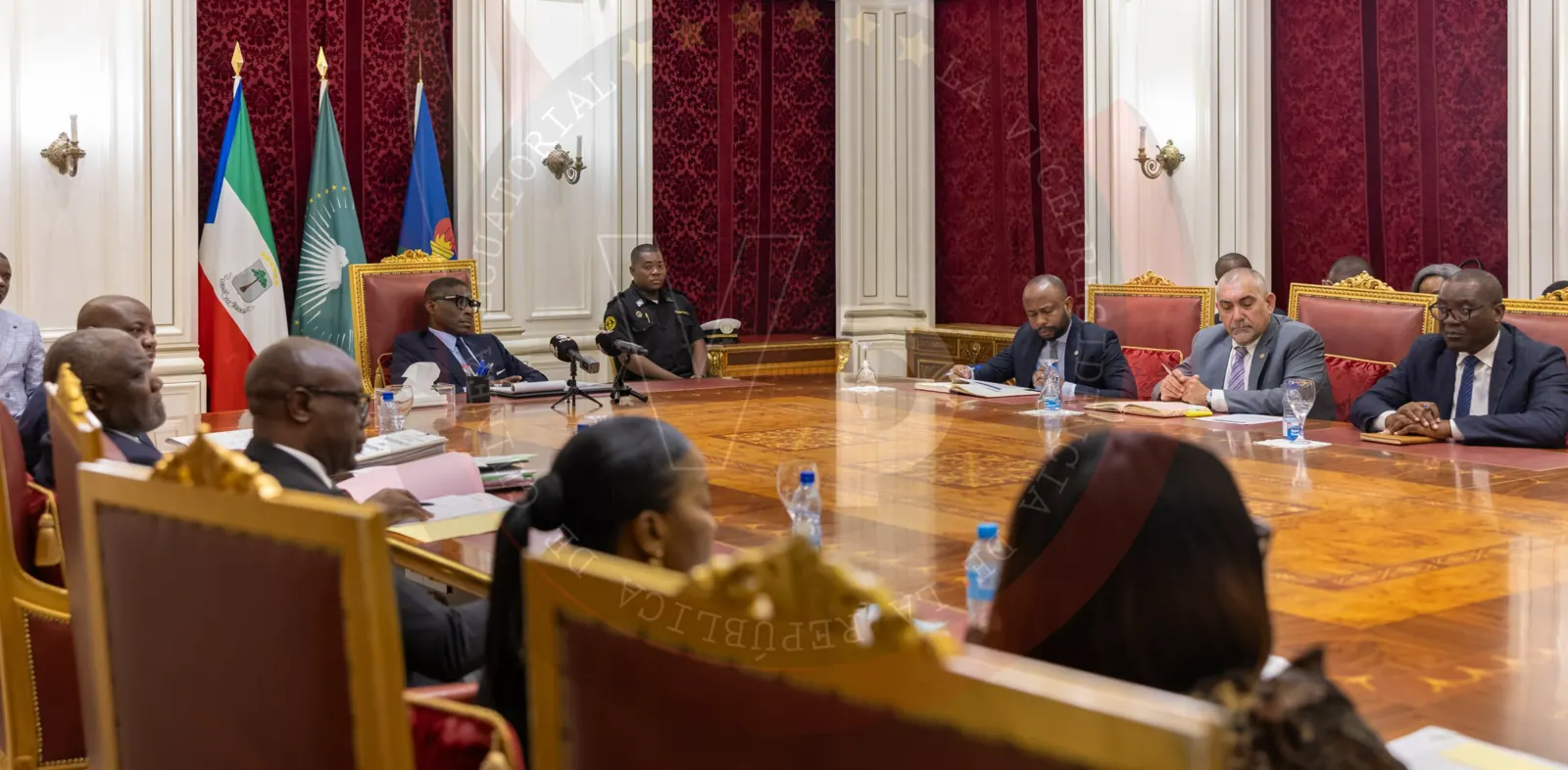
The government of Equatorial Guinea is pushing forward with several major projects aimed at establishing La Ciudad de la Paz as the country's new administrative capital. A meeting was held at the Palacio del Pueblo in Malabo, chaired by Vice President Nguema Obiang Mangue, to review the progress of these projects. Representatives from various government departments, including the Prime Minister's office, Public Works, Finance, Treasury, Interior, and Geproyectos, attended the meeting to discuss the status of priority projects for the country's urban and administrative development.
One of the key areas of focus was the design of social housing in La Ciudad de la Paz. The commission presented three models for the housing project, which will be built using materials from the prefabricated plant in Oyala. After reviewing the designs, the Vice President requested several modifications to improve their functionality, including expanding interior spaces, providing accessible emergency exits, and incorporating recreational areas for residents. These modifications aim to enhance the quality of life for the residents of La Ciudad de la Paz.
Urban planning was another critical topic discussed during the meeting. The government is working on projects to decongest and reorganize Malabo and Bata, with the goal of establishing a more orderly growth pattern and facilitating the provision of basic services. The planning of new areas must take into account essential aspects such as drainage, electricity and water networks, and accessibility for emergency services. To move forward with this initiative, the Vice President set a two-week deadline for the commission to present a definitive plan for executing the projects in both cities.
The meeting also addressed the progress of various road construction projects. The Vice President expressed concern about the slow pace of work on the Malabo-Luba and Mbini-Akoga highways, particularly in the Malabo section. He announced plans to meet with the responsible company to discuss the causes of the delays and demand explanations. In contrast, the canalization project in Luba, Bioko Sur, was positively evaluated, as it had received a new boost following the severe flooding in the city in August of the previous year.
The rehabilitation of social housing in the new urbanization built by the Chinese company Dalian was another topic of discussion. Geproyectos reported that 27 companies had shown interest in participating in the bidding process, with 25 already confirming their participation. The government's strategy involves awarding the contract to a qualified company to carry out the rehabilitation work. This project aims to improve the living conditions of residents in the urbanization.
The government's efforts to develop La Ciudad de la Paz as the new administrative capital are part of a broader strategy to promote urban and economic development in Equatorial Guinea. The project involves significant investments in infrastructure, including roads, housing, and public services. By accelerating these projects, the government aims to create a modern and sustainable city that will serve as a hub for administrative and economic activity in the country.
The progress of these projects will be closely monitored by the government, with regular meetings and evaluations to ensure that they are completed on time and to the required standards. The development of La Ciudad de la Paz is a key priority for the government, and it is expected to have a positive impact on the country's economic and social development. The project will also create new opportunities for economic growth, employment, and improved living standards for the residents of Equatorial Guinea.
Key points
- The government of Equatorial Guinea is accelerating projects to develop La Ciudad de la Paz as its new administrative capital, with a focus on housing, urban planning, and infrastructure development.