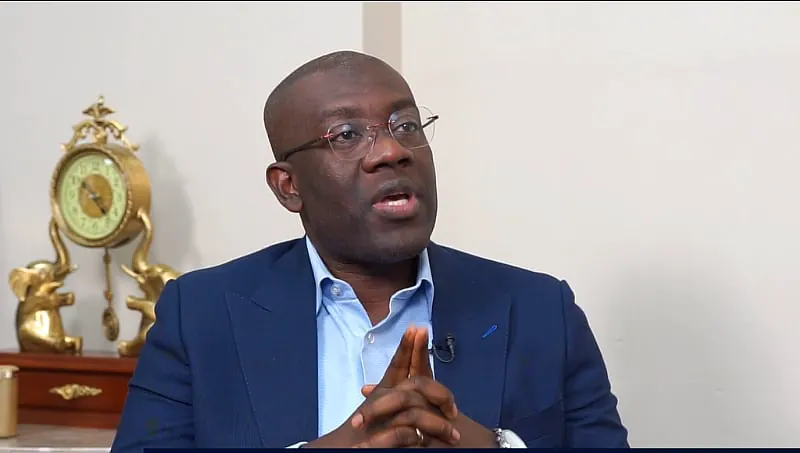
Member of Parliament for Ofoase/Ayirebi, Kojo Oppong Nkrumah, has expressed concerns over the handling of the case involving Manhyia South MP Nana Agyei Baffour Awuah by the Economic and Organised Crime Office (EOCO). According to Oppong Nkrumah, the detention sets a dangerous precedent for Ghana's democracy. He made these comments in an interview with Joy News, following Baffour Awuah's continued detention by EOCO. The MP's detention has sparked debate about the exercise of state powers against citizens.
The saga began on September 23, when EOCO attempted to arrest Baffour Awuah at the Accra High Court, resulting in a confrontation. The state agency later secured a High Court warrant, authorising the arrest and search and seizure of documents relevant to its investigation. On October 1, Baffour Awuah reported himself to EOCO and was placed under arrest. The agency claims he is cooperating with investigators, who are probing alleged criminal conspiracy, financial loss to SIC Savings and Loans, money laundering, and tax-related offences.
Oppong Nkrumah argued that the issue should not be viewed solely as a dispute involving an NPP legislator, but as a broader question about how state institutions exercise their powers against citizens. He emphasised that the precedent being created should concern Ghanaians regardless of their political affiliation. The MP's detention has raised questions about the use of state powers to punish suspects, rather than following due process.
Oppong Nkrumah questioned the decision to keep Baffour Awuah in custody for 48 hours, arguing that the existence of such a power does not mean it should automatically be exercised. He described this as a "weaponisation of power," using authority to punish people. According to Oppong Nkrumah, if a person is willing to cooperate with an investigation, mechanisms such as release on self-recognisance or surety could be considered.
The MP maintained that the exercise of state powers against one person could eventually affect others. He urged Ghanaians to consider whether this is how they want their democracy to function. Oppong Nkrumah's concerns are rooted in the potential for abuse of power and the erosion of trust in state institutions.
EOCO's investigation into Baffour Awuah's activities is focused on his firm's alleged involvement in providing legal services to SIC Savings and Loans. The agency is probing various offences, including criminal conspiracy, financial loss, money laundering, and tax-related offences. Baffour Awuah's cooperation with investigators is seen as a positive step, but Oppong Nkrumah's concerns about the detention remain.
As the case continues, Oppong Nkrumah's warning about the precedent being set has sparked a national debate about the use of state powers and the protection of citizens' rights. The outcome of the case will likely have far-reaching implications for Ghana's democracy and the relationship between state institutions and citizens.
Key points
- Oppong Nkrumah warns that EOCO's handling of Baffour Awuah's detention sets a dangerous precedent for Ghana's democracy.
- The detention has sparked debate about the exercise of state powers against citizens and the potential for abuse of authority.
- Oppong Nkrumah urges Ghanaians to consider whether this is how they want their democracy to function.