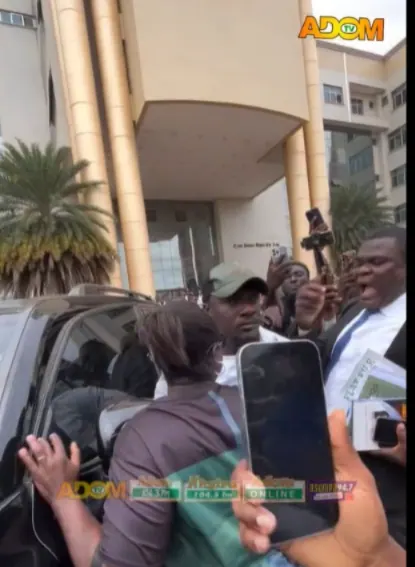
Former Tamale Central MP Inusah Fuseini has expressed concerns over the Economic and Organised Crime Office's (EOCO) approach in attempting to arrest Manhyia South MP Nana Agyei Baffour Awuah at the Accra High Court on September 23. According to Fuseini, EOCO's method was problematic and could have been handled differently. The incident has sparked public debate over EOCO's investigative powers and procedures when dealing with sitting MPs.
Inusah Fuseini, speaking on JoyNews' Newsfile, argued that EOCO could have sought a court warrant and used the appropriate parliamentary channel to compel the legislator to appear before the agency. He noted that the initial encounter between EOCO officials and the MP suggested a more measured approach was possible, citing the respectful demeanor of the female EOCO official who first approached MP Baffour Awuah.
Fuseini suggested that EOCO should have returned to court to obtain a warrant and have it served through the Speaker of Parliament to secure MP Baffour Awuah's attendance. This approach, he believes, would have provided a more appropriate route for compelling the MP to appear before EOCO. The incident has raised questions about the balance between investigative powers and the privileges of Ghanaian lawmakers.
The confrontation between MP Baffour Awuah and EOCO personnel at the Accra High Court has garnered significant public attention. The Ghana Bar Association (GBA) has condemned EOCO's botched arrest, with some lawyers describing the situation as "very dangerous" and expressing concerns about the potential consequences.
Inusah Fuseini's comments highlight the need for clarity on the procedures applicable when a sitting MP is required to assist an investigation. The incident has sparked a national conversation about the limits of investigative powers and the importance of respecting parliamentary privileges.
The EOCO's attempted arrest of MP Baffour Awuah has also raised concerns about the potential for abuse of power and the need for accountability. The incident is currently under public scrutiny, with many calling for a review of EOCO's procedures and the establishment of clearer guidelines for interactions with lawmakers.
The controversy surrounding EOCO's attempted arrest of MP Baffour Awuah continues to unfold, with various stakeholders weighing in on the issue. As the debate rages on, it remains to be seen how the incident will impact the relationship between Ghana's law enforcement agencies and the country's lawmakers.
Key points
- EOCO's approach in attempting to arrest MP Baffour Awuah was problematic and could have been handled differently.
- Obtaining a warrant and serving it through the Speaker of Parliament would have provided a more appropriate route for compelling MP Baffour Awuah to appear before EOCO.
- The incident has sparked public debate over EOCO's investigative powers and procedures when dealing with sitting MPs.