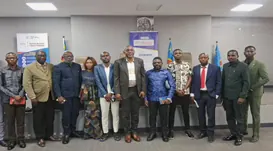
A conference on the interaction between Ebola and the environment was held in Kinshasa, Democratic Republic of Congo, where Professor Pierre-Albert Ngueliele stated that deforestation is the primary cause of the Ebola outbreak, while mining is the second. He emphasized the need for urgent action against Ebola and the importance of implementing policies to prevent rapid deforestation and anarchic mining.
According to Professor Ngueliele, scientific research has shown that the Ebola virus vector is found in nature, which humans are destroying by displacing animal reservoirs. When humans come into contact with infected animals, they become infected and fall ill. He cited the example of the Tshopo province, where 54,000 hectares of forest disappeared between 2004-2005, and 600,000 hectares of forest have disappeared across the entire country.
The destruction of forests due to deforestation and mining has led to the displacement of animals, causing them to move closer to human settlements in search of food. This proximity increases the risk of transmission of the Ebola virus from animals to humans. Professor Ngueliele stressed that while minerals bring wealth, they also destroy biodiversity and ecosystems, just like deforestation.
Professor Ngueliele called on ecologists to raise awareness among authorities, particularly the Ministry of Environment, about the need for intelligent exploitation of natural resources. He advocated for reforestation efforts that replace qualitative trees that can support the animals and insects that lived on the cut-down plants. He also urged the population to take the fight against Ebola seriously, respecting hygiene and sanitary norms, as well as environmental norms.
The conference, which was organized under the theme "Ebola virus disease in DR Congo: strengthening response to the emergence of the Bundibugyo strain, improving prevention, early diagnosis, and patient care," featured other speakers, including Professor Germain Kapour, who presented on the ecosystem of the Ebola virus. The event concluded with the awarding of certificates to speakers and some participants.
Professor Ngueliele emphasized the importance of responsible behavior in preventing the spread of Ebola, citing the example of handling dead animals in the forest. He advised against consuming dead animals, prioritizing human life over a piece of meat. He encouraged people to be kind and help those affected by the disease.
The conference aimed to strengthen the response to the Ebola outbreak and improve prevention, early diagnosis, and patient care. The event brought together experts and stakeholders to discuss the environmental factors contributing to the outbreak and to identify strategies for mitigating the crisis. Key points from the conference include the need for sustainable forest management, responsible mining practices, and community engagement in Ebola prevention efforts.
Key points
- Deforestation and mining are major contributors to the Ebola outbreak in the Democratic Republic of Congo.
- Environmental expert Professor Pierre-Albert Ngueliele emphasizes the need for urgent action against Ebola and the importance of implementing policies to prevent rapid deforestation and anarchic mining.
- The conference highlighted the importance of responsible behavior in preventing the spread of Ebola, including respecting hygiene and sanitary norms, as well as environmental norms.