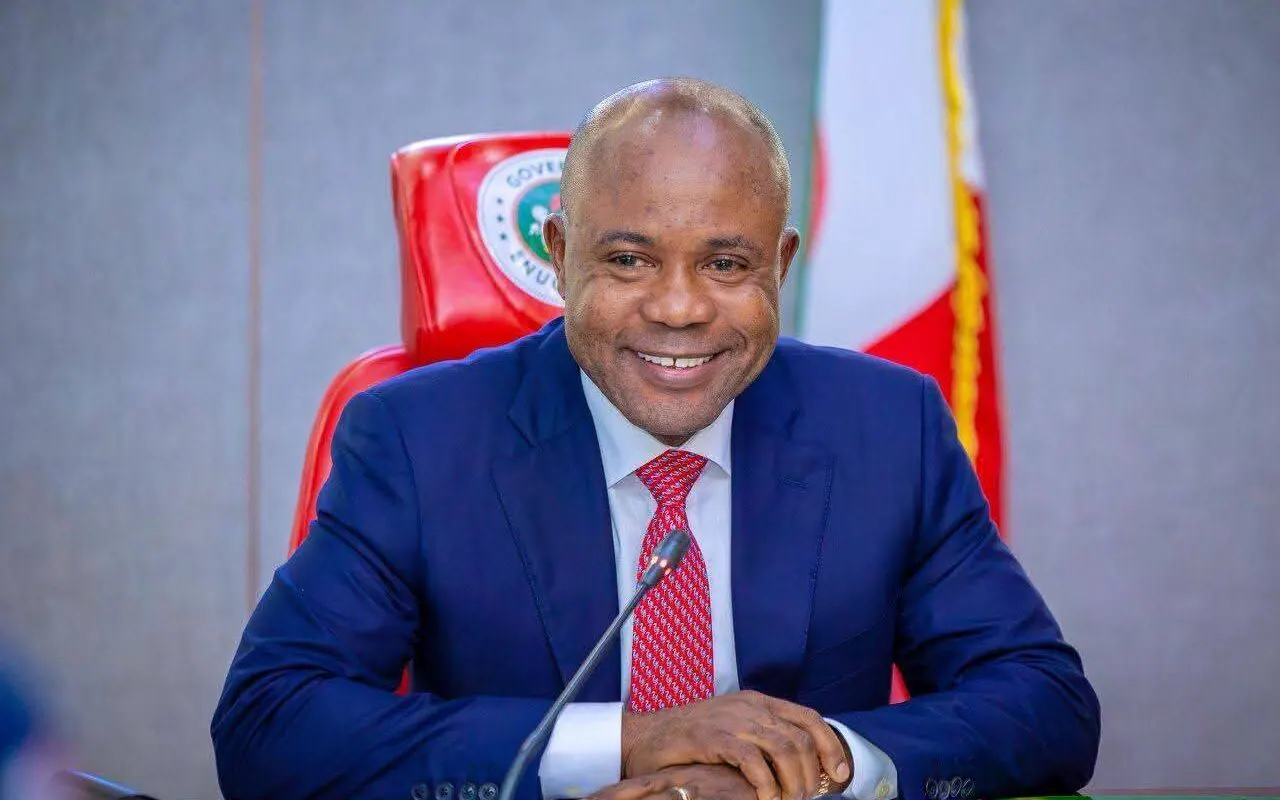
The Enugu State Government has announced a 25-year state plan aimed at sustaining growth, infrastructure, and development beyond the current administration's tenure. Governor Peter Mbah, represented by Secretary to the State Government, Chidiebere Onyia, unveiled the plan at the 2026 Global Goals Week Symposium in Enugu. The symposium, organized by the State Office of Sustainable Development Goals, had the theme "From Projects to Lasting Impacts." The plan is designed to shift the state's development focus from individual projects and administrations to institutions, policies, systems, and long-term planning.
The 25-year plan will provide a framework for successive administrations to sustain and improve development across various sectors, including economy, education, healthcare, infrastructure, agriculture, environment, technology, and human capital development. According to Governor Mbah, the plan will be based on credible data, measurable indicators, and effective monitoring mechanisms to determine the impact of government investments. This approach aims to ensure that development gains are preserved and built upon, rather than starting afresh with each change in government.
A key aspect of the plan is the sustainability of infrastructure, such as smart schools and healthcare facilities. Governor Mbah emphasized that sustainability depends not only on construction but also on adequate staffing, maintenance, financing, technology, and management systems. He also highlighted the need to view roads as economic corridors that connect communities, expand access to markets, and create opportunities for residents, rather than just physical infrastructure.
The state government is also strengthening digital governance to improve transparency, traceability, and accountability. Governor Mbah stressed that reliable data will be critical to measuring progress under the 25-year plan. He called for greater citizen ownership of public infrastructure and urged residents to protect government projects, emphasizing that they belong to the people.
Juliet Chiluwe, UNICEF Chief, Enugu Field Office, spoke at the symposium, emphasizing that sustainable development should be measured by the extent to which projects continue to improve people's lives after completion. She highlighted UNICEF's concerns about investments in children, including education, health, nutrition, water, and sanitation, social protection, and child protection. Chiluwe stressed that lasting impacts will be seen when children can attend school regularly, learn effectively, and contribute meaningfully to society.
Other speakers at the symposium praised Governor Mbah's administration for infrastructure delivery and urged the government to focus on translating ongoing projects into lasting development that directly improves residents' lives. Frank Nweke Jr, a former Minister of Information and National Orientation, emphasized the need to link major investments to defined development challenges and measurable outcomes. Onyinye Akubuilo-Okpalanma, Senior Special Assistant to Governor Mbah on SDGs, urged participants to provide practical solutions and measurable pathways for sustaining the state's development transformation.
The Enugu State Government's 25-year development plan aims to create continuity and ensure that development gains are sustained beyond the current administration's tenure. The plan's success will depend on collaboration among government, the private sector, development partners, academia, civil society organizations, communities, and young people. With a focus on institutions, policies, systems, and long-term planning, the state aims to achieve lasting impacts and improve the lives of its residents.
Key points
- Enugu State Government unveils 25-year development plan to sustain growth and infrastructure.
- The plan aims to shift focus from individual projects to institutions, policies, systems, and long-term planning.
- The plan's success depends on collaboration among stakeholders and a focus on measurable outcomes.