The Enugu State government, led by Governor Peter Ndubuisi Mbah, is nearing the completion of a 300-bed International Hospital, a flagship project designed to revolutionize healthcare in the region. The hospital, flagged off in November 2024, is a quaternary-care center offering advanced medical services, including oncology, critical care, and interventional cardiology. This move is part of a broader strategy to retain value, build capacity, and reposition Enugu State as a regional medical tourism destination. With an estimated $1-2 billion spent annually by Nigerians on medical tourism, the state aims to capture a significant share of this market.
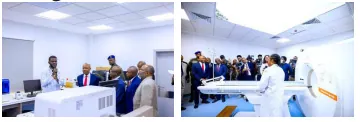
A pre-launch tour by Governor Mbah revealed state-of-the-art facilities, including multiple intensive care units, a coronary care unit, modular operating theaters, kidney dialysis suites, and onsite water treatment and sterilization infrastructure. The hospital will also feature MRI and CT suites, blood banking, recovery wards, and a fully equipped physiotherapy gym. These capabilities will close specific gaps that have long compelled patients to leave the country for medical care. The hospital's equipment and facilities are designed to meet international standards, providing patients with access to high-quality medical care.
The success of the hospital depends on the recruitment of clinical and support talent from across the world. The administration has launched a structured recruitment campaign for various positions, including Heads of Clinical Departments, Medical Consultants, Senior Registrars, and Registrars, as well as nursing and support staff. The offer of competitive salaries, career progression pathways, and continuous professional development training signals an intentional strategy to attract and retain high-caliber professionals. This staffing architecture is essential if the hospital is to function at the clinical standard its equipment promises.
Governor Mbah's approach to healthcare reform is systemic rather than episodic. The International Hospital sits atop a rebuilt primary and secondary foundation, comprising approximately 260 Type-2 primary healthcare centers distributed across every political ward, upgrades to cottage and general hospitals, and concurrent modernization of teaching hospitals. This pyramid is designed so that referral pathways function effectively, with primary facilities handling first contact and stabilization, secondary sites managing intermediate needs, and the quaternary hub absorbing complex cases.
The hospital is explicitly positioned as both a service provider and a teaching-research platform for medical students from state tertiary institutions. This will address the twin deficits of equipment access and skills retention, providing students with hands-on experience and exposure to advanced medical equipment and techniques. The hospital's role as a teaching-research platform will also contribute to the development of medical research and innovation in the region.
Economically, the project is framed as market capture and value retention. By offering diagnostics and therapeutics previously available primarily abroad, the state seeks to retain a meaningful share of the outbound medical spend. Even a conservative capture of 10 percent of a multi-billion-dollar market yields substantial local revenue, employment, and multiplier effects across hospitality, aviation, and ancillary services. The deliberate courting of diaspora clinicians further mitigates brain drain, with state-of-the-art infrastructure and structured career incentives intended to reverse the unidirectional flow of talent.
The project's success will depend on sustained financing for consumables and maintenance, transparent clinical governance, continuous professional development, and effective integration with national health insurance and regulatory frameworks. Early external recognition from WHO and development partners suggests the broader reform trajectory is credible. With the hospital set to realize its potential as West Africa's medical hub, Enugu is poised to attract patients from across the region, retain healthcare spending within the domestic economy, and draw highly skilled medical professionals back home.
Key points
- Enugu State's 300-bed International Hospital is a quaternary-care center offering advanced medical services, including oncology, critical care, and interventional cardiology.
- The hospital's success depends on the recruitment of clinical and support talent from across the world, with competitive salaries and career progression pathways on offer.
- The project aims to capture a significant share of the $1-2 billion spent annually by Nigerians on medical tourism, retaining value and building capacity in the region.