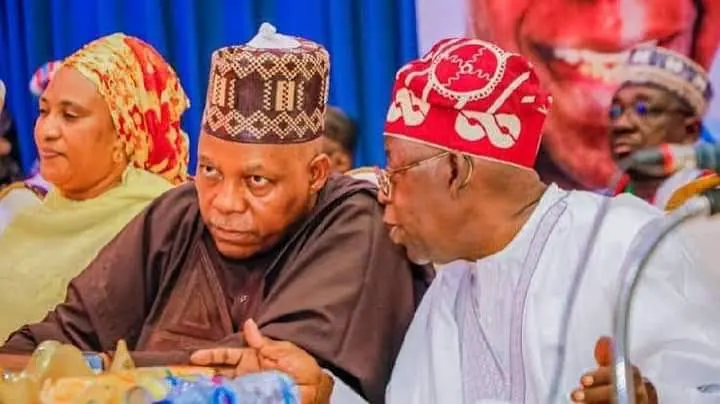
The Nigerian Presidency has confirmed that Vice President Kashim Shettima will represent President Bola Ahmed Tinubu at the 81st Session of the United Nations General Assembly in New York. According to Senior Special Assistant to the President on Media and Communications, Office of the Vice President, Stanley Nkwocha, Shettima will lead a delegation that includes Rivers State Governor Siminalayi Fubara, Zamfara State Governor Dauda Lawal, ministers, and other senior government officials. The UN's official programme shows that the General Debate of the 81st General Assembly will take place from September 22 to 28, 2026.
President Tinubu's absence at the UNGA marks a sharp departure from earlier official indications that he would attend. In July 2026, Nigeria's Permanent Representative to the United Nations, Ambassador Jimoh Ibrahim, had announced that Tinubu would attend the 81st UNGA and present his administration's reform achievements. However, uncertainty intensified after the Presidency indicated that Tinubu would return to Nigeria following his three-week vacation in Europe, with no clear confirmation of a New York trip.
This will be the third consecutive time President Tinubu will miss the UNGA since assuming office in May 2023. He attended the 78th session in September 2023, where he delivered his maiden address calling for UN reforms and increased investment in Africa. However, he was absent at the 79th session in 2024 and the 80th in 2025, both led by Vice President Shettima. Shettima is expected to deliver Nigeria's national statement during the General Debate, outlining the country's position and priorities on national development, international peace and security, economic growth, and multilateral cooperation.
The Vice President will also participate in high-level meetings on issues including the Right to Development, climate action, reform of global financial architecture, sustainable development, and climate finance. He will attend the traditional reception for heads of delegation and hold bilateral meetings with foreign leaders, international organisations, and development partners on the sidelines of the General Assembly. These engagements will provide Nigeria with an opportunity to advance President Tinubu's economic diplomacy, deepen strategic partnerships, and strengthen advocacy for Africa.
Atiku Abubakar, former Vice President and African Democratic Congress presidential candidate, has criticised President Tinubu's absence at the UNGA for the third consecutive year. Atiku said Tinubu's absence does not bode well for Nigeria's image and challenged the Presidency to explain why Tinubu is missing among global leaders. A seat was reportedly secured for Tinubu near United States President Donald Trump at the world's most important annual diplomatic gathering, but he refused to occupy it.
Atiku questioned whether the President's documented history with United States law-enforcement agencies has become a burden on Nigeria's foreign relations. He said Vice President Shettima may represent Nigeria capably, but a delegation cannot permanently substitute for presidential authority. Atiku warned that presidential absence on the global stage has consequences, including fewer investments, fewer businesses, and fewer jobs, which can lead to economic pressures on Nigerian families.
Atiku described as extraordinary the cost of $9m lobbyists and an empty seat at the UNGA. He said Nigeria cannot afford an absentee president, and Tinubu cannot continue to treat Nigeria's seat at the world's biggest diplomatic table as though it were an inconvenient appointment that can be endlessly outsourced.
Key points
- President Bola Ahmed Tinubu will not attend the 81st Session of the United Nations General Assembly in New York, with Vice President Kashim Shettima leading Nigeria's delegation instead.
- This marks the third consecutive year Tinubu will miss the UNGA, sparking criticism from former Vice President Atiku Abubakar that it does not bode well for Nigeria's image.
- Atiku warned that Tinubu's absence could have economic consequences for Nigeria, including fewer investments and jobs.