Emirates SkyCargo has delivered 2,100 aid kits to Malawi, made from upcycled aircraft equipment, reaching vulnerable communities in Zomba. The kits were distributed through healthcare and community outreach programmes. The cargo airline partnered with The Sparkle Foundation, a member organisation of Dubai Humanitarian, for final distribution. The aid kits were built almost entirely from retired aviation equipment, showcasing a creative approach to sustainability.
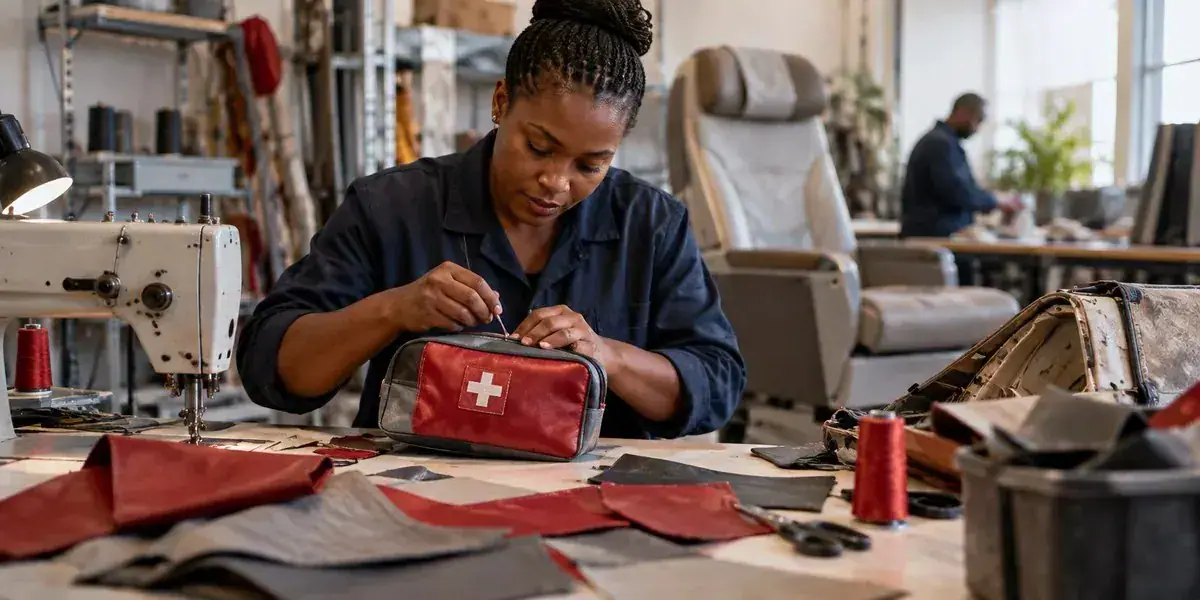
The kits originated as Aircraft on Ground bags, known as AOG bags, introduced by Emirates SkyCargo in 2018. These bags were used to carry urgent spare parts. When a newer generation of bags replaced them, the airline redirected the retired stock rather than disposing of it. Upholsterers at the Emirates Engineering Centre converted the bags into first aid cases. This initiative resulted in the Aircrafted programme, which aimed to give retired equipment a second life.
The finished kits used 97% upcycled materials, drawing on AOG bags, leather offcuts and components from the airline’s cabin retrofit programme. Employee volunteers then packed each case with essential medical supplies. The upcycling process not only reduced waste but also provided essential medical supplies to communities in need. This approach demonstrates a practical way for companies to contribute to sustainable development.
An Emirates SkyCargo freighter carried the consignment directly to Malawi. The Sparkle Foundation received the kits on arrival and deployed them across community health sites in Zomba. The entire supply chain, including engineering, logistics, packing and last-mile delivery, ran through a single coordinated programme. This streamlined approach ensured efficient delivery of the aid kits.
The Aircrafted programme demonstrates that aviation infrastructure can contribute directly to healthcare delivery in underserved markets. The model is straightforward: a retired operational asset acquires a second life with measurable community impact. This approach links an ESG claim to a defined product, a named recipient and a documented delivery route.
The structure of the programme also shows how private logistics capacity can support aid chains. Dubai Humanitarian connects companies with nonprofits, while The Sparkle Foundation manages community delivery. Emirates SkyCargo supplies the transport and the goods, with each party having a clear role. This discipline matters to development finance observers, as aid programmes that depend on a single donor or a one-off gesture rarely scale.
The Aircrafted initiative is small in absolute terms but has the potential to be replicated. The next signal to watch is whether Emirates scales the programme, and whether other carriers adopt comparable upcycling models for their own retired equipment. If scaled, this programme could have a significant impact on healthcare delivery in underserved markets.
Key points
- 2100 aid kits were delivered to Malawi through the Aircrafted upcycling programme.
- The kits were made from 97% upcycled materials.
- The programme demonstrates a practical approach to sustainable development and healthcare delivery.