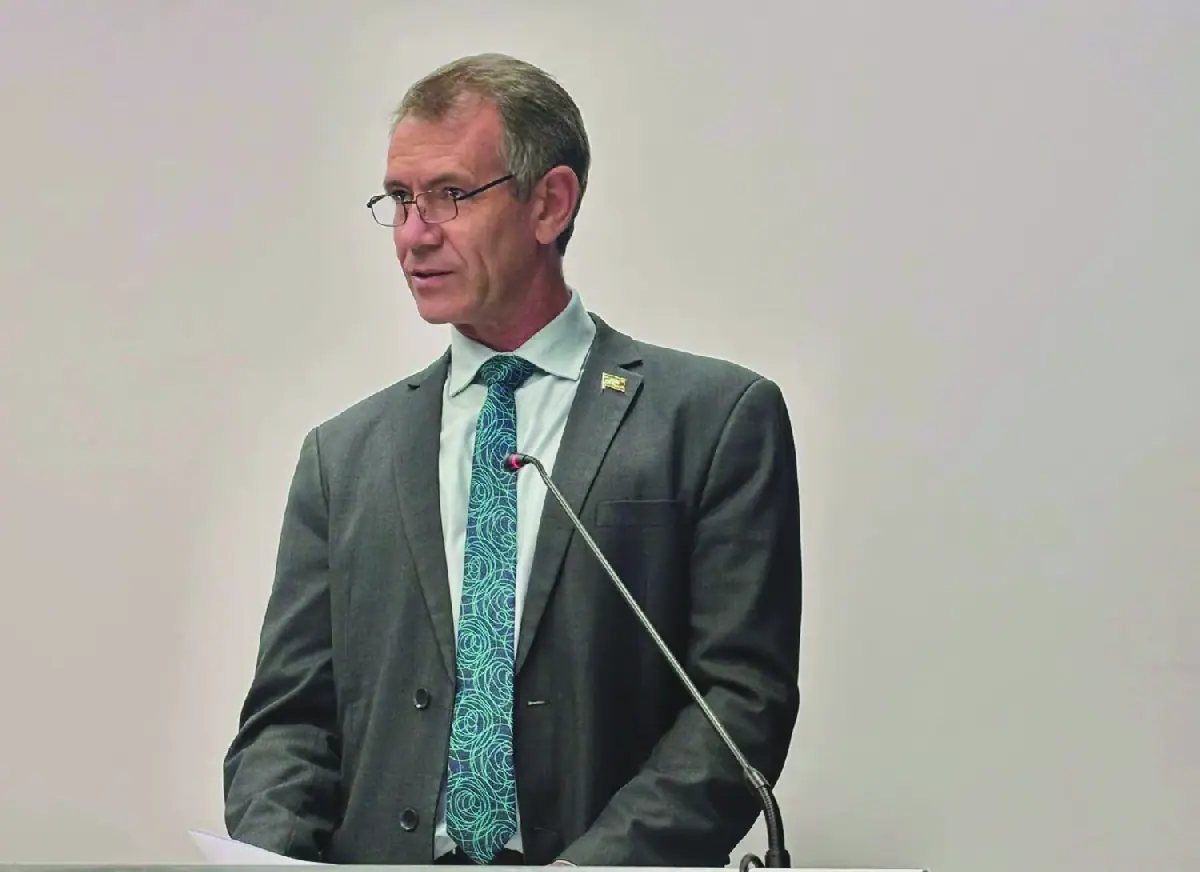
Eswatini's economic growth has not translated into improved living standards for its citizens, with many struggling with debt. Minister Rijkenberg attributes this to excessive borrowing, as individuals take on more debt, leaving them with little disposable income. He notes that despite the country's economic indicators showing signs of progress, citizens are not feeling the benefits of improved economic conditions.
Rijkenberg was responding to concerns raised by Eswatini Observer reporter Sibusiso Dlamini about the government's borrowing patterns. Dlamini questioned the reliance on loans for budget support rather than infrastructure projects capable of generating economic returns. Rijkenberg explained that citizens need to assess how their personal circumstances have changed over the past five years, arguing that many have acquired more possessions but are struggling financially due to borrowing habits.
The minister notes that salary adjustments, including cost of living adjustments, do not necessarily translate into improved living standards. Some of the additional income is absorbed by loan repayments, creating a cycle where individuals commit much of their income to servicing loans rather than meeting other needs. This situation makes it difficult for citizens to feel the benefits of economic progress, even when the country's economic circumstances are improving.
Rijkenberg acknowledges that the country's economic growth is at 5%, but it has not yet reached its desired level of economic development. He defends the use of loans, arguing that borrowing is not necessarily harmful if the money is invested in viable projects supported by sound business cases and capable of generating returns. The government considers a debt level of about 45% of gross domestic product (GDP) manageable and conservative for the kingdom.
Rijkenberg cites Zambia as an example of the dangers of excessive borrowing, where debt has risen to approximately 100% of GDP. He argues that Eswatini should maintain a more conservative threshold of 45%, while the global average debt level stands at about 66% of GDP. The minister maintains that taking calculated financial risks through properly assessed investments can stimulate economic activity and create thousands of jobs.
The key consideration, according to Rijkenberg, is whether borrowed funds are channelled towards projects with clear business cases and the capacity to deliver economic benefits. He emphasizes that most Emaswati are living beyond their means, taking on too much debt. The minister's comments come as the government seeks to support more than infrastructure lending, with concerns raised about outstanding loans secured in the previous year.
Rijkenberg's warning comes as the country faces concerns about its financial standing, with Eswatini TV's Lington Gule questioning whether the country is headed for doom with its many loans. The minister's response highlights the need for responsible borrowing and investment, as the country balances economic growth with financial stability. The government's borrowing patterns and debt levels will likely remain under scrutiny as the country seeks to achieve its economic development goals.
Key points
- Eswatini's economic growth has stalled, with citizens struggling with debt.
Reporting sources
- Emaswati living beyond their means · Swazi Observer