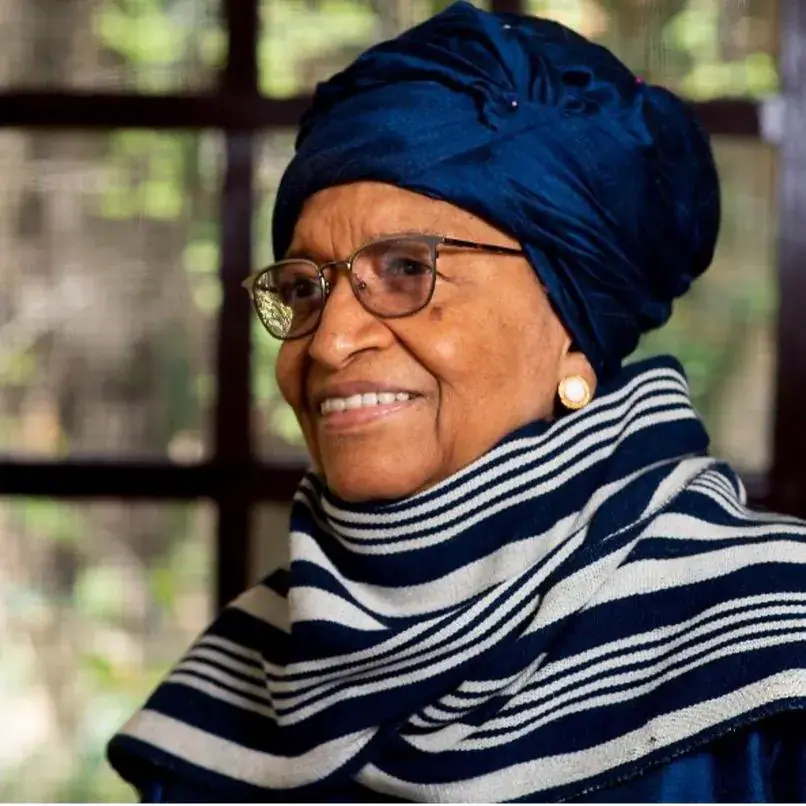
Ellen Johnson Sirleaf, the former President of Liberia, has spoken for herself for most of Liberia's modern history. At 88 years old, her public words now form a record of their own. This record, drawn from speeches, letters, testimony, and interviews across four decades, shows a leader who rarely claimed final victory. The word she returns to most often is "fragile," which she used to describe Liberia's gains in 2011 and Africa's progress in 2025.
Sirleaf was born in Monrovia on October 29, 1938. She took the title of her 2009 memoir, "This Child Will Be Great," from a prediction made over her as a newborn by an old man. She has told the story with a mixture of amusement and seriousness, as a family tale that she later had reason to remember. The road from that prophecy ran through Liberia's Treasury, where she began her career in 1965, through banking and the United Nations, and through the prison cell and exile that followed her clashes with the military government of Samuel Doe in the 1980s.
One of the hardest public admissions made by Sirleaf was about her support for Charles Taylor, a warlord who would later become President of Liberia. Testifying before the Truth and Reconciliation Commission (TRC) in February 2009, she acknowledged that she had backed his rebellion against Doe in its early days, while denying that she was ever part of the rebel movement. Her apology was short: "I was fooled by Mr. Taylor." She told the commission that the regret stayed with her daily.
On January 16, 2006, Sirleaf took the oath as Africa's first elected woman head of state. In her inaugural address, she promised Liberians "a fundamental break with the past" and pledged to fight corruption in a government that would run on a donor-backed program overseeing public spending. Two months later, she stood before a Joint Meeting of the United States Congress in Washington and set a target that would follow her for 12 years: "We will strive to be America's success story in Africa."
The word that recurs most often in Sirleaf's public speech is "fragile." In June 2011, speaking at the United States Institute of Peace (USIP) in Washington, she listed Liberia's economic gains and its strengthening democracy and then cautioned her audience: "In Liberia, as elsewhere in Africa, our gains are fragile." Fourteen years later, in Freetown in July 2025, she used the same idea about the whole continent, telling African women leaders at the NALAFEM Summit that progress is fragile, "especially in fragile states."
On December 10, 2011, Sirleaf delivered her Nobel lecture in Oslo, sharing the Peace Prize with fellow Liberian Leymah Gbowee and Yemen's Tawakkol Karman. The committee had honored the three women for their non-violent struggle for the safety of women and for women's right to full participation in peacebuilding. In the lecture, she spoke of the cost of Liberia's wars in the plainest terms she has used before an international audience: "We have paid in the currencies of blood, of tears, and of dignity."
As Sirleaf prepared to leave office in 2018, she delivered her farewell message to the nation on January 17. She reviewed 12 years in office, counted two peaceful elections and a transfer of power as proof of a democracy taking root, and asked Liberians to stand behind the incoming administration. Her legacy, as told through her own words, is one of a leader who prioritized peace and worked tirelessly to build a better future for Liberia.
Key points
- Sirleaf's public words reveal a leader who measured herself against peace more than power.
- She often used the word "fragile" to describe Liberia's gains and Africa's progress.
- Her hardest public admission was about her support for Charles Taylor, for which she apologized in 2009.