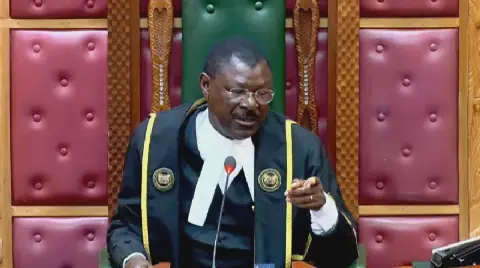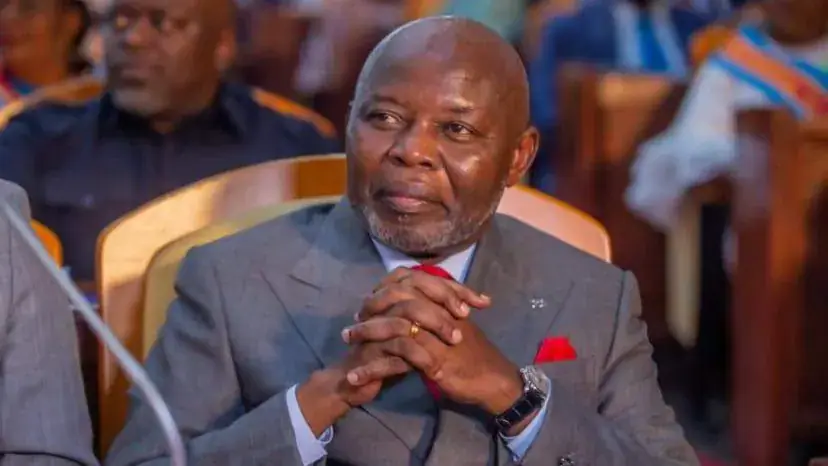
A significant shake-up is underway within the Union for the Congolese Nation (UNC) party in the Democratic Republic of the Congo. Eleven high-ranking members, including national deputies and government officials, have publicly disavowed their party leader, Vital Kamerhe. This move comes after Kamerhe's recent media appearance, where he criticized the government's handling of the security crisis in the eastern part of the country. The disavowal was made public through a statement released on November 25, 2026, in Kinshasa.
The signatories of the statement, which include prominent figures such as Jean Baudouin Mayo Mambeke, Aimé Sakombi Molendo, and Marcel Danau-Ekutu, expressed their disappointment with Kamerhe's attitude, which they described as irresponsible. They emphasized that the current situation in the east of the Democratic Republic of the Congo demands a clear and responsible stance. The country's leadership is expected to take a firm position against aggression, work towards the recovery of occupied territories, and promote national unity.
The eleven high-ranking members also criticized Kamerhe for questioning the government's handling of the war and the allocation of military resources. They argued that such matters should be discussed within the party and in line with the responsibilities assumed within the presidential majority, known as the Sacred Union of the Nation. Kamerhe's public comments were seen as contradicting the party's stance and potentially undermining the military's efforts.
Furthermore, the disavowing members expressed concern over Kamerhe's public remarks against the military hierarchy. They felt that his comments did not adequately acknowledge the efforts of the armed forces and risked eroding public trust in the military. The situation in the Democratic Republic of the Congo is sensitive, with the country facing aggression and threats to its territorial integrity.
The co-founders of the UNC party, including Baudouin Mayo and Sakombi Molendo, emphasized the need for the country to unite in the face of external threats. They warned that Kamerhe's comments could have a demobilizing effect and undermine national cohesion. The party members called for a responsible and patriotic approach to addressing the country's challenges.
Vital Kamerhe's comments have sparked a strong reaction within his party and among the Congolese public. As a prominent figure in the UNC and a member of the presidential majority, Kamerhe's stance on the security crisis has been closely watched. The disavowal by eleven high-ranking members of his party underscores the internal divisions and challenges facing the UNC.
The incident highlights the complexities of Congolese politics, particularly in the context of national security and international pressures. The Democratic Republic of the Congo continues to face significant challenges, including aggression from external forces and internal divisions. The UNC party's internal dynamics reflect the broader tensions and power struggles within the country's political landscape.
Key points
- The disavowal of Vital Kamerhe by eleven high-ranking members of the UNC party reflects internal divisions over the handling of the security crisis in the eastern Democratic Republic of the Congo.
Reporting sources
- UNC : onze hauts cadres désavouent Kamerhe · Ouragan.cd