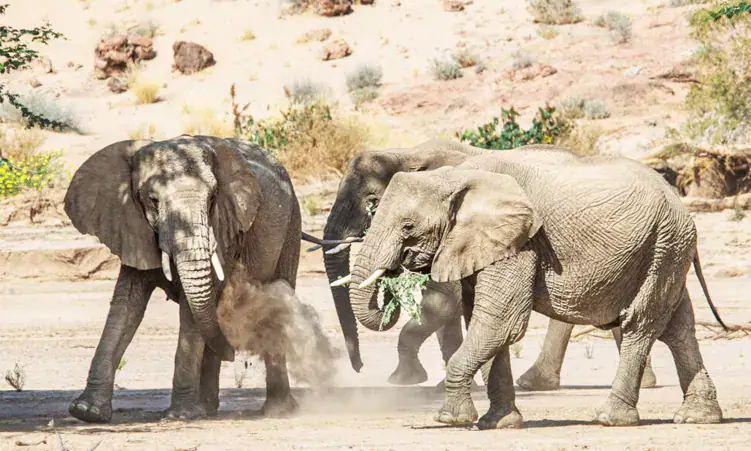
Health outreach teams in Namibia's Kunene region are struggling to provide essential services to remote communities due to encounters with elephants. The teams are forced to cancel planned visits, leaving families waiting for services they may struggle to access elsewhere. Residents of Braunfels, a community with a population of 356 people, recently experienced a six-month gap between outreach visits, raising concerns about access to healthcare.
Community health worker Berlinda Haraes, who serves the area, says elephants pose a significant safety risk to outreach teams traveling across the farms. She travels extensively, sometimes walking up to 10 kilometers a day, to reach scattered households and check on children, pregnant women, and other residents who need assistance. Her duties include checking children's immunization status, screening for malnutrition, and identifying pregnant women.
The challenges faced by health workers in Kunene came into focus during a recent visit by United Nations Children's Fund (Unicef) regional director for eastern and southern Africa Etleva Kadilli. During the visit, community health workers raised concerns about worn-out uniforms, particularly their boots, which they need to travel long distances across rural terrain. The outreach programme conducted during the visit highlighted the importance of reaching children in remote communities.
Senior medical officer Rusa Nangolo emphasized the significance of outreach services in providing maternal, newborn, and child health care, as well as support for community health workers. She highlighted the importance of health screening, water, sanitation, and hygiene interventions in hard-to-reach areas. Community leader Rebecca Nanuses called on community members and stakeholders to unite and support those in need.
Residents have appealed for health teams to return more regularly, citing the six-month gap between outreach visits as a significant challenge. The community has a population of 356 people, including 58 children, and community health workers cover 14 farms and approximately 350 households. The outreach programme aims to provide essential services, including immunization, malnutrition screening, and HIV support.
Unicef's Etleva Kadilli's presence in the region reflects the organization's commitment to reaching every child, including those in hard-to-reach areas. The visit highlighted the importance of collaboration between stakeholders to address the challenges faced by health workers in Kunene. Community health workers play a vital role in providing essential services to remote communities.
The situation in Kunene underscores the need for innovative solutions to address the challenges faced by health workers in remote areas. The presence of elephants, worn-out uniforms, and limited resources all contribute to the difficulties faced by outreach teams. Key stakeholders, including Unicef and the Namibian government, must work together to find sustainable solutions to ensure that remote communities receive essential health services.
Key points
- Health outreach teams in Kunene face challenges due to elephant encounters and limited resources.
- The six-month gap between outreach visits leaves families waiting for essential services.
- Unicef and the Namibian government must collaborate to find innovative solutions to address the challenges faced by health workers in remote areas.