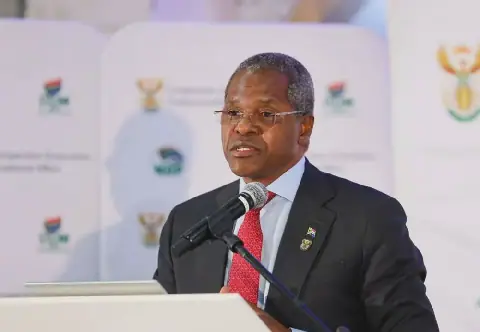
The High Court in Mbarara, Uganda, has ordered the Electoral Commission to pay the legal costs incurred by Nathan Byanyima, a Member of Parliament for Bukanga North County in Isingiro District. The court's decision was made on November 23, 2026, after dismissing an election petition filed by Tumuhimbise, who challenged Byanyima's victory in the January 2026 parliamentary elections. The petition cited alleged electoral irregularities, including the omission of results from 32 polling stations.
The Electoral Commission had declared Byanyima the winner of the contest, with 19,932 votes, while Tumuhimbise secured 10,745 votes. Tumuhimbise's petition argued that the excluded polling stations had 10,592 registered voters, and their exclusion could have affected the election outcome. Byanyima's winning margin was 9,187 votes. However, the court ruled that although Tumuhimbise established instances of electoral non-compliance, he failed to demonstrate that the irregularities substantially affected the election results.
Justice Bonny Isaac Teko, who delivered the judgment, described the omission of results from the 32 polling stations as a material breach of the Electoral Commission's statutory obligations. The judge exercised his discretion to order the Electoral Commission to pay Byanyima's allowable costs, subject to taxation by the Registrar. The court declined to award separate costs to Tumuhimbise and ruled that he should not be required to pay costs to the Electoral Commission or the Returning Officer.
Byanyima's lawyer, Peter Mukidi Walubiri, had disputed the allegations of electoral offences, arguing that the petitioner's witnesses failed to provide evidence of specific figures allegedly altered or produce declaration of results forms showing the claimed alterations. Byanyima also submitted that incorporating results recovered from five polling stations would have increased his winning margin by 1,075 votes.
The court's decision to order the Electoral Commission to pay Byanyima's legal costs was based on its failure to include results from the 32 polling stations in the final constituency tally. Justice Teko ruled that it would be unjust to determine responsibility for legal costs solely based on the dismissal of the petition while disregarding the Commission's established failure.
The judge also found insufficient evidence linking Byanyima personally, or with his knowledge and approval, to the alleged electoral offences. The court consequently upheld Byanyima's election as the directly elected Member of Parliament for Bukanga North County following the January 15, 2026 polls. The Electoral Commission was ordered to pay Byanyima's allowable costs as assessed by the Registrar.
The dismissal of the petition and the order to pay Byanyima's legal costs bring closure to the election dispute. The court's decision emphasizes the importance of the Electoral Commission's compliance with statutory obligations and the need for petitioners to demonstrate substantial effects on election results. The case highlights the critical role of the judiciary in ensuring the integrity of Uganda's electoral process.
Key points
- The Electoral Commission was ordered to pay Nathan Byanyima's legal costs due to its failure to include results from 32 polling stations in the final constituency tally.
- The court dismissed the election petition filed by Tumuhimbise, who challenged Byanyima's victory in the January 2026 parliamentary elections.
- The judge found insufficient evidence linking Byanyima to the alleged electoral offences.