Ethiopia's economy may experience a significant slowdown in 2027 due to El Niño-driven rainfall shortages, according to a recent analysis by the International Food Policy Research Institute (IFPRI). The country's GDP growth could be 0.4-1.1% lower than projected, with an average reduction of 0.8%, depending on the severity of the weather shock. This comes as a concern, given that agriculture accounts for a significant portion of Ethiopia's economy.
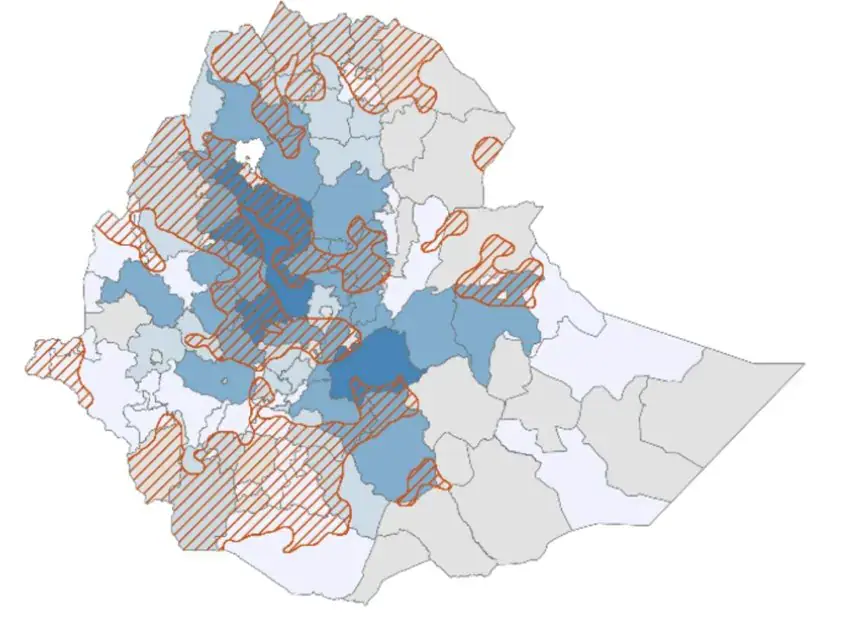
The IFPRI study warns that weak rainfall combined with elevated global fuel prices could push an additional 905,000 people into poverty and 2.8 million into undernourishment under a moderate-risk scenario. Researchers estimate that the kiremt rainy season, which occurs from June to September, has seen poor rainfall across major crop-producing areas, with some locations logging record dryness. Satellite imagery and field reports reveal reduced cultivated land and deteriorating crop conditions in northern and eastern zones.
An IFPRI rapid assessment notes an estimated 6% reduction in land planted with maize and sorghum in parts of North Shewa and North Wollo. The meher harvest, gathered between October and December, accounts for over 95% of Ethiopia's annual agricultural output. Researchers modeled three scenarios, including a mild shock, moderate shock, and severe shock, with varying reductions in agricultural productivity. The moderate case combines rainfall deficits, delayed rains, and prolonged dry spells that cut both acreage and yields.
Under the severe scenario, dry highlands could experience a 9.6% production drop, including a 10.8% crop contraction, while dry lowland output falls by 6.5%. Moist systems are expected to fare better, illustrating uneven agroecological exposure. Moist highland-cereal systems account for roughly 54.6% of agricultural value added, with dry highlands contributing 23.6%. Ethiopia faces higher domestic fuel costs linked to Middle East market disruptions and shipping bottlenecks in the Strait of Hormuz.
Local fuel prices were about 40% higher in August 2026 than at the start of the year, while Brent crude averaged $113 per barrel in September, nearly 72% above January levels. The World Bank's fertilizer index averaged 165.5 in 2026, a 20% increase over 2025. However, researchers note that fuel prices alone will have a limited effect on 2027 economic output, as export performance tied to currency depreciation offsets higher energy costs.
Household welfare suffers as costlier industrial goods squeeze consumers. Under baseline conditions, about 42.6 million Ethiopians (30.2% of the population) are projected to live below the $3-a-day international poverty line in 2027, with 28.5 million experiencing undernourishment. The researchers urge early preparations ahead of peak humanitarian needs between June and August 2027, warning that ongoing conflict in northern Ethiopia could further compound vulnerabilities.
The IFPRI study highlights the need for proactive measures to mitigate the effects of El Niño on Ethiopia's economy and household welfare. With agriculture remaining vulnerable, the country's economic growth and food security are at risk. The researchers' findings emphasize the importance of addressing climate-related shocks to ensure sustainable economic growth and poverty reduction in Ethiopia.
Key points
- El Niño-driven rainfall shortages may slow 2027 GDP growth by up to 1.1%.
- 905,000 people may be pushed into poverty and 2.8 million into undernourishment under a moderate-risk scenario.
- Agriculture accounts for over 95% of Ethiopia's annual output during the meher harvest season.
Reporting sources
- El Niño threatens harvest, could slow 2027 GDP growth by up to 1.1% · Capital Ethiopia