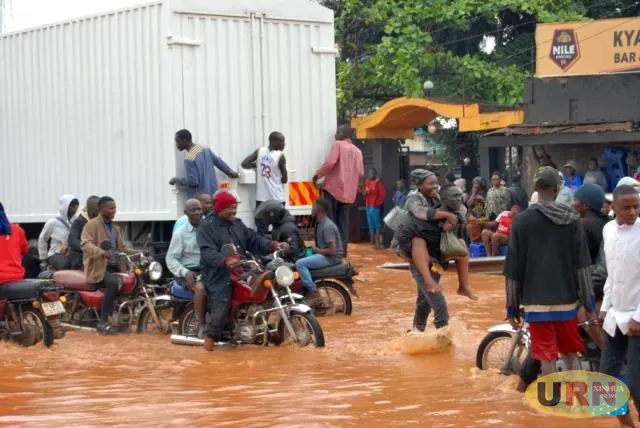
The Ugandan government is bracing for El Niño rains, which are expected to hit the country between September and December. According to the Office of the Prime Minister (OPM), almost 80 percent of Uganda is expected to receive above-normal rainfall, increasing the risk of floods, landslides, and damage to infrastructure. The OPM has developed a costed preparedness and response plan, but it is yet to receive funding.
The plan, which covers sectors including agriculture, food security, health, water and sanitation, education, and disaster coordination, needs to be approved by Cabinet before resources can be allocated. Assistant Commissioner for Disaster Management in the OPM, Rose Nakabugo, said the lack of resources is already affecting the government's ability to prepare for predictable emergencies. Insufficient funds are hindering the procurement and pre-positioning of relief items and emergency equipment.
The expected rainfall is likely to reverse Uganda's recent weather challenge, a severe dry spell that contributed to food shortages and deaths in some areas, particularly Karamoja. The government now expects most parts of the country to move into a rainy period with enhanced rainfall. Nakabugo warned that the anticipated rainfall could increase the risks of floods and landslides and cause damage to infrastructure.
Uganda's challenge reflects a wider problem identified at a regional forum: governments and humanitarian agencies are increasingly developing anticipatory-action plans, but financing is not keeping pace with the plans. A regional survey found significant funding gaps among anticipatory-action plans, with only a minority of plans having full funding pre-arranged for activation.
Maureen Ambani, who coordinates anticipatory action for the World Food Programme's regional office for Eastern and Southern Africa, called for financing to be arranged before rainfall and flooding begin. She highlighted the critical challenge of translating plans into actual actions without pre-arranged financing in place.
Uganda says it already has the legal and institutional framework needed to coordinate anticipatory action. Nakabugo said Uganda's Disaster Preparedness and Management Policy assigns the OPM the responsibility of coordinating disaster-risk management. The framework brings together government agencies, development partners, and local governments to share forecasts, identify high-risk areas, and agree on response strategies.
The government is working with the Uganda Red Cross Society to strengthen volunteer networks that can support monitoring, damage assessments, and search-and-rescue operations. Some high-risk local governments and urban areas have limited preparedness and response capacity, while critical infrastructure remains vulnerable. Nakabugo emphasized that early action is more effective and less costly, citing Uganda's experience from previous El Niño conditions.
Key points
- The Ugandan government is yet to secure funding for its El Niño preparedness plan.
- Insufficient resources are hindering the procurement and pre-positioning of relief items and emergency equipment.
- The expected El Niño rains pose a significant risk of floods, landslides, and damage to infrastructure in Uganda.