A severe drought caused by El Niño has devastated the north and east of Ethiopia, leading to significant food shortages and economic hardship. The drought has resulted in the failure of the Kiremt rains, which in turn has cut the Meher harvest in these regions. This has had a ripple effect on food prices, with maize prices climbing by 70-90% in just nine months.
The impact of the drought is being felt across the country, with projections for 2027 showing Ethiopia's GDP 0.4-1.1% below baseline due to the drought and higher fuel prices. A moderate scenario predicts that 905,000 more people will be pushed into poverty and 2.8 million more will be undernourished. The situation is expected to worsen, with emergency food needs peaking between June and August 2027.
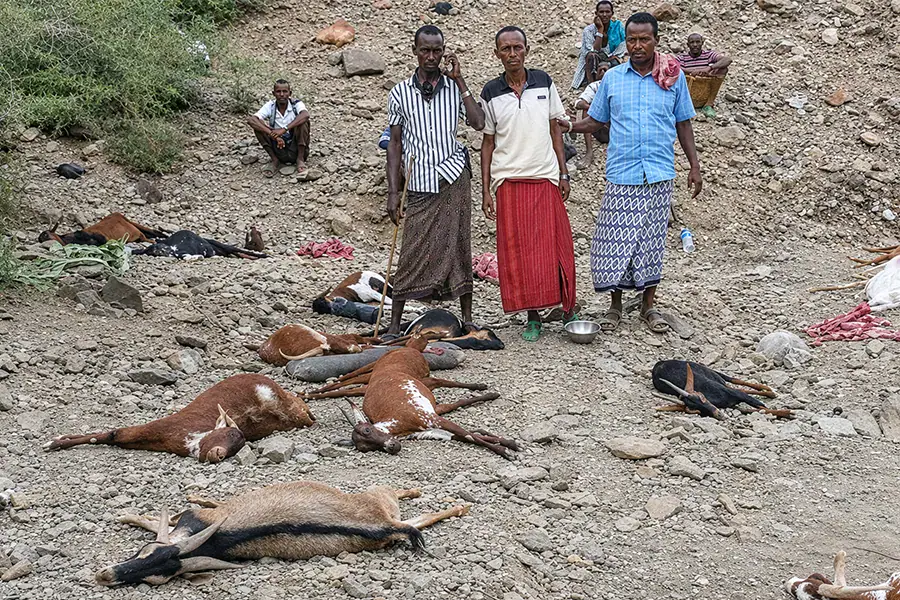
The effects of the drought are being felt by communities and individuals, with many livestock dying due to lack of food and water. Hussen Bori, a resident of Berhale Woreda in Afar Regional State, lost 250 of his goats in a single day due to the severe drought. Desalegn Shaqa, a farmer from Kure Kebele in the North Shewa Zone of Oromia Regional State, has also been affected by the drought, which has impacted his maize crop.
Experts are urging the government and humanitarian organizations to take immediate action to mitigate the effects of the drought. They recommend water harvesting, planting short-cycle crops, and using drought-resistant fodder as some of the responses to the crisis. These measures can help to reduce the impact of the drought and support communities and individuals affected by it.
The drought has also highlighted the need for long-term solutions to address the impact of climate change on agriculture and food security in Ethiopia. The government and international organizations must work together to develop and implement sustainable solutions to support farmers and pastoralists in the face of climate-related shocks.
The situation in Ethiopia is a stark reminder of the devastating impact of El Niño on food security and livelihoods. The international community must provide urgent support to affected communities and work with the government to develop long-term solutions to address the root causes of food insecurity and poverty.
As the situation continues to unfold, it is essential that the government and humanitarian organizations prioritize the needs of the most vulnerable communities. This includes providing emergency food assistance, supporting livestock health, and promoting sustainable agricultural practices. By working together, it is possible to mitigate the effects of the drought and support the recovery of affected communities.
Key points
- Maize prices have surged 70-90% in nine months due to the drought caused by El Niño.
Reporting sources
- El Niño Leaves Granaries Bare, Herds Dying in the North and East · addisfortune.news/