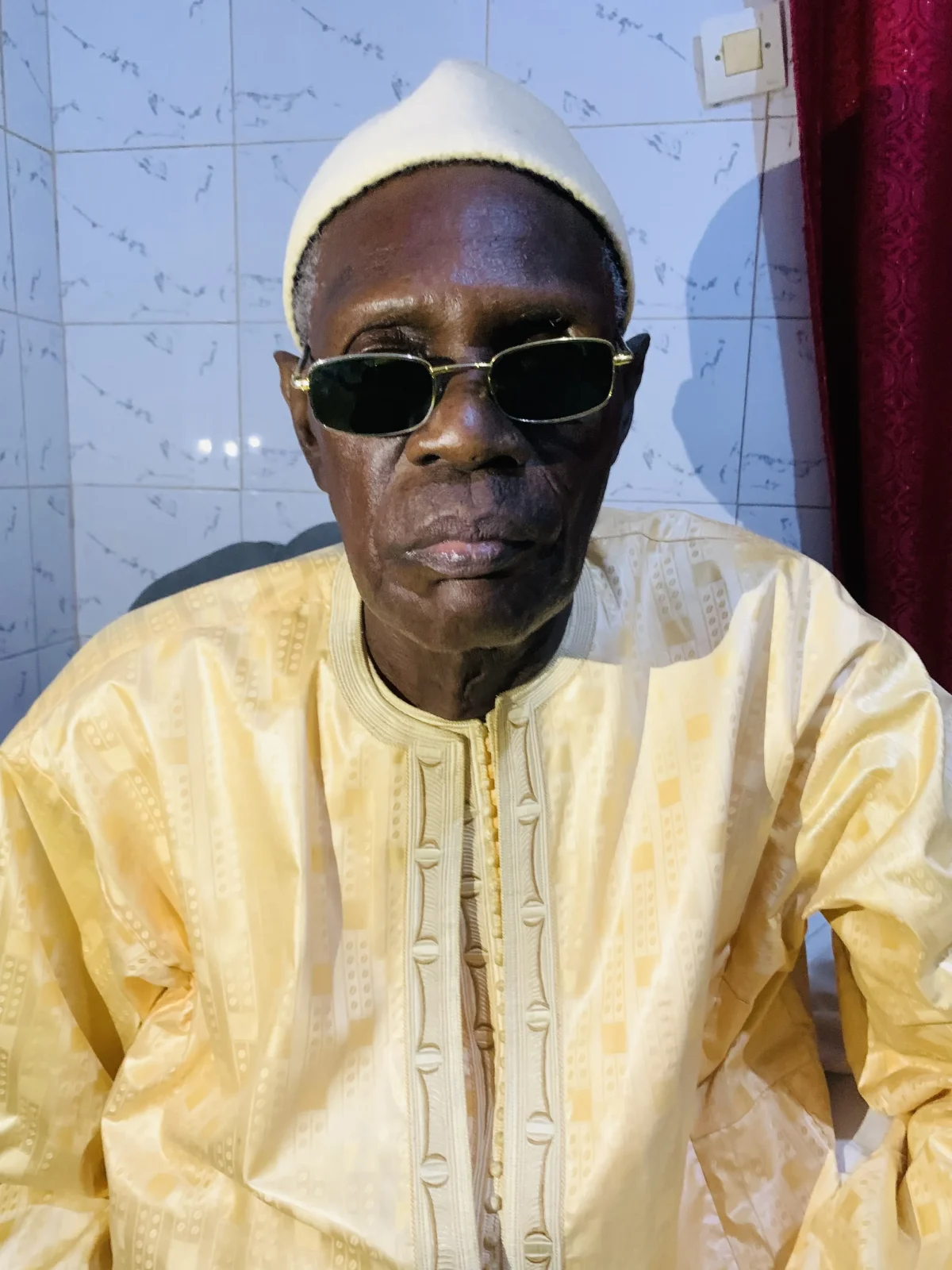
El Hadji Mbassou Ngom, a 79-year-old griot from Senegal, has dedicated his life to preserving the history of Rufisque, his hometown. Born on September 11, 1947, in the Lébou neighborhood of Dangou, Ngom developed a passion for storytelling and traditional music from a young age. His father, a history enthusiast, instilled in him the importance of preserving the past. Ngom's talent for oral tradition was evident at the 1966 Festival mondial des arts nègres, where he represented Rufisque as a tambour-major at just 19 years old.
Ngom's journey as a griot began with his grandfather, who taught him the art of playing the tam-tam. He quickly developed his skills, and his talent was recognized by his community. As a young man, Ngom had dreamed of becoming a doctor, but a broken leg at 13 forced him to re-evaluate his path. He turned to music and storytelling, becoming an accomplished griot and communicator. His expertise has earned him the respect of his community, including Rufisque's mayor, Mamadou Diop Thioune, who acknowledges Ngom's value as a historian and cultural ambassador.
Ngom's memory is remarkable, and he can recall the names of Rufisque's mayors in chronological order, starting with Ngalandou Diouf in 1919. He remembers significant events, such as the suppression of Rufisque's autonomous commune in 1964 and its subsequent reinstatement in 1984. Ngom's knowledge of Rufisque's history is not limited to politics; he also shares stories about the city's cultural and economic development. His contributions have been recognized through various initiatives, including the construction of the Maison des arts Adja Khar Mbaye, a result of the twinning between Rufisque and Nantes in 1992.
Ngom's family has been a significant part of his journey. His children and nieces and nephews praise his generosity, kindness, and dedication to his craft. His son, Mamadou Cora Ngom, was named after former mayor Mamadou Cora Fall, a testament to Ngom's respect for his community's leaders. Ngom's niece, Mame Fatou Ndiaye, describes him as a "boundless sea" of knowledge and kindness. His family's involvement in his work has ensured the continuation of his legacy, with his son Ndiapaly taking over as tambour-major in 1993.
Throughout his career, Ngom has built strong relationships with Rufisque's mayors, including Cora Fall and Mbaye Jacques Diop. He credits them with supporting his work and providing opportunities for his family. Ngom's contributions to Rufisque's cultural scene have been invaluable, and his legacy continues to inspire new generations. As a guardian of Rufisque's memory, Ngom has ensured that the city's history and traditions will be preserved for years to come.
Ngom's impact extends beyond Rufisque; his work has also been recognized internationally. He has traveled to various countries, including France, where he has shared his knowledge and culture with diverse audiences. His experience at the Festival mondial des arts nègres in 1966 was a turning point in his career, and he has continued to build on the connections he made during that event. Ngom's dedication to his craft has earned him a reputation as a master griot and communicator.
As Ngom looks back on his life's work, he is proud of the impact he has had on his community. He has inspired a new generation of griots and communicators, ensuring that Rufisque's history and traditions will continue to thrive. Ngom's legacy serves as a testament to the power of oral tradition and the importance of preserving cultural heritage. His story is a remarkable example of resilience, dedication, and passion for one's craft.
Key points
- El Hadji Mbassou Ngom is a renowned griot and historian from Rufisque, Senegal, who has dedicated his life to preserving the city's cultural heritage.
- Ngom's expertise in oral tradition has earned him recognition both locally and internationally, and he continues to inspire new generations of griots and communicators.
- Through his work, Ngom has built strong relationships with Rufisque's leaders and community members, ensuring the continuation of the city's history and traditions.