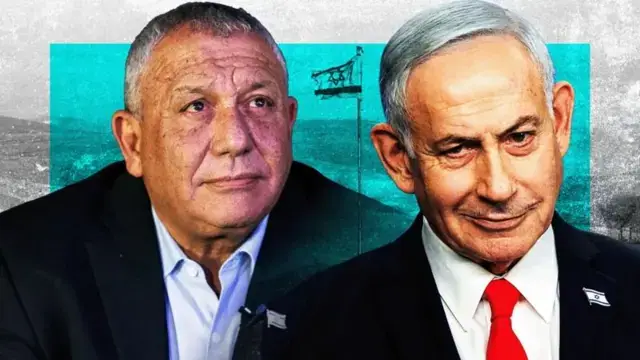
Israeli politician Gadi Eisenkot has extended an invitation to Prime Minister Benjamin Netanyahu to engage in swift discussions on the possibility of establishing a national unity government. This development comes on the heels of Netanyahu's proposal for a power-sharing agreement through an alternating prime ministerial arrangement. The move is set against the backdrop of Israel's persistent political tensions following the general elections held in late October, which failed to yield a clear majority for any party.
Eisenkot, tasked by Israeli President Isaac Herzog with forming a new government, has been striving to garner support from various parties to oust Netanyahu's administration. In his proposal announced on social media on Saturday night, Netanyahu expressed willingness to put aside political differences and accept Eisenkot as the prime minister, with Netanyahu serving as deputy prime minister initially. Responding to the proposal, Eisenkot indicated readiness to engage in talks, provided that Netanyahu's Likud party demonstrates genuine intent to form a unity government.
Eisenkot has invited Netanyahu and his team to a meeting at the Dan Accadia Hotel in Herzliya for prompt discussions. He has set a 24-hour deadline to determine if Likud is prepared to engage in genuine negotiations for a unity government. This comes as Eisenkot had previously pledged to declare a new government by December 6, the last day of his official term, not utilizing the 14-day extension he was entitled to request. However, his efforts have been hindered by political differences concerning Arab parties, Orthodox Jewish religious parties, and the potential for cooperation with Likud.
On Friday, Eisenkot criticized Likud for delaying government formation talks, alleging that the party has failed to present any foundational proposals for over two weeks. Concurrently, Netanyahu's opponents have criticized his proposal for sharing the prime ministerial role. Youssef Jabareen, leader of the Joint List, stated that citizens desire Netanyahu's removal and the establishment of a new leadership representing both Jewish and Arab Israelis. Former Prime Minister Yair Lapid characterized Netanyahu's proposal as another political maneuver to deceive his partners.
In a related development, Israeli media reports suggest that Mansour Abbas, leader of the Raam party, is considering recognizing Hamas as a terrorist organization. This move could potentially pave the way for his party's participation in a government possibly led by Eisenkot. However, in an interview with Channel 12 television, Abbas refrained from making a direct statement about recognizing Hamas, noting that such a decision could significantly impact the Arab community in Israel and their relations with Palestinians in the West Bank and Gaza Strip.
Abbas highlighted that the two Arab parties, Raam and Joint List, have already supported a bill to establish an investigative committee into the failure of Israel's security systems during the October 7, 2023, attacks. Currently, Eisenkot's Yashar party has reached cooperation agreements with the Democrats and Israel Beiteinu parties. Together, these three parties hold 36 seats out of the 120 in the Israeli Parliament, meaning they still need to secure support from additional lawmakers to achieve the 61-seat threshold required to form a majority government.
The fate of Israel's next government now hinges on Eisenkot's ability to forge agreements with politically disparate parties, while Netanyahu attempts to leverage the national unity proposal to remain part of the country's leadership. The success of these talks will determine the future political landscape of Israel, as the country continues to grapple with internal divisions and external pressures.
Key points
- Eisenkot invites Netanyahu to talks on a national unity government amid Israel's political tensions.
- Netanyahu proposes an alternating prime ministerial arrangement with Eisenkot.
- The formation of a new government is crucial for addressing Israel's ongoing political instability.