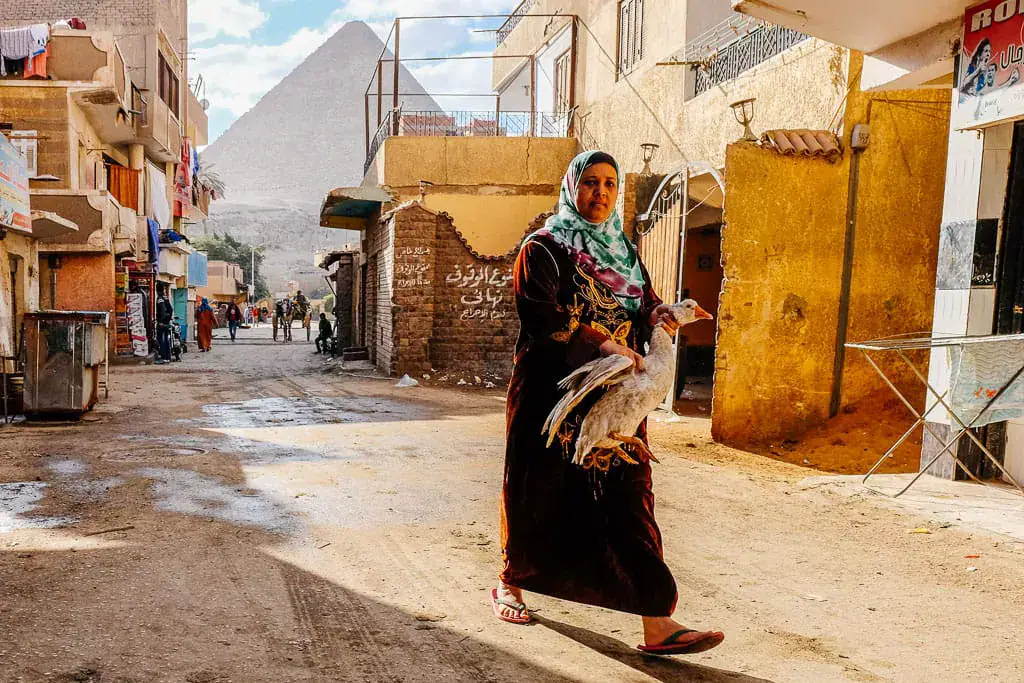
Egyptians are increasingly opting for access over ownership as financial pressures mount. The traditional notion of ownership providing long-term financial value and independence is being reevaluated. With rising costs, many are finding it difficult to afford major purchases, leading to a growing demand for alternatives that provide access without requiring a significant upfront investment. This shift is evident in various aspects of daily life, from transportation to office spaces.
The financial gap between ownership and access is particularly pronounced in the case of private cars. In Cairo, traffic congestion and limited public transportation make private vehicles highly valuable for daily mobility. However, purchasing a car requires a substantial financial commitment that does not align with earnings. According to Egypt's National Council for Wages, the private-sector minimum wage was raised to EGP 7,000 (USD 131) per month in March 2025. The locally assembled Nissan Sunny, one of the more affordable new sedans, had a listed starting price of EGP 665,000 (USD 12,449) for its manual version.
The cost of owning a car is a significant burden for many Egyptians. At the private-sector minimum wage of EGP 7,000 (USD 131) per month, purchasing the Nissan Sunny outright would require approximately 95 months of gross earnings, or nearly eight years, assuming the entire salary was saved. This calculation excludes living expenses and additional costs such as fuel, maintenance, insurance, and repairs. In response, public transportation and ride-hailing services are becoming more popular alternatives, although they vary in cost, accessibility, and convenience.
A 2019 study by researchers affiliated with the Abdul Latif Jameel Poverty Action Lab (J-PAL) found that participants who received a 25 percent discount on Uber rides in Cairo used the service 175 percent more frequently than those paying regular fares. However, using ride-hailing services regularly can be expensive, particularly for daily commuters. Public transportation may be a more affordable alternative, although it does not always offer the same convenience. For many Egyptians, relying on these services is not a matter of preference but a reflection of the financial difficulty of purchasing a private car.
The shift towards access over ownership is also evident in the office space market. Changing work patterns have contributed to demand for flexible office arrangements, including coworking and serviced spaces. According to a December 2025 report by the American Chamber of Commerce in Egypt, businesses are seeking workspaces that accommodate changing workforce sizes and offer shorter rental commitments. Flexible offices provide an alternative to traditional long-term leases, allowing businesses to rent ready-to-use spaces without taking on additional responsibilities.
The expansion of flexible workspaces in Egypt is evident in the growth of companies like the International Workplace Group (IWG), which operates coworking and serviced office brands including Regus and Spaces. By November 2024, IWG had established 17 centers across the country. Additionally, a flexible workspace project was launched by MQR, formerly known as AlMaqarr, and Nile City Investments at Nile City Towers in Cairo, featuring 32 private offices, three meeting rooms, and two shared working areas.
The choice between buying and renting is not limited to cars and offices. Egyptians are also turning to rental platforms for items such as evening dresses, professional cameras, and camping equipment. Platforms like Rento and Aggarli offer a range of items for rent, providing a practical alternative to buying for occasional use. As financial pressures continue to mount, Egyptians are reevaluating their priorities and opting for access over ownership in various aspects of daily life.
Key points
- Egyptians are turning to alternatives like public transportation, ride-hailing, and flexible workspaces due to rising costs and financial pressures.
- The financial gap between ownership and access is particularly pronounced in the case of private cars, with purchasing a car requiring a substantial financial commitment that does not align with earnings.
- The shift towards access over ownership is also evident in the office space market, with businesses seeking flexible office arrangements that accommodate changing workforce sizes and offer shorter rental commitments.
Reporting sources
- Why Some Egyptians Are Paying to Use Instead of Buying to Own · Egyptian Streets