The Feed Ghana Programme, a government initiative aimed at boosting agricultural production, has been found to have a significant policy gap in climate resilience. An assessment conducted by the Council for Scientific and Industrial Research (CSIR) Science and Technology Policy Research Institute (CSIR-STEPRI) revealed that the programme lacks alignment with the climate resilience pillar of the Comprehensive Africa Agriculture Development Programme (CAADP) Kampala Strategy.
The CSIR-STEPRI assessment was part of efforts to strengthen the use of research evidence in government decisions. The research team, led by Dr Justina Onumah, identified both strong areas and significant gaps in the alignment of the Feed Ghana Programme with continental agricultural targets. The programme's climate resilience component was found to be in need of urgent attention, despite having set ambitious production targets.
The assessment proposed four options to address the gaps in the Feed Ghana Programme. These options included revising the Food and Agriculture Sector Development Policy to align it with CAADP, aligning the Feed Ghana Programme directly with the continental framework without revising the sector policy, undertaking both revisions simultaneously, or maintaining the existing arrangements without immediate changes.
The options were evaluated based on policy coherence, feasibility, timing, continuity of the programme, and cost. According to Dr Onumah, the findings were particularly important because the existing agricultural sector policy, introduced in 2008, was currently undergoing revision. The CSIR-STEPRI had been included in the technical committee working on the new policy and was expected to contribute evidence to the process.
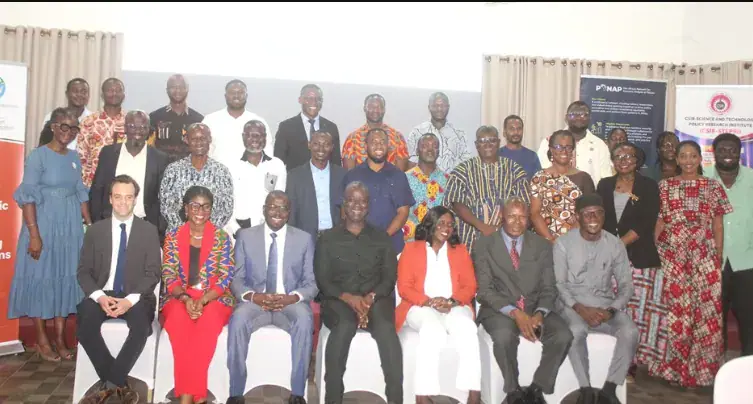
The Research-to-Policy Co-Lab, where the findings were presented, aimed to improve cooperation between research institutions and government agencies. The initiative sought to ensure that research findings were available when policymakers needed them. The event brought together researchers and policymakers to discuss practical solutions to problems confronting the country.
The Chairman of Parliament's Select Committee on Food, Agriculture and Cocoa Affairs, Dr Godfred Seidu Jasaw, commended the initiative, stating that it offered an opportunity to close the longstanding gap between researchers and policymakers. He emphasized that research must move beyond academic publications and provide practical solutions to problems.
The Feed Ghana Programme's policy gap in climate resilience has raised concerns about its readiness to address the growing impact of climate change on agricultural production. The programme's revision, in line with the CAADP framework, is expected to enhance its climate resilience and contribute to the country's agricultural development.
Key points
- The Feed Ghana Programme lacks alignment with the climate resilience pillar of the Comprehensive Africa Agriculture Development Programme (CAADP) Kampala Strategy.
- The programme's climate resilience component needs urgent attention despite having set ambitious production targets.
- Four options have been proposed to address the gaps in the Feed Ghana Programme, including revising the Food and Agriculture Sector Development Policy or aligning the programme with the CAADP framework.
Reporting sources
- Feed Ghana Programme lacks climate resilience alignment — CSIR · The Ghanaian Times