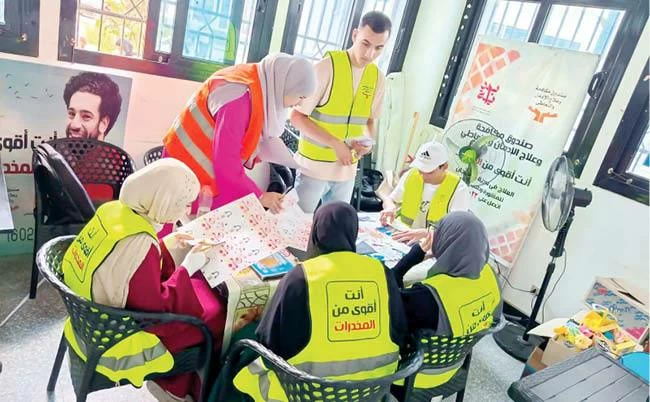
The volunteer houses, affiliated with the Fund for Combating and Treating Addiction and Abuse, have seen significant engagement from university students during the first two weeks of the new academic year. These houses have transformed into hubs of creative ideas, with hundreds of students daily participating in activities aimed at raising awareness about the dangers of drug abuse and addiction. The activities, conducted within the fund's fixed premises in universities, utilize innovative methods to educate students about the risks associated with drug use.
The volunteer houses target young university students, aiming to educate them on how to prevent drug abuse, address inquiries regarding the harms of addiction, and correct misconceptions. For instance, some believe that drugs can enhance focus and memory. The houses also emphasize the importance of choosing the right friends and other misguided notions. To achieve these goals, the fund implements various awareness programs and training sessions to protect students from addiction and encourage them to volunteer and join the fund's association of volunteers.
The fund relies on "prevention through innovative methods" in its plan, launching the initiative "See it Before You Experience it" using virtual reality technology and modern tech to illustrate the psychological, physical, and social harm caused by drugs. This initiative provides educational and interactive simulations that introduce users to the risks of addiction, teaching them refusal skills in a safe environment. The goal is to enhance awareness and decision-making abilities, exposing users to peer pressure situations to train them to say "no" to drugs.
Dr. Amr Osman, director of the Fund for Combating and Treating Addiction and Abuse, stated that the volunteer houses represent a crucial arm of the fund in reaching young people where they are. The fund currently has volunteer houses in several universities and plans to expand to new locations as part of the national plan to combat drugs and limit the risks of abuse and addiction. This plan was launched under the auspices of the President and is being implemented in cooperation with relevant ministries and entities.
The fund focuses on using innovative awareness methods, most notably virtual reality technology, which was recently launched. This technology allows young people to witness firsthand the negative effects of drugs on health, social life, and career, thereby reinforcing preventive messages. Dr. Osman also mentioned that the past period saw a significant influx of young people applying to join the fund's volunteer association, which currently comprises over 36,000 volunteers.
Volunteers undergo specialized training programs in the field of prevention to qualify them as ambassadors for the fund within their universities and local communities. They are equipped to correct misconceptions related to drugs and address their peers' inquiries. University students participating in the volunteer houses' activities expressed their satisfaction with the experience, stating that it helped them understand the reality of drugs, particularly new synthetic ones, and how to protect themselves and their friends.
The activities provided students with opportunities to acquire leadership and volunteer work skills, and they gained insight into the physical, psychological, and social effects of drugs through the fund's virtual reality technology. The students appreciated the experience, saying it enabled them to comprehend the dangers of drug abuse and addiction and learn how to resist peer pressure.
Key points
- The Egyptian government has launched a national plan to combat drugs and limit the risks of abuse and addiction.
- The Fund for Combating and Treating Addiction and Abuse has volunteer houses in several universities, with plans for expansion.
- Over 36,000 volunteers are currently part of the fund's association, working to raise awareness about the dangers of drug abuse and addiction.