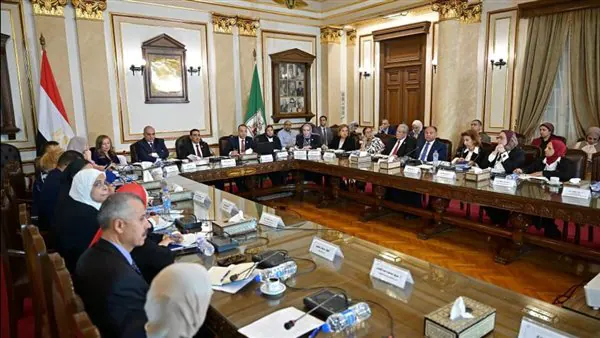
Cairo University recently organized a university listening session focused on the economic axis. The event saw the participation of 25 faculty members from various relevant colleges and specialties, along with 14 experts and officials from five ministries and government institutions. These included the Ministry of Finance, Ministry of Investment, Ministry of Planning, Ministry of Industry, and the Central Bank of Egypt. The session aimed to contribute scientifically to the national dialogue on economic issues.
The listening session was held in response to an invitation from President Abdel Fattah El-Sisi to hear the opinions of academics, experts, and specialists on various national issues and files. This is in preparation for the launch of Egypt Forum 2026, scheduled to take place from October 19-24, 2026. The event reflects Cairo University's commitment to utilizing its scientific and research capabilities in addressing national issues.
Cairo University's President, Dr. Mohamed Sami Abdel Sadek, emphasized that the session is part of the university's response to the President's invitation. He highlighted the university's role as a hub of expertise and a beacon of science and knowledge. The university seeks to employ its scientific and research potentials in serving national issues and allowing specialists to present their views and analyses within a framework of responsible scientific dialogue.
Dr. Mahmoud El-Saeed, Vice President of Cairo University for Postgraduate Studies and Research, and Director of the University's Listening Sessions, noted that the session featured a diverse range of specialties and participating expertise. This diversity contributed to addressing the economic axis from multiple angles. He stressed the importance of integrating academic vision with practical and institutional experience when discussing economic issues.
The session covered three main axes, including foreign exchange resources and debt management. Participants discussed sources of foreign exchange, ways to enhance sustainability, and the relationship between exports and imports. They also examined the burdens of interest and financing needs, managing debt maturity, and diversifying revenue sources and investments.
The second axis dealt with the informal economy, the private sector, and investment. Discussions revolved around the size of the informal economic activity, ways for businesses and workers to transition to the formal economy, and the relationship between the private sector and the state. Participants also addressed issues such as credit costs, procedures, and social protection for workers in the informal sector.
The third axis tackled economic transformation, productivity, and competitiveness. The discussions included rates of productivity growth, the role of the private sector in investment, growth, and job creation, and diversifying the export base. Participants also explored the gap in technical skills, production costs, and the use of modern technology in production and transportation.
Key points
- Cairo University hosts a listening session on Egypt's economic challenges with 25 professors, 14 experts, and officials.
- The session aimed to contribute scientifically to the national dialogue on economic issues.
- The event reflects Cairo University's commitment to utilizing its scientific and research capabilities in addressing national issues.