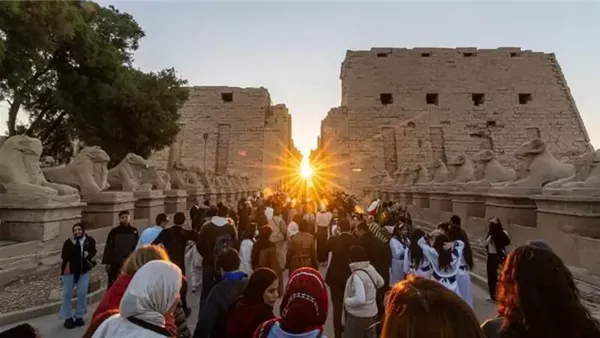
The temples of Karnak in Luxor, Egypt, are set to experience a spectacular phenomenon as the autumnal equinox begins. On September 23, 2026, the sun's rays will illuminate the sacred areas of the temples, showcasing the ingenuity of ancient Egyptian architecture and astronomy. This event, which occurs annually, highlights the alignment of the sun's rays with the temple's architectural features.
According to Dr. Manar Abbadi, head of the Sun Research Laboratory at the National Institute for Astronomical and Geophysical Research, the autumnal equinox officially begins at 3:05 am. This marks the start of the astronomical autumn season. The phenomenon is made possible by the precise alignment of the sun's rays with the temple's openings and axes, allowing sunlight to penetrate the inner chambers of the temples.
The sun's rays will begin to appear and penetrate the sacred chambers at 12:40 pm, when the sun's elevation reaches approximately 64 degrees. Visitors can observe the changing movement of light and shadows within the temples until the solar noon. This spectacle demonstrates the advanced astronomical knowledge and architectural skills of the ancient Egyptians.
The Karnak temple complex, one of the largest and most important religious sites in ancient Egypt, is a testament to the civilization's sophisticated understanding of astronomy and architecture. The complex, built over several historical periods, features numerous temples, halls, and other structures. The ancient Egyptians referred to Karnak as "Ipetsut," or "the most distinguished place."
The phenomenon of the sun's rays illuminating the Karnak temples underscores the significance of this archaeological site. It reveals the precision and skill with which the ancient Egyptians designed and built their temples, taking into account the movement of the sun and its relationship to the seasons. This event is a major tourist attraction, drawing visitors and enthusiasts of archaeology and astronomy.
The Egyptian Ministry of Tourism and Antiquities notes that the Karnak complex was a major religious center in ancient Thebes and features several impressive structures, including the Temple of Amun-Ra, the Great Hypostyle Hall, and the Sacred Lake. The complex provides a unique glimpse into the spiritual and cultural practices of ancient Egypt.
As the sun's rays illuminate the Karnak temples, visitors can appreciate the intersection of astronomy, architecture, and history. This phenomenon highlights the ingenuity and advanced knowledge of the ancient Egyptians, who were able to harness the power of the sun and create magnificent structures that continue to inspire wonder and awe today.
Key points
- The temples of Karnak in Luxor, Egypt, experience a spectacular phenomenon as the autumnal equinox begins, with sunlight illuminating the sacred areas of the temples.
- The event showcases the advanced astronomical knowledge and architectural skills of the ancient Egyptians, who designed and built the temples to align with the movement of the sun.
- The phenomenon is a major tourist attraction, drawing visitors and enthusiasts of archaeology and astronomy to the Karnak temple complex.