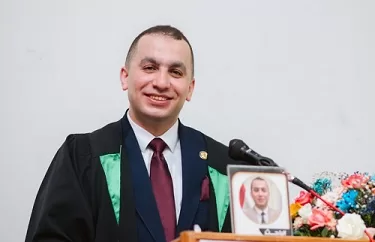
The Faculty of Law at Beni Suef University recently discussed a doctoral thesis by researcher Mahmoud Riyadh Saeed, Deputy Public Prosecutor, titled "Criminal Protection for Consumers from Deceptive Commercial Advertisements." The study, which received a "very good with honors" rating, sheds light on the growing problem of deceptive marketing in Egypt. As economic and technological advancements intensify competition and diversify commercial activities, consumers have become more vulnerable to exploitation.
The research highlights the need for legislative intervention to address deceptive marketing, both locally and internationally. It analyzes the Egyptian Consumer Protection Law No. 181 of 2018, which criminalizes deceptive advertising and outlines penalties and precautionary measures. The study also examines the integration of this law with the Commercial Law No. 17 of 1999 and the established principles of the Court of Cassation.
Deceptive marketing has become a pressing issue in Egypt, with the rapid growth of digital marketing platforms creating new challenges for consumers. The study emphasizes that the current laws and regulations may not be sufficient to address these challenges. Therefore, it proposes several key recommendations to limit commercial deception, including the development of a precise legislative definition of deception that keeps pace with digital marketing mechanisms.
The study's recommendations also include adopting an objective standard to facilitate the identification and classification of deceptive advertisements. Additionally, it suggests implementing a "relative fine" system tied to the size of the company's business, ensuring that fines are not simply considered marginal operating costs. This approach aims to deter companies from engaging in deceptive marketing practices.
The thesis was evaluated by a committee consisting of Dr. Rafeat Mohamed Ali Rashwan, Professor of Criminal Law at Beni Suef University and advisor to the Abu Dhabi Police Commander; Dr. Khaled Safwat Bahnsawi, Professor and Head of the Criminal Law Department at Beni Suef University; and Dr. Mohamed Hussein Musa, Associate Professor of Criminal Law at Asyut University.
The committee praised the study's systematic integration and scientific rigor, stating that it represents a significant academic and practical contribution to criminal studies and legislative policy-making in consumer protection. The study's findings and recommendations are expected to inform policy decisions and improve the protection of consumers in Egypt.
The study's author, Mahmoud Riyadh Saeed, is a Deputy Public Prosecutor who has demonstrated a strong commitment to addressing consumer protection issues. His research has the potential to inform future legislative reforms and enhance the Egyptian government's efforts to safeguard consumers from deceptive marketing practices.
Key points
- The study calls for a precise legislative definition of deception to keep pace with digital marketing mechanisms.
- The research proposes adopting an objective standard to identify and classify deceptive advertisements.
- The study suggests implementing a "relative fine" system tied to the size of the company's business to deter deceptive marketing practices.