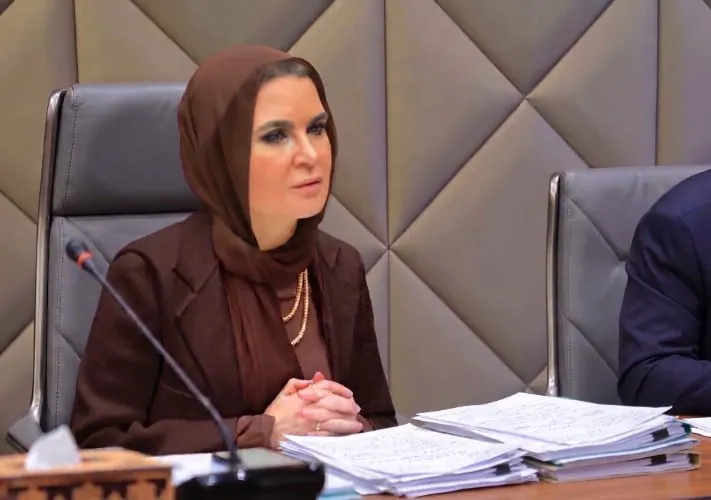
Dr. Sahar Nasr, Deputy Chair of the Senate's Economic and Financial Affairs Committee, emphasized the significance of early parliamentary participation in discussing and drafting economic and trade agreements. This involvement ensures that international commitments align with national legislative frameworks, supporting effective and sustainable economic policy implementation. Her remarks were made during a high-level parliamentary session at the World Trade Organization's Public Forum in Geneva.
The session, organized by the Inter-Parliamentary Union and the World Trade Organization, focused on "Engaging Parliaments in Sustainable Services Trade." It brought together representatives from national parliaments worldwide, along with experts in trade, economics, and public policy. Dr. Nasr represented the Arab Republic of Egypt at the event. The discussions underscored the importance of trade in services as a key driver of economic growth.
Dr. Nasr highlighted that trade in services plays a pivotal role in supporting GDP, creating jobs, and enhancing the competitive capacity of national economies. It also empowers women and youth and supports small and medium-sized enterprises, which are crucial components of many countries' economic structures. The sector has seen rapid evolution, particularly in telecommunications, information technology, financial services, and digital transformation.
Despite its importance, trade in services faces several challenges. Dr. Nasr stressed the need for effective parliamentary participation in the early stages of negotiating, discussing, drafting, and reviewing economic and trade agreements. This engagement enhances the inclusivity of policy-making, helps overcome legislative and regulatory obstacles, and improves the efficiency of implementing related commitments.
Dr. Nasr noted that involving parliaments and policymakers from the outset in agreement drafting helps identify and address legislative challenges in a timely manner. It also promotes consistency between international obligations and national legislation, supporting more effective and sustainable economic policy implementation. She emphasized the importance of dialogue and coordination among parliaments, international organizations, and experts.
Dr. Nasr reviewed Egypt's experience, highlighting developments in the banking and non-banking financial sectors. These have enhanced financial inclusion and capital market development, supporting the national economy's ability to leverage modern financing tools and services. She also discussed Egypt's digital infrastructure advancements, which have facilitated digital transformation and expanded access to digital services.
The Egyptian experience, Dr. Nasr concluded, reflects the importance of integrating legislative and institutional development, investing in infrastructure, and promoting financial inclusion and digital transformation. These elements support the economy's ability to achieve sustainable growth rates and create new opportunities for various societal groups. Egypt's participation in the World Trade Organization's Public Forum demonstrates its commitment to parliamentary engagement in international economic and trade issues.
Key points
- Dr. Sahar Nasr emphasizes early parliamentary participation in trade agreements.
- Trade in services is crucial for economic growth and development.
- Egypt highlights its experience in financial sector development and digital transformation.